
Rail Fares in England Frozen for First Time in 30 Years to Ease Cost of Living
In This Article
HIGHLIGHTS
- Rail fares in England will be frozen until March 2027, marking the first freeze in 30 years.
- The freeze applies to regulated fares, including season tickets and off-peak returns, potentially saving commuters over £300 annually.
- The government aims to limit inflation and ease the cost of living, with the announcement preceding the upcoming budget.
- Chancellor Rachel Reeves and Prime Minister Keir Starmer are using the freeze to gain political favor amid expected tax increases.
- The freeze is part of broader plans to establish Great British Railways, bringing parts of the railway system into public ownership.
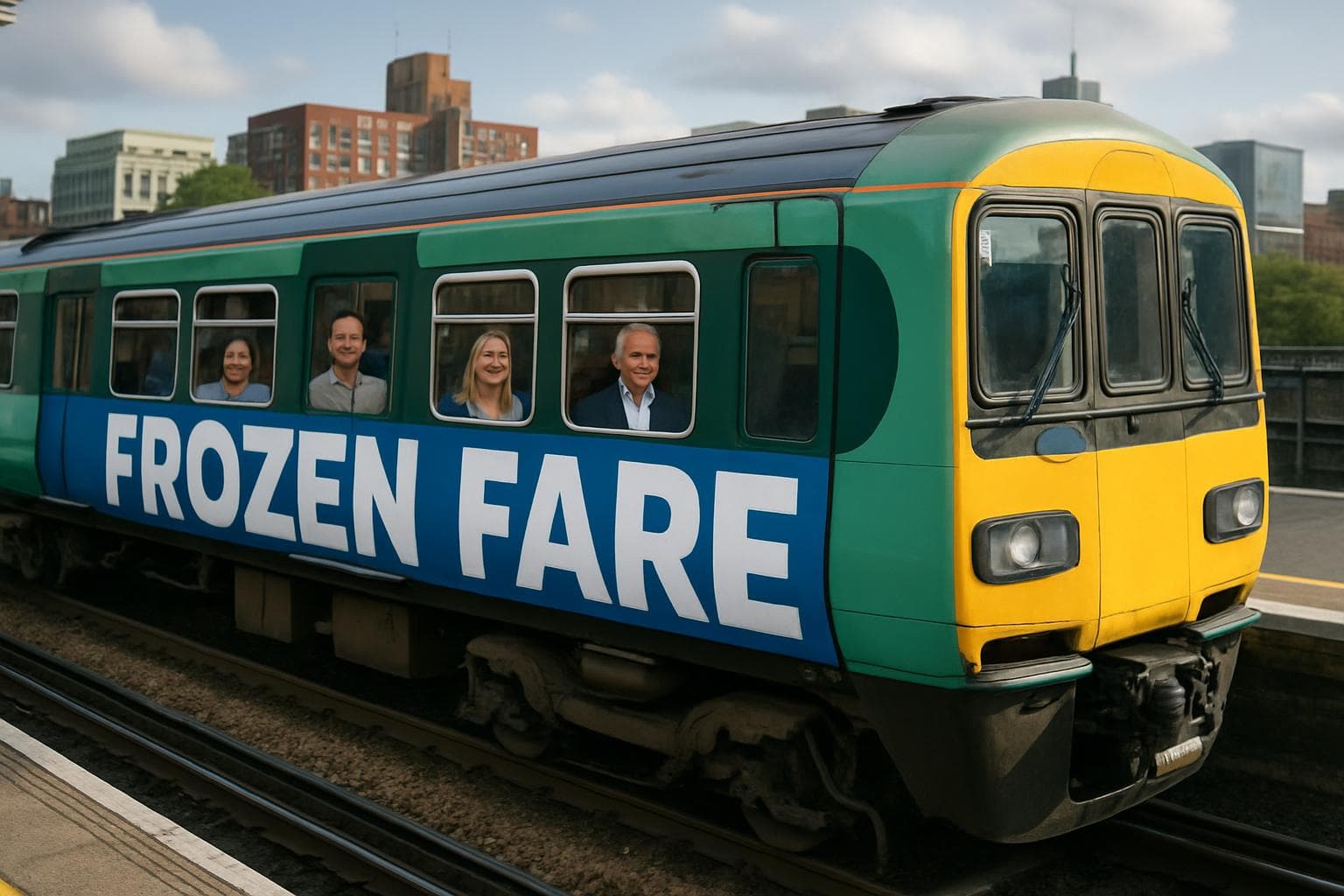
In a landmark decision, the UK government has announced a freeze on rail fares in England until March 2027, marking the first such freeze in three decades. This move, which applies to regulated fares such as season tickets and off-peak returns, is expected to save commuters on expensive routes more than £300 annually.
The announcement comes ahead of Chancellor Rachel Reeves' budget presentation, where she is expected to outline measures aimed at curbing inflation and alleviating the cost of living. The freeze is part of a broader strategy to support economic growth and stability, as emphasized by Prime Minister Keir Starmer, who recently returned from the G20 summit in Johannesburg to finalize the budget details.
Government's Economic Strategy
The decision to freeze rail fares is seen as a strategic move to counterbalance the anticipated political backlash from several tax increases. Reeves is expected to address a £20 billion deficit in government finances by freezing income tax thresholds and implementing other revenue-raising measures. Despite these challenges, the government hopes to regain public favor through consumer-friendly initiatives like the fare freeze.
Transport Secretary Heidi Alexander highlighted the significance of the freeze, stating it would directly limit inflation by holding down a major component of everyday costs. The freeze applies to regulated fares, which cover a significant portion of commuter routes and long-distance journeys, while unregulated fares may still see increases.
Transition to Great British Railways
This fare freeze aligns with the government's ongoing efforts to establish Great British Railways, a public body set to take over the management of tracks and trains by the end of 2027. This initiative aims to end years of fragmentation in the railway system, improving standards for passengers and making travel more affordable.
The Rail Delivery Group, representing UK rail operators, welcomed the freeze as "good news for customers" and expressed commitment to working with the government on upcoming railway reforms.
WHAT THIS MIGHT MEAN
The rail fare freeze is a significant step in the government's broader economic strategy, potentially easing financial pressures on commuters and contributing to inflation control. However, the success of this initiative will largely depend on the public's reception of the upcoming budget, particularly in light of expected tax increases.
As the government moves towards establishing Great British Railways, the transition to public ownership could lead to more comprehensive reforms in the railway sector. This shift may enhance service quality and operational efficiency, ultimately benefiting passengers.
Political implications are also at play, with the fare freeze serving as a potential boost for Reeves and Starmer amid growing criticism. The government's ability to balance fiscal responsibility with consumer-friendly policies will be crucial in shaping public perception and political outcomes in the coming years.
Related Articles
US Supreme Court Ruling on Tariffs Sparks Uncertainty for UK and Global Trade
Middle East Conflict Drives UK Energy Prices to New Highs
Government Announces £4 Billion Overhaul of SEND Support in England
UK Government Announces Major Overhaul of SEND System with £3.4 Billion Investment
Government Unveils Ambitious Plan to Halve Attainment Gap in England's Schools

UK Government's SEND Reforms: A Critical Turning Point for Special Education
Rail Fares in England Frozen for First Time in 30 Years to Ease Cost of Living
In This Article
 Daniel Rivera| Published
 HIGHLIGHTS
- Rail fares in England will be frozen until March 2027, marking the first freeze in 30 years.
- The freeze applies to regulated fares, including season tickets and off-peak returns, potentially saving commuters over £300 annually.
- The government aims to limit inflation and ease the cost of living, with the announcement preceding the upcoming budget.
- Chancellor Rachel Reeves and Prime Minister Keir Starmer are using the freeze to gain political favor amid expected tax increases.
- The freeze is part of broader plans to establish Great British Railways, bringing parts of the railway system into public ownership.
In a landmark decision, the UK government has announced a freeze on rail fares in England until March 2027, marking the first such freeze in three decades. This move, which applies to regulated fares such as season tickets and off-peak returns, is expected to save commuters on expensive routes more than £300 annually.
The announcement comes ahead of Chancellor Rachel Reeves' budget presentation, where she is expected to outline measures aimed at curbing inflation and alleviating the cost of living. The freeze is part of a broader strategy to support economic growth and stability, as emphasized by Prime Minister Keir Starmer, who recently returned from the G20 summit in Johannesburg to finalize the budget details.
Government's Economic Strategy
The decision to freeze rail fares is seen as a strategic move to counterbalance the anticipated political backlash from several tax increases. Reeves is expected to address a £20 billion deficit in government finances by freezing income tax thresholds and implementing other revenue-raising measures. Despite these challenges, the government hopes to regain public favor through consumer-friendly initiatives like the fare freeze.
Transport Secretary Heidi Alexander highlighted the significance of the freeze, stating it would directly limit inflation by holding down a major component of everyday costs. The freeze applies to regulated fares, which cover a significant portion of commuter routes and long-distance journeys, while unregulated fares may still see increases.
Transition to Great British Railways
This fare freeze aligns with the government's ongoing efforts to establish Great British Railways, a public body set to take over the management of tracks and trains by the end of 2027. This initiative aims to end years of fragmentation in the railway system, improving standards for passengers and making travel more affordable.
The Rail Delivery Group, representing UK rail operators, welcomed the freeze as "good news for customers" and expressed commitment to working with the government on upcoming railway reforms.
WHAT THIS MIGHT MEAN
The rail fare freeze is a significant step in the government's broader economic strategy, potentially easing financial pressures on commuters and contributing to inflation control. However, the success of this initiative will largely depend on the public's reception of the upcoming budget, particularly in light of expected tax increases.
As the government moves towards establishing Great British Railways, the transition to public ownership could lead to more comprehensive reforms in the railway sector. This shift may enhance service quality and operational efficiency, ultimately benefiting passengers.
Political implications are also at play, with the fare freeze serving as a potential boost for Reeves and Starmer amid growing criticism. The government's ability to balance fiscal responsibility with consumer-friendly policies will be crucial in shaping public perception and political outcomes in the coming years.
Related Articles
US Supreme Court Ruling on Tariffs Sparks Uncertainty for UK and Global Trade
Middle East Conflict Drives UK Energy Prices to New Highs
Government Announces £4 Billion Overhaul of SEND Support in England
UK Government Announces Major Overhaul of SEND System with £3.4 Billion Investment
Government Unveils Ambitious Plan to Halve Attainment Gap in England's Schools
UK Government's SEND Reforms: A Critical Turning Point for Special Education