
Prolonged Drought in England Spurs Urgent Water Conservation Efforts
In This Article
HIGHLIGHTS
- The East Midlands is experiencing drought conditions that could persist until the end of autumn, according to the Environment Agency.
- England is facing a significant water shortfall, with only 89% of the long-term average rainfall recorded in July.
- Water companies are considering stricter conservation measures, including non-essential use bans, as reservoirs and rivers reach low levels.
- The National Drought Group is coordinating efforts to manage the drought, involving government, water companies, and environmental experts.
- Five regions in England, including Yorkshire and the East Midlands, are officially in drought, with potential for more areas to be affected.
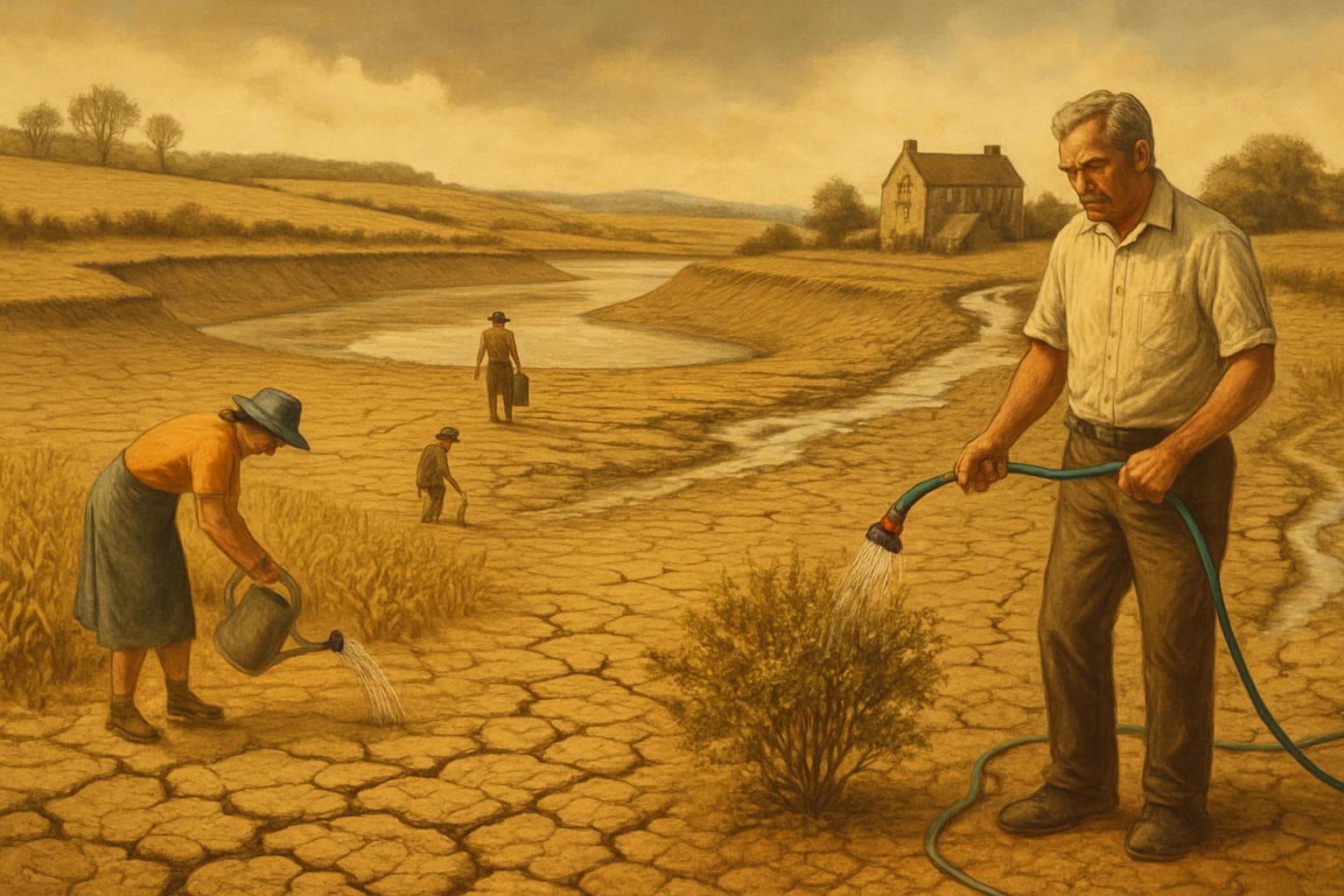
The East Midlands and other parts of England are grappling with severe drought conditions that could extend into late autumn, according to recent warnings from the Environment Agency. This follows England's driest start to the year since 1976, with reservoirs like Carsington Water in Derbyshire currently at only 67% capacity. Matt Lewis of Severn Trent Water has urged the region's 8.5 million residents to adopt sensible water usage practices, such as reducing hosepipe use and conserving water during daily activities.
Water Shortage and Conservation Measures
The National Drought Group, which includes government officials, water companies, and environmental experts, convened to strategize on mitigating the water crisis. Steve Reed, the environment secretary, has briefed senior government officials on the risks posed by the ongoing dry conditions. Southern Water has already implemented a hosepipe ban for some customers and is seeking further restrictions on non-essential water use, including prohibitions on filling swimming pools and cleaning windows.
Impact on Environment and Agriculture
The drought's impact is widespread, affecting agriculture, navigation, and wildlife. Farmers are struggling to maintain crops and livestock, while anglers report increased fish die-offs. Rivers like the Wye and the Great Ouse have reached record low levels for July, exacerbating the situation. The UK Centre for Ecology & Hydrology has warned that dry conditions could persist well into October, placing additional strain on already depleted water supplies.
Regional Drought Conditions
Five regions, including Yorkshire, Cumbria, and the East Midlands, are officially in drought. The situation is particularly dire in areas dependent on reservoirs and chalk streams, as aquifers, which require sustained rainfall to recharge, are also running low. The hydrological outlook for August to October suggests continued below-normal groundwater levels, particularly in southern England and Wales.
WHAT THIS MIGHT MEAN
As drought conditions persist, water conservation measures are likely to become more stringent, potentially affecting daily life and business operations across England. The government and water companies may need to implement further restrictions if rainfall remains scarce. Long-term solutions could involve investing in infrastructure to improve water storage and distribution, as well as promoting sustainable water usage practices. The situation underscores the need for a coordinated national response to manage water resources effectively in the face of climate change.
Related Articles
UK Government Eases Deer Culling to Protect Woodlands and Farmland
Saharan Dust to Illuminate UK Skies with Vivid Sunrises and Sunsets
Government U-turn Forces Local Elections in Lancashire and Essex Amid Reorganisation Plans
Prince William Calls for Action on UK Male Suicide Rates
Sisters Tragically Drown at Eryri National Park's Watkin Path

Labour MP's Husband Arrested in UK-China Espionage Probe
Prolonged Drought in England Spurs Urgent Water Conservation Efforts
In This Article
 Leila Hassan| Published
 HIGHLIGHTS
- The East Midlands is experiencing drought conditions that could persist until the end of autumn, according to the Environment Agency.
- England is facing a significant water shortfall, with only 89% of the long-term average rainfall recorded in July.
- Water companies are considering stricter conservation measures, including non-essential use bans, as reservoirs and rivers reach low levels.
- The National Drought Group is coordinating efforts to manage the drought, involving government, water companies, and environmental experts.
- Five regions in England, including Yorkshire and the East Midlands, are officially in drought, with potential for more areas to be affected.
The East Midlands and other parts of England are grappling with severe drought conditions that could extend into late autumn, according to recent warnings from the Environment Agency. This follows England's driest start to the year since 1976, with reservoirs like Carsington Water in Derbyshire currently at only 67% capacity. Matt Lewis of Severn Trent Water has urged the region's 8.5 million residents to adopt sensible water usage practices, such as reducing hosepipe use and conserving water during daily activities.
Water Shortage and Conservation Measures
The National Drought Group, which includes government officials, water companies, and environmental experts, convened to strategize on mitigating the water crisis. Steve Reed, the environment secretary, has briefed senior government officials on the risks posed by the ongoing dry conditions. Southern Water has already implemented a hosepipe ban for some customers and is seeking further restrictions on non-essential water use, including prohibitions on filling swimming pools and cleaning windows.
Impact on Environment and Agriculture
The drought's impact is widespread, affecting agriculture, navigation, and wildlife. Farmers are struggling to maintain crops and livestock, while anglers report increased fish die-offs. Rivers like the Wye and the Great Ouse have reached record low levels for July, exacerbating the situation. The UK Centre for Ecology & Hydrology has warned that dry conditions could persist well into October, placing additional strain on already depleted water supplies.
Regional Drought Conditions
Five regions, including Yorkshire, Cumbria, and the East Midlands, are officially in drought. The situation is particularly dire in areas dependent on reservoirs and chalk streams, as aquifers, which require sustained rainfall to recharge, are also running low. The hydrological outlook for August to October suggests continued below-normal groundwater levels, particularly in southern England and Wales.
WHAT THIS MIGHT MEAN
As drought conditions persist, water conservation measures are likely to become more stringent, potentially affecting daily life and business operations across England. The government and water companies may need to implement further restrictions if rainfall remains scarce. Long-term solutions could involve investing in infrastructure to improve water storage and distribution, as well as promoting sustainable water usage practices. The situation underscores the need for a coordinated national response to manage water resources effectively in the face of climate change.
Related Articles
UK Government Eases Deer Culling to Protect Woodlands and Farmland
Saharan Dust to Illuminate UK Skies with Vivid Sunrises and Sunsets
Government U-turn Forces Local Elections in Lancashire and Essex Amid Reorganisation Plans
Prince William Calls for Action on UK Male Suicide Rates
Sisters Tragically Drown at Eryri National Park's Watkin Path
Labour MP's Husband Arrested in UK-China Espionage Probe