
Families Demand MI5 Accountability in New Public Office Bill
In This Article
HIGHLIGHTS
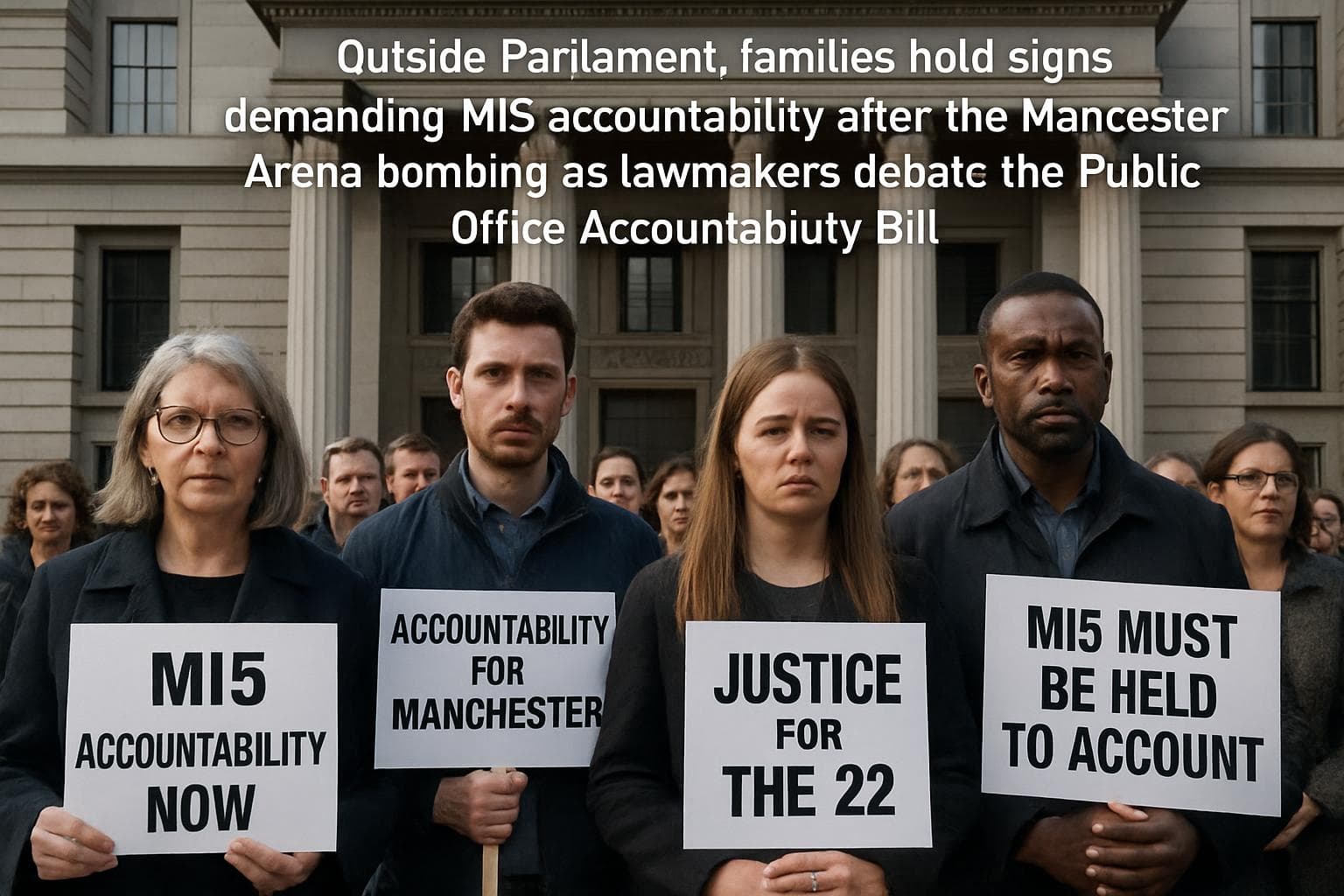
- Families of the Manchester Arena bombing victims demand MI5's inclusion in the new Public Office (Accountability) Bill to prevent cover-ups.
- The Hillsborough Law aims to enforce truthfulness among public officials during investigations, following the Hillsborough disaster.
- MI5 was criticized for not acting on crucial intelligence that might have prevented the 2017 attack, which killed 22 people.
- The government is negotiating the bill's application to intelligence services, with campaigners feeling misled about its scope.
- A judge ruled nearly £20 million in compensation for children injured in the bombing, highlighting the attack's devastating impact.
Families affected by the Manchester Arena bombing are calling for the inclusion of MI5 in a new law designed to prevent cover-ups in public life. This demand follows a public inquiry that criticized MI5 for failing to act on crucial intelligence that might have thwarted the 2017 attack, which claimed 22 lives and injured hundreds.
Hillsborough Law and Its Implications
The proposed legislation, known as the Public Office (Accountability) Bill or the Hillsborough Law, seeks to enforce a duty of candour among public officials. This initiative follows the Hillsborough disaster, where police were found to have spread false narratives. The bill mandates truthfulness during official investigations and aims to rebalance legal representation funding for state bodies and victims.
MI5's Role Under Scrutiny
The families' plea, articulated in a letter to Prime Minister Keir Starmer, underscores their distrust in MI5's transparency. The inquiry led by Sir John Saunders highlighted a "significant missed opportunity" by MI5 to act on intelligence regarding Salman Abedi, the bomber. Abedi's return from Libya, where he had been involved with Islamist groups, was a critical moment that MI5 failed to address adequately.
Legal and Financial Repercussions
In a related development, a judge recently approved nearly £20 million in compensation for children injured in the bombing. This ruling underscores the attack's profound impact, with victims suffering both physical and psychological trauma. The compensation amounts, ranging from £11.4 million to £2,770, reflect the severity of the injuries sustained.
Government and Campaigners at Odds
Despite the bill's progress, campaigners like Pete Weatherby KC express dissatisfaction with the government's handling of negotiations concerning the intelligence services. Weatherby, a key figure in the Hillsborough Law Now campaign, accuses the government of misleading him about the bill's application to MI5, MI6, and GCHQ. He emphasizes the need for genuine accountability to prevent future tragedies.
WHAT THIS MIGHT MEAN
As the Public Office (Accountability) Bill advances through Parliament, its potential inclusion of intelligence services like MI5 remains a contentious issue. Should the bill pass with comprehensive coverage, it could set a precedent for increased transparency and accountability within the UK's security apparatus. However, balancing national security concerns with public accountability will be crucial to its success.
Legal experts suggest that the bill could reshape the landscape of public accountability, potentially leading to more rigorous scrutiny of intelligence operations. This shift might prompt other nations to consider similar measures, fostering a global movement towards greater transparency in public office.
Images from the Web

Related Articles

Russian LNG Tanker Sinks in Mediterranean Amid Accusations of Ukrainian Drone Attack

UK Faces Dilemmas Amid Iran Conflict and China Spying Allegations
Labour MP's Husband Arrested in UK-China Espionage Probe

UK-Iran Tensions: Starmer Defends Cautious Approach Amid Trump Criticism

Diplomatic Tensions Rise as Trump Criticizes Starmer's Iran Policy

UK Government Considers Removing Andrew Mountbatten-Windsor from Royal Succession Amid Arrest
Families Demand MI5 Accountability in New Public Office Bill
In This Article
 Ethan Brooks| Published
 HIGHLIGHTS
- Families of the Manchester Arena bombing victims demand MI5's inclusion in the new Public Office (Accountability) Bill to prevent cover-ups.
- The Hillsborough Law aims to enforce truthfulness among public officials during investigations, following the Hillsborough disaster.
- MI5 was criticized for not acting on crucial intelligence that might have prevented the 2017 attack, which killed 22 people.
- The government is negotiating the bill's application to intelligence services, with campaigners feeling misled about its scope.
- A judge ruled nearly £20 million in compensation for children injured in the bombing, highlighting the attack's devastating impact.
Families affected by the Manchester Arena bombing are calling for the inclusion of MI5 in a new law designed to prevent cover-ups in public life. This demand follows a public inquiry that criticized MI5 for failing to act on crucial intelligence that might have thwarted the 2017 attack, which claimed 22 lives and injured hundreds.
Hillsborough Law and Its Implications
The proposed legislation, known as the Public Office (Accountability) Bill or the Hillsborough Law, seeks to enforce a duty of candour among public officials. This initiative follows the Hillsborough disaster, where police were found to have spread false narratives. The bill mandates truthfulness during official investigations and aims to rebalance legal representation funding for state bodies and victims.
MI5's Role Under Scrutiny
The families' plea, articulated in a letter to Prime Minister Keir Starmer, underscores their distrust in MI5's transparency. The inquiry led by Sir John Saunders highlighted a "significant missed opportunity" by MI5 to act on intelligence regarding Salman Abedi, the bomber. Abedi's return from Libya, where he had been involved with Islamist groups, was a critical moment that MI5 failed to address adequately.
Legal and Financial Repercussions
In a related development, a judge recently approved nearly £20 million in compensation for children injured in the bombing. This ruling underscores the attack's profound impact, with victims suffering both physical and psychological trauma. The compensation amounts, ranging from £11.4 million to £2,770, reflect the severity of the injuries sustained.
Government and Campaigners at Odds
Despite the bill's progress, campaigners like Pete Weatherby KC express dissatisfaction with the government's handling of negotiations concerning the intelligence services. Weatherby, a key figure in the Hillsborough Law Now campaign, accuses the government of misleading him about the bill's application to MI5, MI6, and GCHQ. He emphasizes the need for genuine accountability to prevent future tragedies.
WHAT THIS MIGHT MEAN
As the Public Office (Accountability) Bill advances through Parliament, its potential inclusion of intelligence services like MI5 remains a contentious issue. Should the bill pass with comprehensive coverage, it could set a precedent for increased transparency and accountability within the UK's security apparatus. However, balancing national security concerns with public accountability will be crucial to its success.
Legal experts suggest that the bill could reshape the landscape of public accountability, potentially leading to more rigorous scrutiny of intelligence operations. This shift might prompt other nations to consider similar measures, fostering a global movement towards greater transparency in public office.
Images from the Web
Related Articles
Russian LNG Tanker Sinks in Mediterranean Amid Accusations of Ukrainian Drone Attack
UK Faces Dilemmas Amid Iran Conflict and China Spying Allegations
Labour MP's Husband Arrested in UK-China Espionage Probe
UK-Iran Tensions: Starmer Defends Cautious Approach Amid Trump Criticism
Diplomatic Tensions Rise as Trump Criticizes Starmer's Iran Policy
UK Government Considers Removing Andrew Mountbatten-Windsor from Royal Succession Amid Arrest