
Farage's Deportation Plan Sparks Controversy Over Human Rights and Peace Agreements
In This Article
HIGHLIGHTS
- Nigel Farage proposes renegotiating the Good Friday Agreement to facilitate mass deportations, drawing criticism from various political figures.
- Reform UK plans to deport up to 600,000 asylum seekers, potentially undermining international human rights agreements.
- The proposal includes leaving the European Convention on Human Rights and repealing the Human Rights Act.
- Critics argue the plan could damage the UK's international reputation and disrupt existing cooperation on migration issues.
- Reform UK suggests financial deals with countries like Iran and Afghanistan to facilitate deportations, raising ethical and economic concerns.
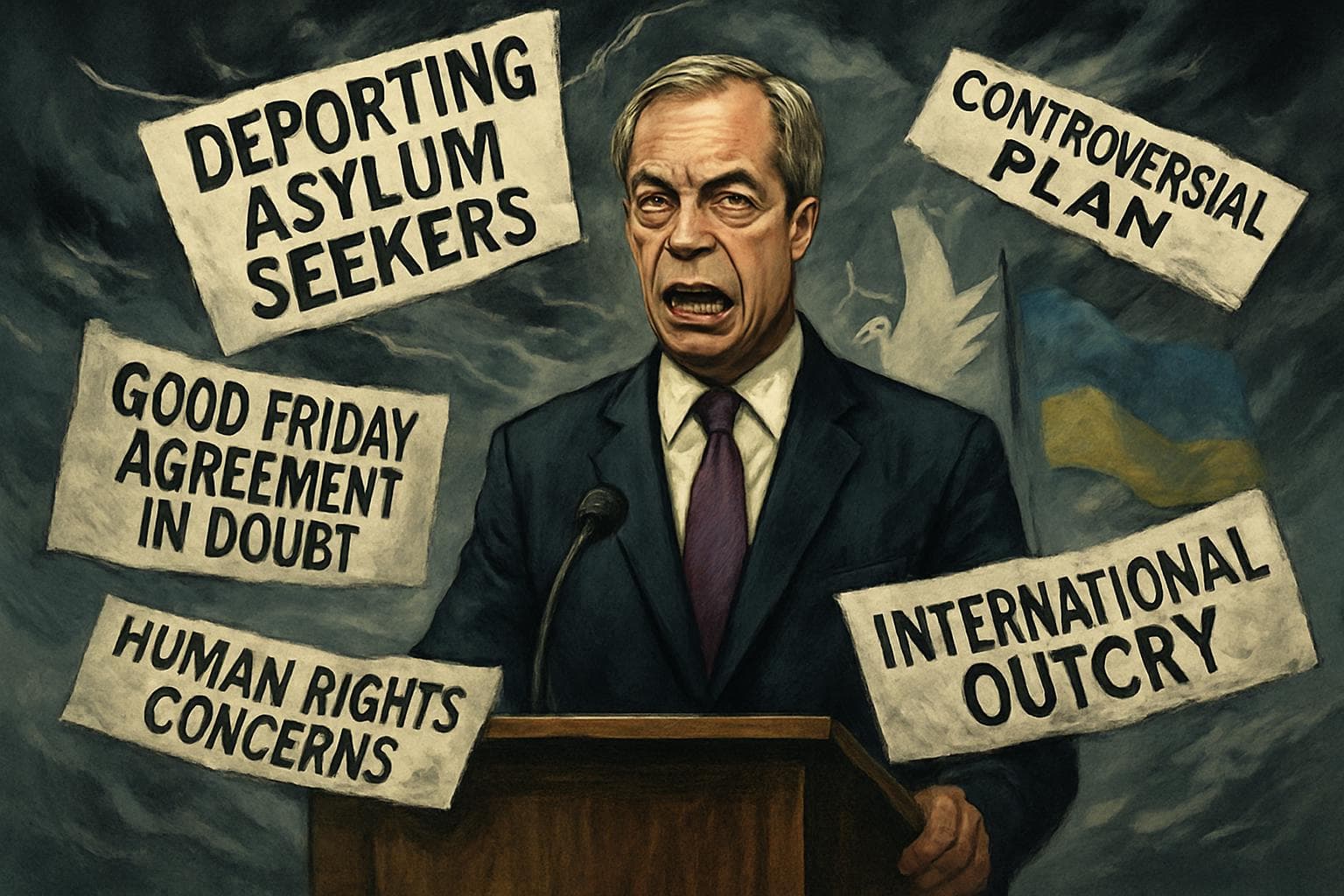
Nigel Farage, leader of Reform UK, has unveiled a controversial plan to deport up to 600,000 asylum seekers, proposing a renegotiation of the Good Friday Agreement to achieve this goal. The plan, announced at a recent press conference, has drawn widespread criticism for its potential impact on human rights and international agreements.
Renegotiating the Good Friday Agreement
Farage's proposal to renegotiate the Good Friday Agreement has been met with skepticism and criticism. The agreement, which has been a cornerstone of peace in Northern Ireland, could be jeopardized by the plan to leave the European Convention on Human Rights (ECHR). A Downing Street spokesperson dismissed the proposal as "not serious," emphasizing the ECHR's role in underpinning key international agreements.
Mass Deportation and Human Rights Concerns
Central to Farage's plan is the mass deportation of asylum seekers, which would involve repealing the Human Rights Act and opting out of several international conventions. Critics, including the Society of Labour Lawyers, warn that such actions could isolate the UK from other European democracies and harm its international reputation. The plan also includes indefinite detention for immigration purposes, a move likely to face legal challenges.
Financial Deals with Controversial Regimes
Reform UK suggests striking financial deals with countries like Iran and Afghanistan to facilitate deportations. This aspect of the plan has been labeled a "Taliban tax" by the Liberal Democrats, who argue that it would involve paying billions to regimes with questionable human rights records. Zia Yusuf, a senior figure in Reform UK, stated that £2 billion has been earmarked for these deals, partly funded by the UK's foreign aid budget.
Political Reactions and Criticism
The proposal has sparked criticism from across the political spectrum. Conservative leader Kemi Badenoch accused Reform UK of "copying" Conservative policies without the necessary groundwork. Former SDLP leader Colum Eastwood condemned the plan as "undermining our peace deal for a cheap headline."
WHAT THIS MIGHT MEAN
The future of Farage's proposal remains uncertain, with significant legal and political hurdles to overcome. If pursued, the plan could lead to strained relations with European partners and potential legal battles over human rights violations. Experts suggest that renegotiating the Good Friday Agreement could destabilize the peace process in Northern Ireland, a risk that may deter political support. As the UK approaches its next general election, the viability of Reform UK's policies will likely be scrutinized, influencing both domestic and international perceptions of the country's commitment to human rights and international cooperation.
Related Articles

UK-Iran Tensions: Starmer Defends Cautious Approach Amid Trump Criticism

Diplomatic Tensions Rise as Trump Criticizes Starmer's Iran Policy
UK Government to Reform Asylum Seeker Support and Employment Policies

Reform UK Aims to Reshape Welsh Politics with New Manifesto

UK Faces Dilemmas Amid Iran Conflict and China Spying Allegations

UK Reinforces Military Presence in Cyprus Amid Middle East Tensions
Farage's Deportation Plan Sparks Controversy Over Human Rights and Peace Agreements
In This Article
 Ethan Brooks| Published
 HIGHLIGHTS
- Nigel Farage proposes renegotiating the Good Friday Agreement to facilitate mass deportations, drawing criticism from various political figures.
- Reform UK plans to deport up to 600,000 asylum seekers, potentially undermining international human rights agreements.
- The proposal includes leaving the European Convention on Human Rights and repealing the Human Rights Act.
- Critics argue the plan could damage the UK's international reputation and disrupt existing cooperation on migration issues.
- Reform UK suggests financial deals with countries like Iran and Afghanistan to facilitate deportations, raising ethical and economic concerns.
Nigel Farage, leader of Reform UK, has unveiled a controversial plan to deport up to 600,000 asylum seekers, proposing a renegotiation of the Good Friday Agreement to achieve this goal. The plan, announced at a recent press conference, has drawn widespread criticism for its potential impact on human rights and international agreements.
Renegotiating the Good Friday Agreement
Farage's proposal to renegotiate the Good Friday Agreement has been met with skepticism and criticism. The agreement, which has been a cornerstone of peace in Northern Ireland, could be jeopardized by the plan to leave the European Convention on Human Rights (ECHR). A Downing Street spokesperson dismissed the proposal as "not serious," emphasizing the ECHR's role in underpinning key international agreements.
Mass Deportation and Human Rights Concerns
Central to Farage's plan is the mass deportation of asylum seekers, which would involve repealing the Human Rights Act and opting out of several international conventions. Critics, including the Society of Labour Lawyers, warn that such actions could isolate the UK from other European democracies and harm its international reputation. The plan also includes indefinite detention for immigration purposes, a move likely to face legal challenges.
Financial Deals with Controversial Regimes
Reform UK suggests striking financial deals with countries like Iran and Afghanistan to facilitate deportations. This aspect of the plan has been labeled a "Taliban tax" by the Liberal Democrats, who argue that it would involve paying billions to regimes with questionable human rights records. Zia Yusuf, a senior figure in Reform UK, stated that £2 billion has been earmarked for these deals, partly funded by the UK's foreign aid budget.
Political Reactions and Criticism
The proposal has sparked criticism from across the political spectrum. Conservative leader Kemi Badenoch accused Reform UK of "copying" Conservative policies without the necessary groundwork. Former SDLP leader Colum Eastwood condemned the plan as "undermining our peace deal for a cheap headline."
WHAT THIS MIGHT MEAN
The future of Farage's proposal remains uncertain, with significant legal and political hurdles to overcome. If pursued, the plan could lead to strained relations with European partners and potential legal battles over human rights violations. Experts suggest that renegotiating the Good Friday Agreement could destabilize the peace process in Northern Ireland, a risk that may deter political support. As the UK approaches its next general election, the viability of Reform UK's policies will likely be scrutinized, influencing both domestic and international perceptions of the country's commitment to human rights and international cooperation.
Related Articles
UK-Iran Tensions: Starmer Defends Cautious Approach Amid Trump Criticism
Diplomatic Tensions Rise as Trump Criticizes Starmer's Iran Policy
UK Government to Reform Asylum Seeker Support and Employment Policies
Reform UK Aims to Reshape Welsh Politics with New Manifesto
UK Faces Dilemmas Amid Iran Conflict and China Spying Allegations
UK Reinforces Military Presence in Cyprus Amid Middle East Tensions