
Historic Space Journey: First Wheelchair User Reaches the Stars
In This Article
HIGHLIGHTS
- Michaela Benthaus, a paraplegic engineer from Germany, became the first wheelchair user to travel to space with Blue Origin.
- The 10-minute flight, organized by retired SpaceX executive Hans Koenigsmann, reached above the Kármán line, the boundary of space.
- Blue Origin made minor adjustments to accommodate Benthaus, showcasing the potential for accessible space travel.
- The mission highlights the growing competition in the space tourism industry, with Blue Origin conducting its 16th suborbital launch.
- Benthaus's journey underscores the message that space is for everyone, regardless of physical limitations.
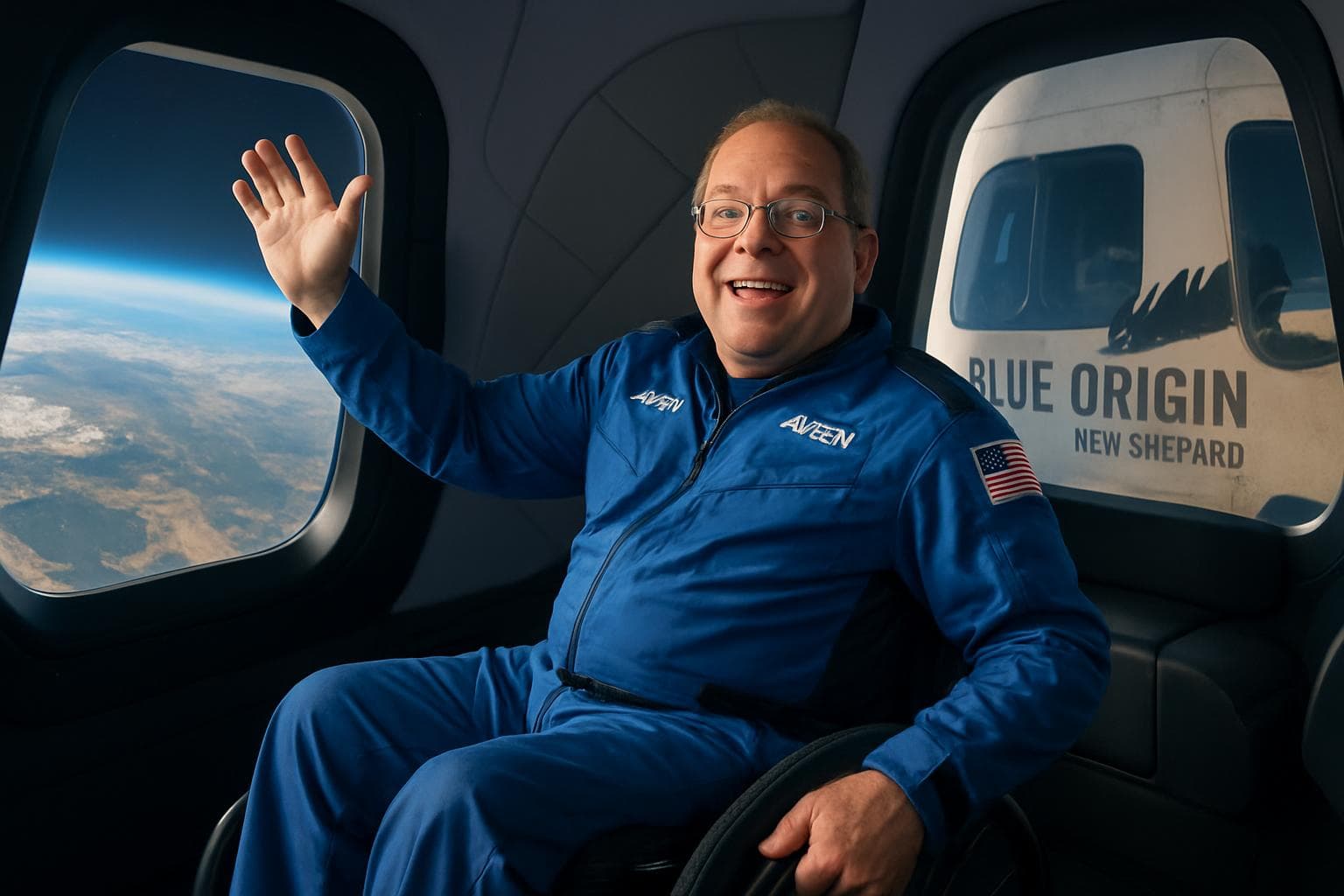
In a groundbreaking achievement for both space exploration and accessibility, Michaela Benthaus, a paraplegic engineer from Germany, has become the first wheelchair user to travel to space. The historic flight took place on Saturday, courtesy of Blue Origin, the space tourism company founded by Jeff Bezos. Benthaus, who suffered a spinal cord injury in a mountain biking accident seven years ago, embarked on this journey with the help of retired SpaceX executive Hans Koenigsmann.
A Dream Realized
The 10-minute flight launched from Blue Origin's Texas site, with Benthaus and five other passengers aboard the New Shepard, a reusable sub-orbital launch vehicle. The capsule soared above the Kármán line, the internationally recognized boundary of space, offering Benthaus a once-in-a-lifetime experience. "It was the coolest experience!" she exclaimed in a video shared by Blue Origin after landing. Benthaus expressed her delight at the view, the sensation of microgravity, and the thrill of the ascent.
Pioneering Accessible Space Travel
Blue Origin made minor adjustments to accommodate Benthaus, demonstrating the potential for accessible space travel. The company added ground support equipment, including a patient transfer board and a carpet for easy wheelchair access post-landing. "Michi's flight is particularly meaningful, demonstrating that space is for everyone," said Phil Joyce, senior vice-president of New Shepard.
A Collaborative Effort
Benthaus's journey was made possible through her collaboration with Hans Koenigsmann, who was inspired by her determination. "It's her drive that kind of convinced me I should do that, too," Koenigsmann remarked. The mission was a private endeavor, with no involvement from the European Space Agency, where Benthaus is currently a graduate trainee.
Space Tourism's Competitive Landscape
This mission marks Blue Origin's 16th suborbital space tourism launch, highlighting the fierce competition in the burgeoning space tourism industry. The company has previously sent a diverse range of tourists to space, including those with limited mobility and sensory impairments. As private space companies vie for dominance, Benthaus's flight underscores the industry's potential to make space accessible to all.
WHAT THIS MIGHT MEAN
Michaela Benthaus's successful journey into space could pave the way for more inclusive space travel, encouraging other private space companies to consider accessibility in their designs. As the space tourism industry continues to grow, the inclusion of individuals with disabilities could become a standard practice, broadening the market and inspiring a new generation of space enthusiasts.
The mission also highlights the increasing role of private companies in space exploration, potentially influencing policy and funding decisions at national space agencies. As competition intensifies, companies like Blue Origin may push for further innovations in spacecraft design and passenger experience, ultimately benefiting a wider range of potential space tourists.
Images from the Web

Related Articles

New UK Entry Rules for Dual Nationals Spark Outcry

James Talarico Secures Democratic Nomination in Texas Senate Race Amidst Republican Runoff

Trump's Board of Peace Pledges $7 Billion for Gaza Amidst International Skepticism

NHS Faces Joint Surgery Delays Amid Bone Cement Shortage

UK and Allies Accuse Russia of Killing Navalny with Dart Frog Toxin

BrewDog Explores Sale Amid Economic Challenges
Historic Space Journey: First Wheelchair User Reaches the Stars
In This Article
 Leila Hassan| Published
 HIGHLIGHTS
- Michaela Benthaus, a paraplegic engineer from Germany, became the first wheelchair user to travel to space with Blue Origin.
- The 10-minute flight, organized by retired SpaceX executive Hans Koenigsmann, reached above the Kármán line, the boundary of space.
- Blue Origin made minor adjustments to accommodate Benthaus, showcasing the potential for accessible space travel.
- The mission highlights the growing competition in the space tourism industry, with Blue Origin conducting its 16th suborbital launch.
- Benthaus's journey underscores the message that space is for everyone, regardless of physical limitations.
In a groundbreaking achievement for both space exploration and accessibility, Michaela Benthaus, a paraplegic engineer from Germany, has become the first wheelchair user to travel to space. The historic flight took place on Saturday, courtesy of Blue Origin, the space tourism company founded by Jeff Bezos. Benthaus, who suffered a spinal cord injury in a mountain biking accident seven years ago, embarked on this journey with the help of retired SpaceX executive Hans Koenigsmann.
A Dream Realized
The 10-minute flight launched from Blue Origin's Texas site, with Benthaus and five other passengers aboard the New Shepard, a reusable sub-orbital launch vehicle. The capsule soared above the Kármán line, the internationally recognized boundary of space, offering Benthaus a once-in-a-lifetime experience. "It was the coolest experience!" she exclaimed in a video shared by Blue Origin after landing. Benthaus expressed her delight at the view, the sensation of microgravity, and the thrill of the ascent.
Pioneering Accessible Space Travel
Blue Origin made minor adjustments to accommodate Benthaus, demonstrating the potential for accessible space travel. The company added ground support equipment, including a patient transfer board and a carpet for easy wheelchair access post-landing. "Michi's flight is particularly meaningful, demonstrating that space is for everyone," said Phil Joyce, senior vice-president of New Shepard.
A Collaborative Effort
Benthaus's journey was made possible through her collaboration with Hans Koenigsmann, who was inspired by her determination. "It's her drive that kind of convinced me I should do that, too," Koenigsmann remarked. The mission was a private endeavor, with no involvement from the European Space Agency, where Benthaus is currently a graduate trainee.
Space Tourism's Competitive Landscape
This mission marks Blue Origin's 16th suborbital space tourism launch, highlighting the fierce competition in the burgeoning space tourism industry. The company has previously sent a diverse range of tourists to space, including those with limited mobility and sensory impairments. As private space companies vie for dominance, Benthaus's flight underscores the industry's potential to make space accessible to all.
WHAT THIS MIGHT MEAN
Michaela Benthaus's successful journey into space could pave the way for more inclusive space travel, encouraging other private space companies to consider accessibility in their designs. As the space tourism industry continues to grow, the inclusion of individuals with disabilities could become a standard practice, broadening the market and inspiring a new generation of space enthusiasts.
The mission also highlights the increasing role of private companies in space exploration, potentially influencing policy and funding decisions at national space agencies. As competition intensifies, companies like Blue Origin may push for further innovations in spacecraft design and passenger experience, ultimately benefiting a wider range of potential space tourists.
Images from the Web
Related Articles
New UK Entry Rules for Dual Nationals Spark Outcry
James Talarico Secures Democratic Nomination in Texas Senate Race Amidst Republican Runoff
Trump's Board of Peace Pledges $7 Billion for Gaza Amidst International Skepticism
NHS Faces Joint Surgery Delays Amid Bone Cement Shortage
UK and Allies Accuse Russia of Killing Navalny with Dart Frog Toxin
BrewDog Explores Sale Amid Economic Challenges