
France Moves to Ban Social Media for Under-15s in Landmark Legislation
In This Article
HIGHLIGHTS
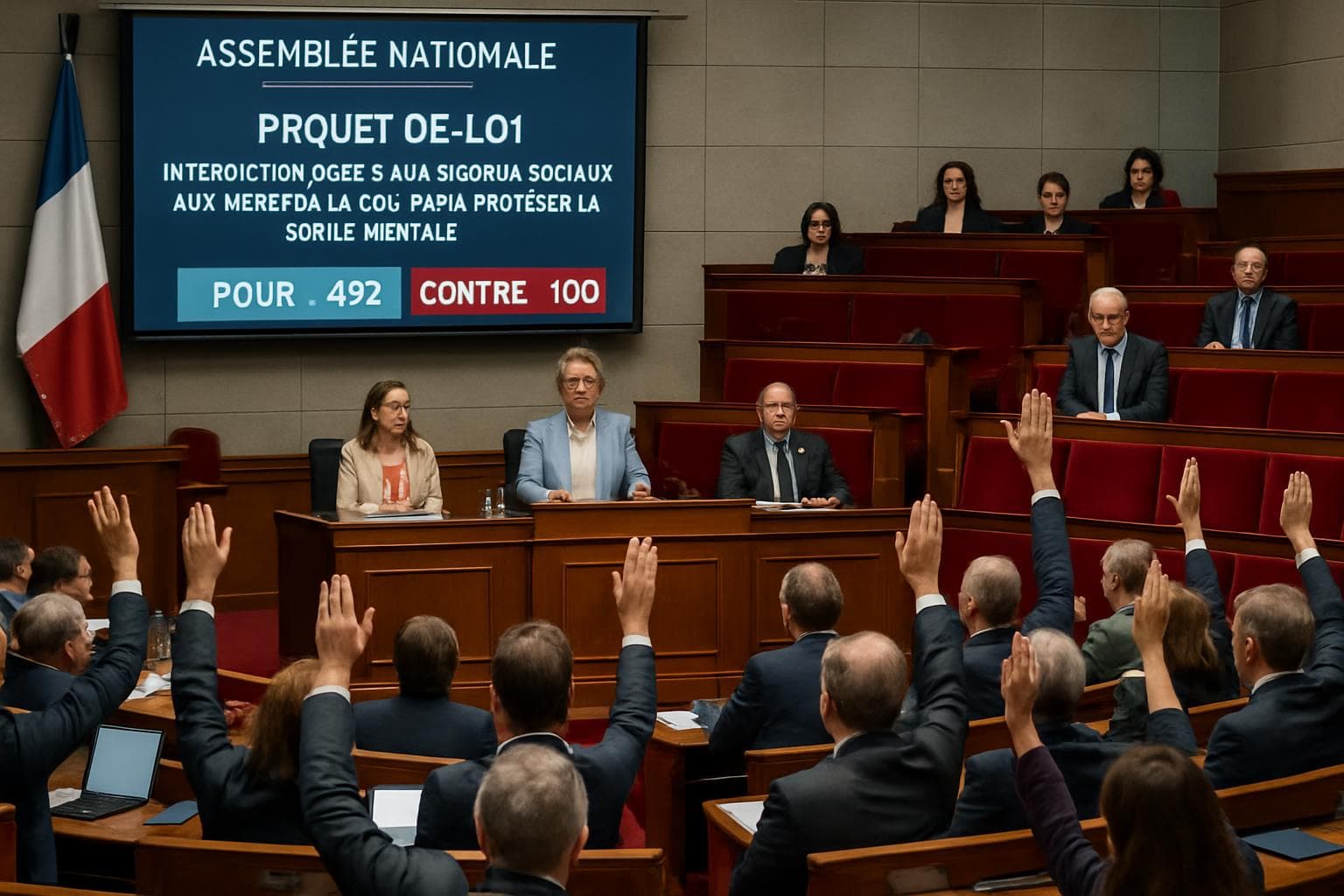
- France's National Assembly voted 116-23 in favor of a bill banning social media for under-15s, supported by President Emmanuel Macron.
- The bill, which also bans mobile phones in high schools, now moves to the Senate for approval.
- If passed, the law would require age verification systems to enforce the ban, similar to Australia's approach.
- Macron emphasized the need to protect children's mental health from social media's negative impacts.
- Critics argue the ban is overly simplistic, urging accountability for platforms instead.
In a decisive move to safeguard the mental health of young people, France's National Assembly has voted overwhelmingly in favor of a bill that would prohibit social media access for those under the age of 15. The legislation, which passed with a vote of 116-23, is a key initiative of President Emmanuel Macron, who has been vocal about the detrimental effects of excessive screen time on children.
Legislative Progress and Details
The bill will now proceed to the Senate, France's upper house, for further consideration. If enacted, the law would make France the second country after Australia to implement such a restriction, following Australia's ban on social media for under-16s last December. The proposed French law also includes a ban on mobile phones in high schools, extending an existing prohibition in junior and middle schools.
Protecting Mental Health
President Macron has championed the bill as a "major step" in protecting the emotional and mental well-being of French youth. "Our children's brains are not for sale," Macron declared, highlighting the need to shield young minds from the manipulative algorithms of social media platforms. The legislation aims to address concerns about cyberbullying, exposure to harmful content, and the overall impact of social media on adolescent development.
Implementation and Criticism
For the ban to be effective, an age verification system must be established, a process currently under development at the European level. Former Prime Minister Gabriel Attal expressed hope that the Senate would pass the bill by mid-February, allowing the ban to take effect by the start of the next school year on September 1. However, the proposal has faced criticism from some quarters. Arnaud Saint-Martin of the France Unbowed party described the measure as "digital paternalism," while child protection groups have called for platforms to be held accountable rather than banning children outright.
WHAT THIS MIGHT MEAN
Should the Senate approve the bill, France could set a precedent for other European nations considering similar measures. The implementation of an effective age verification system will be crucial to the law's success and could influence future digital policy across the continent. However, the debate over the balance between child protection and digital freedom is likely to continue, with potential implications for how technology companies operate in Europe. As the conversation evolves, the focus may shift towards holding social media platforms more accountable for their content and user engagement practices.
Related Articles

Bill Gates Withdraws from India AI Summit Amid Epstein Controversy

EU Launches Investigation into Shein Over Alleged Digital Law Breaches
Trump's New Tariff Strategy Sparks Global Trade Uncertainty

Trump Raises Import Tariffs to 15% After Supreme Court Setback

Arrests Over French Activist's Death Heighten Political Tensions
New UK Entry Rules for Dual Nationals Spark Outcry
France Moves to Ban Social Media for Under-15s in Landmark Legislation
In This Article
 Himanshu Kaushik| Published
 HIGHLIGHTS
- France's National Assembly voted 116-23 in favor of a bill banning social media for under-15s, supported by President Emmanuel Macron.
- The bill, which also bans mobile phones in high schools, now moves to the Senate for approval.
- If passed, the law would require age verification systems to enforce the ban, similar to Australia's approach.
- Macron emphasized the need to protect children's mental health from social media's negative impacts.
- Critics argue the ban is overly simplistic, urging accountability for platforms instead.
In a decisive move to safeguard the mental health of young people, France's National Assembly has voted overwhelmingly in favor of a bill that would prohibit social media access for those under the age of 15. The legislation, which passed with a vote of 116-23, is a key initiative of President Emmanuel Macron, who has been vocal about the detrimental effects of excessive screen time on children.
Legislative Progress and Details
The bill will now proceed to the Senate, France's upper house, for further consideration. If enacted, the law would make France the second country after Australia to implement such a restriction, following Australia's ban on social media for under-16s last December. The proposed French law also includes a ban on mobile phones in high schools, extending an existing prohibition in junior and middle schools.
Protecting Mental Health
President Macron has championed the bill as a "major step" in protecting the emotional and mental well-being of French youth. "Our children's brains are not for sale," Macron declared, highlighting the need to shield young minds from the manipulative algorithms of social media platforms. The legislation aims to address concerns about cyberbullying, exposure to harmful content, and the overall impact of social media on adolescent development.
Implementation and Criticism
For the ban to be effective, an age verification system must be established, a process currently under development at the European level. Former Prime Minister Gabriel Attal expressed hope that the Senate would pass the bill by mid-February, allowing the ban to take effect by the start of the next school year on September 1. However, the proposal has faced criticism from some quarters. Arnaud Saint-Martin of the France Unbowed party described the measure as "digital paternalism," while child protection groups have called for platforms to be held accountable rather than banning children outright.
WHAT THIS MIGHT MEAN
Should the Senate approve the bill, France could set a precedent for other European nations considering similar measures. The implementation of an effective age verification system will be crucial to the law's success and could influence future digital policy across the continent. However, the debate over the balance between child protection and digital freedom is likely to continue, with potential implications for how technology companies operate in Europe. As the conversation evolves, the focus may shift towards holding social media platforms more accountable for their content and user engagement practices.
Related Articles
Bill Gates Withdraws from India AI Summit Amid Epstein Controversy
EU Launches Investigation into Shein Over Alleged Digital Law Breaches
Trump's New Tariff Strategy Sparks Global Trade Uncertainty
Trump Raises Import Tariffs to 15% After Supreme Court Setback
Arrests Over French Activist's Death Heighten Political Tensions
New UK Entry Rules for Dual Nationals Spark Outcry