
Fujiyoshida Cancels Cherry Blossom Festival Amid Tourist Crisis
In This Article
HIGHLIGHTS
- The cherry blossom festival in Fujiyoshida, near Mount Fuji, has been canceled due to disruptive tourist behavior.
- The town experiences over 10,000 visitors daily during peak blossom season, driven by social media and a weak yen.
- Incidents include tourists trespassing, littering, and using private properties without permission.
- Despite the festival's cancellation, large crowds are still expected, prompting increased security measures.
- Similar measures to manage overtourism are being implemented in other popular destinations like Rome and Venice.
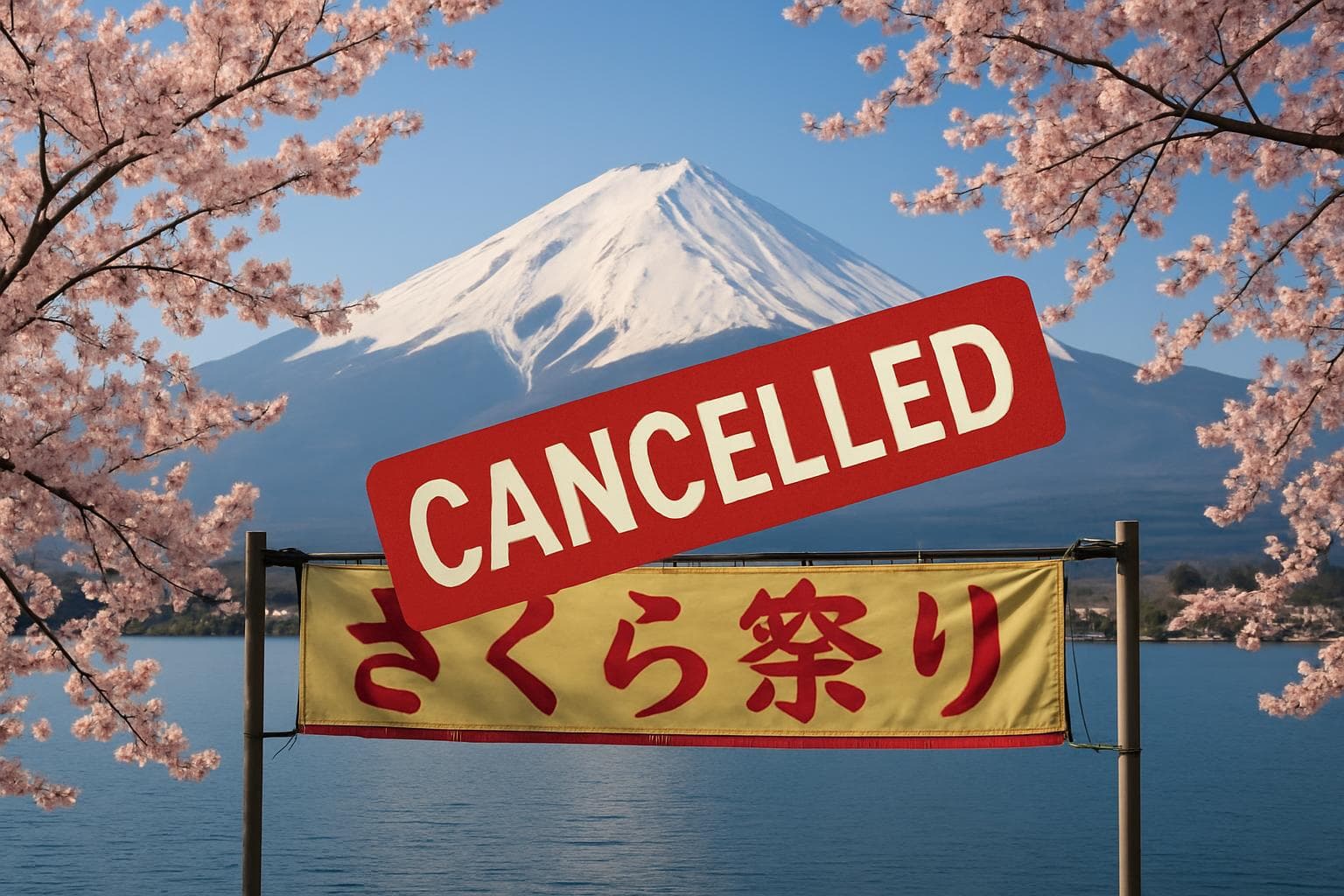
The city of Fujiyoshida, nestled near the iconic Mount Fuji, has announced the cancellation of its annual cherry blossom festival, citing a surge in unruly tourist behavior. This decision marks the end of a decade-long tradition at Arakurayama Sengen Park, a site renowned for its breathtaking views of cherry blossoms against the backdrop of Japan's highest peak.
Tourist Influx and Local Impact
The festival, which typically draws around 200,000 visitors each year, has become a victim of its own success. The town now sees over 10,000 visitors daily during the cherry blossom season, fueled by social media's influence and favorable exchange rates. However, this influx has led to significant disruptions for local residents. Reports of tourists trespassing, littering, and even using private gardens as restrooms have become increasingly common, prompting the city's mayor, Shigeru Horiuchi, to express a "strong sense of crisis."
Measures to Manage Crowds
Despite the festival's cancellation, Arakurayama Sengen Park is expected to remain a popular destination. To manage the anticipated crowds, city officials plan to bolster security, provide temporary parking, and install portable toilets. These measures aim to mitigate the impact on residents while accommodating the continued interest in the area's scenic beauty.
A Broader Trend of Overtourism
Fujiyoshida's challenges are not unique. Other tourist hotspots, such as Rome and Venice, have also implemented measures to control visitor numbers and preserve local environments. Rome recently introduced a fee for accessing the Trevi Fountain's viewing area, while Venice plans to charge day-trippers during peak periods. These initiatives reflect a growing global effort to balance tourism's economic benefits with the need to protect local communities and heritage sites.
WHAT THIS MIGHT MEAN
The cancellation of Fujiyoshida's cherry blossom festival highlights the broader issue of overtourism, a challenge faced by many popular destinations worldwide. As social media continues to drive tourist interest, cities must find sustainable ways to manage visitor numbers without compromising local quality of life. Experts suggest that implementing visitor caps, promoting off-peak travel, and investing in infrastructure could be effective strategies. Moving forward, Fujiyoshida's experience may serve as a case study for other cities grappling with similar issues, prompting a reevaluation of how tourism is managed in the age of digital influence.
Related Articles
Jeff Bezos and Lauren Sanchez Tie the Knot in Star-Studded Venice Celebration Amid Protests

Southern Europe Grapples with Intense Heatwave Amid Climate Concerns
Rai Sport Chief Resigns Amid Olympic Commentary Controversy

Controversial Fresco in Rome Church Erased Amid Likeness to Italian PM

Valentino Garavani: Fashion World Bids Farewell to the Last Emperor of Italian Couture

Valentino Garavani: A Legacy of Italian Glamour and Elegance
Fujiyoshida Cancels Cherry Blossom Festival Amid Tourist Crisis
In This Article
 Maya Singh| Published
 HIGHLIGHTS
- The cherry blossom festival in Fujiyoshida, near Mount Fuji, has been canceled due to disruptive tourist behavior.
- The town experiences over 10,000 visitors daily during peak blossom season, driven by social media and a weak yen.
- Incidents include tourists trespassing, littering, and using private properties without permission.
- Despite the festival's cancellation, large crowds are still expected, prompting increased security measures.
- Similar measures to manage overtourism are being implemented in other popular destinations like Rome and Venice.
The city of Fujiyoshida, nestled near the iconic Mount Fuji, has announced the cancellation of its annual cherry blossom festival, citing a surge in unruly tourist behavior. This decision marks the end of a decade-long tradition at Arakurayama Sengen Park, a site renowned for its breathtaking views of cherry blossoms against the backdrop of Japan's highest peak.
Tourist Influx and Local Impact
The festival, which typically draws around 200,000 visitors each year, has become a victim of its own success. The town now sees over 10,000 visitors daily during the cherry blossom season, fueled by social media's influence and favorable exchange rates. However, this influx has led to significant disruptions for local residents. Reports of tourists trespassing, littering, and even using private gardens as restrooms have become increasingly common, prompting the city's mayor, Shigeru Horiuchi, to express a "strong sense of crisis."
Measures to Manage Crowds
Despite the festival's cancellation, Arakurayama Sengen Park is expected to remain a popular destination. To manage the anticipated crowds, city officials plan to bolster security, provide temporary parking, and install portable toilets. These measures aim to mitigate the impact on residents while accommodating the continued interest in the area's scenic beauty.
A Broader Trend of Overtourism
Fujiyoshida's challenges are not unique. Other tourist hotspots, such as Rome and Venice, have also implemented measures to control visitor numbers and preserve local environments. Rome recently introduced a fee for accessing the Trevi Fountain's viewing area, while Venice plans to charge day-trippers during peak periods. These initiatives reflect a growing global effort to balance tourism's economic benefits with the need to protect local communities and heritage sites.
WHAT THIS MIGHT MEAN
The cancellation of Fujiyoshida's cherry blossom festival highlights the broader issue of overtourism, a challenge faced by many popular destinations worldwide. As social media continues to drive tourist interest, cities must find sustainable ways to manage visitor numbers without compromising local quality of life. Experts suggest that implementing visitor caps, promoting off-peak travel, and investing in infrastructure could be effective strategies. Moving forward, Fujiyoshida's experience may serve as a case study for other cities grappling with similar issues, prompting a reevaluation of how tourism is managed in the age of digital influence.
Related Articles
Jeff Bezos and Lauren Sanchez Tie the Knot in Star-Studded Venice Celebration Amid Protests
Southern Europe Grapples with Intense Heatwave Amid Climate Concerns
Rai Sport Chief Resigns Amid Olympic Commentary Controversy
Controversial Fresco in Rome Church Erased Amid Likeness to Italian PM
Valentino Garavani: Fashion World Bids Farewell to the Last Emperor of Italian Couture
Valentino Garavani: A Legacy of Italian Glamour and Elegance