
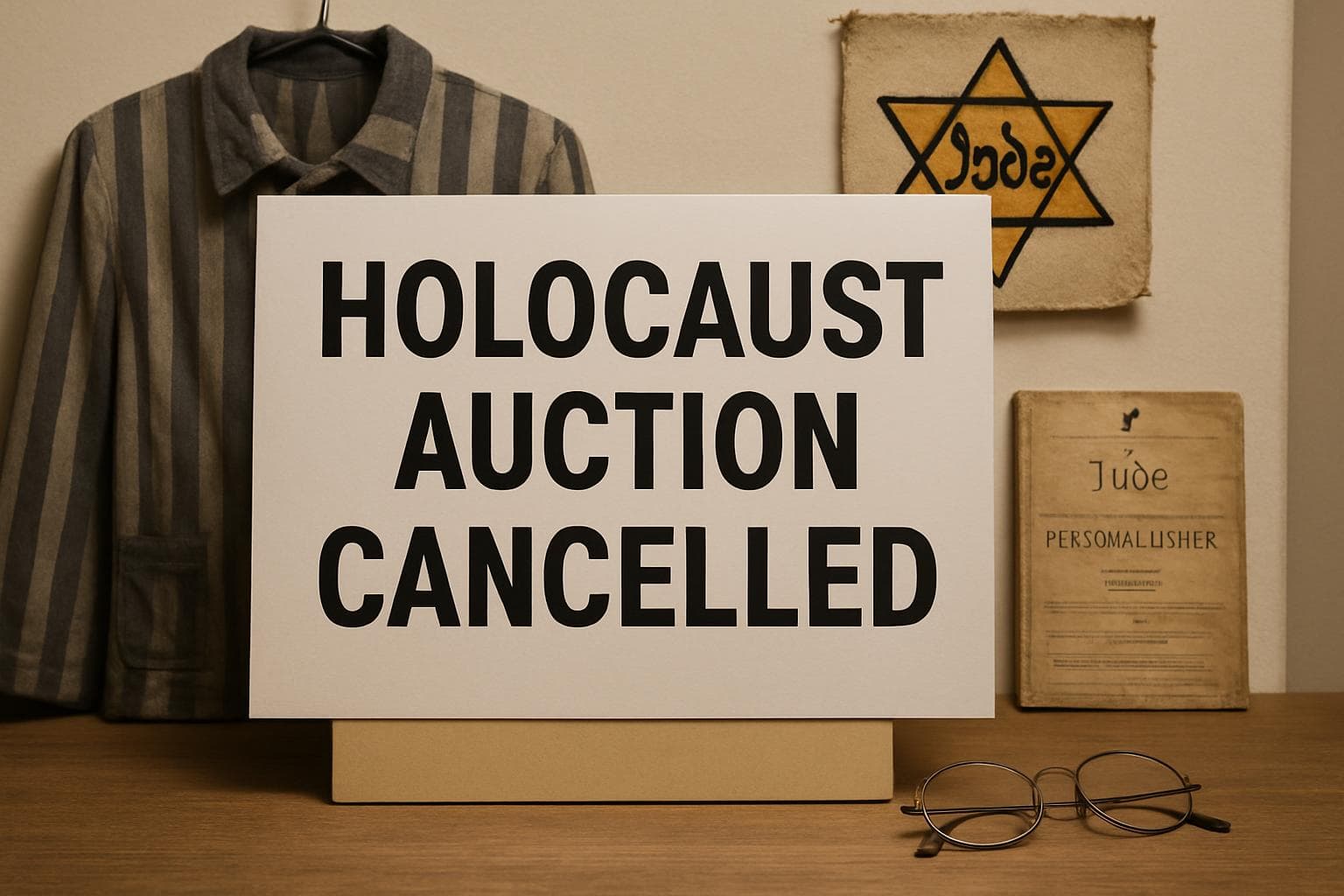
German Auction of Holocaust Artefacts Cancelled Amid Outcry
In This Article
HIGHLIGHTS
- A controversial auction of Holocaust artefacts in Germany was cancelled after public backlash and intervention by Polish and German officials.
- The auction, organized by Auktionshaus Felzmann, included over 600 items, such as letters from Auschwitz prisoners and Gestapo documents.
- Holocaust survivors and advocacy groups condemned the auction as exploitative, urging that such items belong in museums or memorials.
- Polish authorities are investigating the provenance of the artefacts to determine if any should be repatriated to Poland.
- The cancellation highlights ongoing tensions over the commercialization of Holocaust history and the need for respectful preservation.
A planned auction of Holocaust artefacts in Germany has been cancelled following widespread condemnation from Holocaust survivors, advocacy groups, and government officials. The auction, organized by Auktionshaus Felzmann in Neuss, near Düsseldorf, was set to feature over 600 items, including letters from Auschwitz prisoners and Gestapo documents. The cancellation was confirmed by Poland's Deputy Prime Minister, Radoslaw Sikorski, who thanked his German counterpart, Johann Wadephul, for agreeing that "such a scandal must be prevented."
Public Outcry and Official Intervention
The auction faced severe criticism from Holocaust survivors and organizations, who labeled it a "cynical and shameless undertaking." Christoph Heubner, executive vice-president of the International Auschwitz Committee, emphasized that these artefacts, which include personal letters and documents identifying victims by name, should be preserved in museums or memorial exhibitions rather than being sold as commodities. "Their history and the suffering of all those persecuted and murdered by the Nazis is being exploited for commercial gain," Heubner stated.
Cultural Heritage and Legal Concerns
The auction's cancellation has sparked discussions about the ethical handling of Holocaust artefacts. Poland's culture minister, Marta Cienkowska, announced that her ministry would investigate the provenance of the items to determine if any should be returned to Poland. Auschwitz, a symbol of the Nazi genocide, saw the deaths of nearly one million Jews, along with Poles, Roma, and Russian prisoners of war. The artefacts, reportedly from Buchenwald and Auschwitz, are considered by many to be part of a shared cultural heritage that demands respectful preservation.
The Role of Auction Houses
The incident has raised questions about the responsibilities of auction houses in handling sensitive historical items. German State Minister for Culture, Wolfram Weimer, called for measures to prevent similar auctions in the future, asserting that "documents or expert reports by Nazi perpetrators are not for private collections." The auction house has yet to comment on the cancellation or the controversy surrounding the sale.
WHAT THIS MIGHT MEAN
The cancellation of the auction underscores the ongoing debate over the commercialization of Holocaust history and the ethical responsibilities of auction houses. Moving forward, there may be increased calls for international guidelines on the sale and preservation of Holocaust artefacts to ensure they are treated with the dignity they deserve. Legal investigations into the provenance of such items could lead to further repatriations, particularly to countries like Poland, which suffered immense losses during the Holocaust. As awareness grows, auction houses may face heightened scrutiny and pressure to adhere to ethical standards, potentially reshaping the market for historical artefacts.
Related Articles

NHS Faces Joint Surgery Delays Amid Bone Cement Shortage
UK and Allies Accuse Russia of Killing Navalny with Dart Frog Toxin

UK and China Seek Diplomatic Thaw with Trade and Sanctions Breakthroughs

Global Reflections on Holocaust Memorial Day Amid Rising Antisemitism

New UK Entry Rules for Dual Nationals Spark Outcry
Concerns Mount as Abusive Nursery Worker Faces Deportation to Poland
German Auction of Holocaust Artefacts Cancelled Amid Outcry
In This Article
 Ethan Brooks| Published
 HIGHLIGHTS
- A controversial auction of Holocaust artefacts in Germany was cancelled after public backlash and intervention by Polish and German officials.
- The auction, organized by Auktionshaus Felzmann, included over 600 items, such as letters from Auschwitz prisoners and Gestapo documents.
- Holocaust survivors and advocacy groups condemned the auction as exploitative, urging that such items belong in museums or memorials.
- Polish authorities are investigating the provenance of the artefacts to determine if any should be repatriated to Poland.
- The cancellation highlights ongoing tensions over the commercialization of Holocaust history and the need for respectful preservation.
A planned auction of Holocaust artefacts in Germany has been cancelled following widespread condemnation from Holocaust survivors, advocacy groups, and government officials. The auction, organized by Auktionshaus Felzmann in Neuss, near Düsseldorf, was set to feature over 600 items, including letters from Auschwitz prisoners and Gestapo documents. The cancellation was confirmed by Poland's Deputy Prime Minister, Radoslaw Sikorski, who thanked his German counterpart, Johann Wadephul, for agreeing that "such a scandal must be prevented."
Public Outcry and Official Intervention
The auction faced severe criticism from Holocaust survivors and organizations, who labeled it a "cynical and shameless undertaking." Christoph Heubner, executive vice-president of the International Auschwitz Committee, emphasized that these artefacts, which include personal letters and documents identifying victims by name, should be preserved in museums or memorial exhibitions rather than being sold as commodities. "Their history and the suffering of all those persecuted and murdered by the Nazis is being exploited for commercial gain," Heubner stated.
Cultural Heritage and Legal Concerns
The auction's cancellation has sparked discussions about the ethical handling of Holocaust artefacts. Poland's culture minister, Marta Cienkowska, announced that her ministry would investigate the provenance of the items to determine if any should be returned to Poland. Auschwitz, a symbol of the Nazi genocide, saw the deaths of nearly one million Jews, along with Poles, Roma, and Russian prisoners of war. The artefacts, reportedly from Buchenwald and Auschwitz, are considered by many to be part of a shared cultural heritage that demands respectful preservation.
The Role of Auction Houses
The incident has raised questions about the responsibilities of auction houses in handling sensitive historical items. German State Minister for Culture, Wolfram Weimer, called for measures to prevent similar auctions in the future, asserting that "documents or expert reports by Nazi perpetrators are not for private collections." The auction house has yet to comment on the cancellation or the controversy surrounding the sale.
WHAT THIS MIGHT MEAN
The cancellation of the auction underscores the ongoing debate over the commercialization of Holocaust history and the ethical responsibilities of auction houses. Moving forward, there may be increased calls for international guidelines on the sale and preservation of Holocaust artefacts to ensure they are treated with the dignity they deserve. Legal investigations into the provenance of such items could lead to further repatriations, particularly to countries like Poland, which suffered immense losses during the Holocaust. As awareness grows, auction houses may face heightened scrutiny and pressure to adhere to ethical standards, potentially reshaping the market for historical artefacts.
Related Articles
NHS Faces Joint Surgery Delays Amid Bone Cement Shortage
UK and Allies Accuse Russia of Killing Navalny with Dart Frog Toxin
UK and China Seek Diplomatic Thaw with Trade and Sanctions Breakthroughs
Global Reflections on Holocaust Memorial Day Amid Rising Antisemitism
New UK Entry Rules for Dual Nationals Spark Outcry
Concerns Mount as Abusive Nursery Worker Faces Deportation to Poland