
Global Stock Markets Tumble Amid AI Bubble Concerns
In This Article
HIGHLIGHTS
- Global stock markets have sharply declined due to fears of an "AI bubble" and overvalued tech companies.
- Michael Burry, known for predicting the 2008 financial crisis, has bet $1.1 billion against AI-related stocks like Nvidia and Palantir.
- Major indices in Asia, including Japan's Nikkei 225, and the US tech-focused Nasdaq have experienced significant drops.
- Financial analysts warn of a potential market correction, with concerns echoed by major bank executives.
- The decline in tech shares has been exacerbated by skepticism over the sustainability of AI investments.
Global stock markets have experienced a significant downturn as fears mount over the sustainability of the current boom in artificial intelligence (AI) company valuations. Investors are increasingly wary of what some are calling an "AI bubble," leading to sharp declines in technology shares across major indices in the US, Asia, and Europe.
AI Bubble Fears Trigger Market Decline
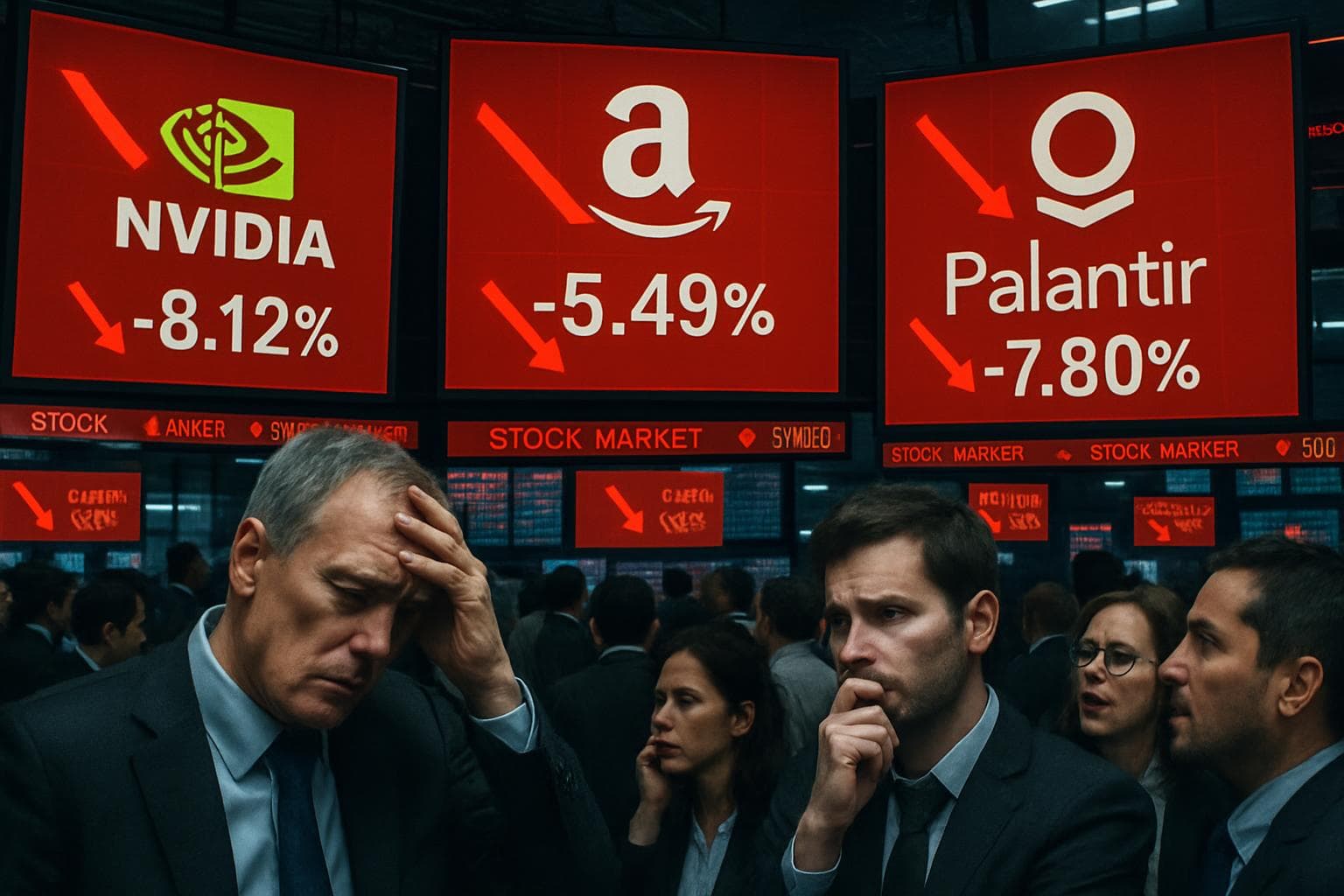
The tech-heavy Nasdaq and the S&P 500 in the United States suffered their largest one-day percentage drops in nearly a month, with the Nasdaq closing 2% lower. This decline was driven by falls in the "magnificent seven" AI-related stocks, including Nvidia, Amazon, and Palantir. The latter saw its shares slump by almost 8%, despite having raised its revenue outlook just a day earlier.
In Asia, Japan's Nikkei 225 index closed down 2.5%, heavily impacted by a more than 10% drop in SoftBank shares. South Korea's Kospi index also fell by 2.85%, while TSMC, a major semiconductor manufacturer for Nvidia, saw its shares decrease by nearly 3%.
Michael Burry's Bold Bet Against AI Stocks
Hedge fund investor Michael Burry, who gained fame for predicting the 2008 financial crisis, has placed a $1.1 billion bet against AI-linked companies Nvidia and Palantir. Burry's move has sparked criticism from industry leaders like Palantir's CEO, Alex Karp, who accused short-sellers of undermining the AI revolution.
Warnings of a Market Correction
Financial analysts and bank executives have voiced concerns about a potential market correction. Jamie Dimon, CEO of JP Morgan Chase, warned of a possible market crash within the next six months to two years. Similarly, Morgan Stanley and Goldman Sachs executives have cautioned about the risks of overvaluation in tech stocks.
Global Impact and Investor Sentiment
The ripple effect of these concerns has been felt worldwide, with European markets in the UK, France, and Germany also experiencing declines. Analysts like Jim Reid from Deutsche Bank have noted a growing consensus on the likelihood of an equity correction, as investors question the long-term viability of AI-driven market gains.
WHAT THIS MIGHT MEAN
The current market volatility raises questions about the future trajectory of AI-related stocks and the broader tech sector. If the perceived "AI bubble" continues to deflate, we could see a prolonged period of market correction, impacting investor confidence and potentially leading to tighter financial conditions. On the other hand, if AI companies can demonstrate sustainable growth and profitability, it may stabilize market sentiment. Experts suggest that investors should remain cautious, closely monitoring developments in AI technology and its real-world applications to assess long-term investment risks.
Related Articles
Middle East Conflict Drives UK Energy Prices to New Highs
US Supreme Court Ruling Sparks Trade Uncertainty in Asia and Beyond
Trump's New Tariff Strategy Sparks Global Trade Uncertainty

Canada and Australia Forge Strategic Partnership Amid Global Uncertainty

Tech Giants Pledge to Cover AI Data Center Energy Costs Amid Rising Electricity Concerns

UK Government to Reform Asylum Seeker Support and Employment Policies
Global Stock Markets Tumble Amid AI Bubble Concerns
In This Article
 Daniel Rivera| Published
 HIGHLIGHTS
- Global stock markets have sharply declined due to fears of an "AI bubble" and overvalued tech companies.
- Michael Burry, known for predicting the 2008 financial crisis, has bet $1.1 billion against AI-related stocks like Nvidia and Palantir.
- Major indices in Asia, including Japan's Nikkei 225, and the US tech-focused Nasdaq have experienced significant drops.
- Financial analysts warn of a potential market correction, with concerns echoed by major bank executives.
- The decline in tech shares has been exacerbated by skepticism over the sustainability of AI investments.
Global stock markets have experienced a significant downturn as fears mount over the sustainability of the current boom in artificial intelligence (AI) company valuations. Investors are increasingly wary of what some are calling an "AI bubble," leading to sharp declines in technology shares across major indices in the US, Asia, and Europe.
AI Bubble Fears Trigger Market Decline
The tech-heavy Nasdaq and the S&P 500 in the United States suffered their largest one-day percentage drops in nearly a month, with the Nasdaq closing 2% lower. This decline was driven by falls in the "magnificent seven" AI-related stocks, including Nvidia, Amazon, and Palantir. The latter saw its shares slump by almost 8%, despite having raised its revenue outlook just a day earlier.
In Asia, Japan's Nikkei 225 index closed down 2.5%, heavily impacted by a more than 10% drop in SoftBank shares. South Korea's Kospi index also fell by 2.85%, while TSMC, a major semiconductor manufacturer for Nvidia, saw its shares decrease by nearly 3%.
Michael Burry's Bold Bet Against AI Stocks
Hedge fund investor Michael Burry, who gained fame for predicting the 2008 financial crisis, has placed a $1.1 billion bet against AI-linked companies Nvidia and Palantir. Burry's move has sparked criticism from industry leaders like Palantir's CEO, Alex Karp, who accused short-sellers of undermining the AI revolution.
Warnings of a Market Correction
Financial analysts and bank executives have voiced concerns about a potential market correction. Jamie Dimon, CEO of JP Morgan Chase, warned of a possible market crash within the next six months to two years. Similarly, Morgan Stanley and Goldman Sachs executives have cautioned about the risks of overvaluation in tech stocks.
Global Impact and Investor Sentiment
The ripple effect of these concerns has been felt worldwide, with European markets in the UK, France, and Germany also experiencing declines. Analysts like Jim Reid from Deutsche Bank have noted a growing consensus on the likelihood of an equity correction, as investors question the long-term viability of AI-driven market gains.
WHAT THIS MIGHT MEAN
The current market volatility raises questions about the future trajectory of AI-related stocks and the broader tech sector. If the perceived "AI bubble" continues to deflate, we could see a prolonged period of market correction, impacting investor confidence and potentially leading to tighter financial conditions. On the other hand, if AI companies can demonstrate sustainable growth and profitability, it may stabilize market sentiment. Experts suggest that investors should remain cautious, closely monitoring developments in AI technology and its real-world applications to assess long-term investment risks.
Related Articles
Middle East Conflict Drives UK Energy Prices to New Highs
US Supreme Court Ruling Sparks Trade Uncertainty in Asia and Beyond
Trump's New Tariff Strategy Sparks Global Trade Uncertainty
Canada and Australia Forge Strategic Partnership Amid Global Uncertainty
Tech Giants Pledge to Cover AI Data Center Energy Costs Amid Rising Electricity Concerns
UK Government to Reform Asylum Seeker Support and Employment Policies