
Grand Jury Declines to Indict Letitia James on Mortgage Fraud Charges Again
In This Article
HIGHLIGHTS
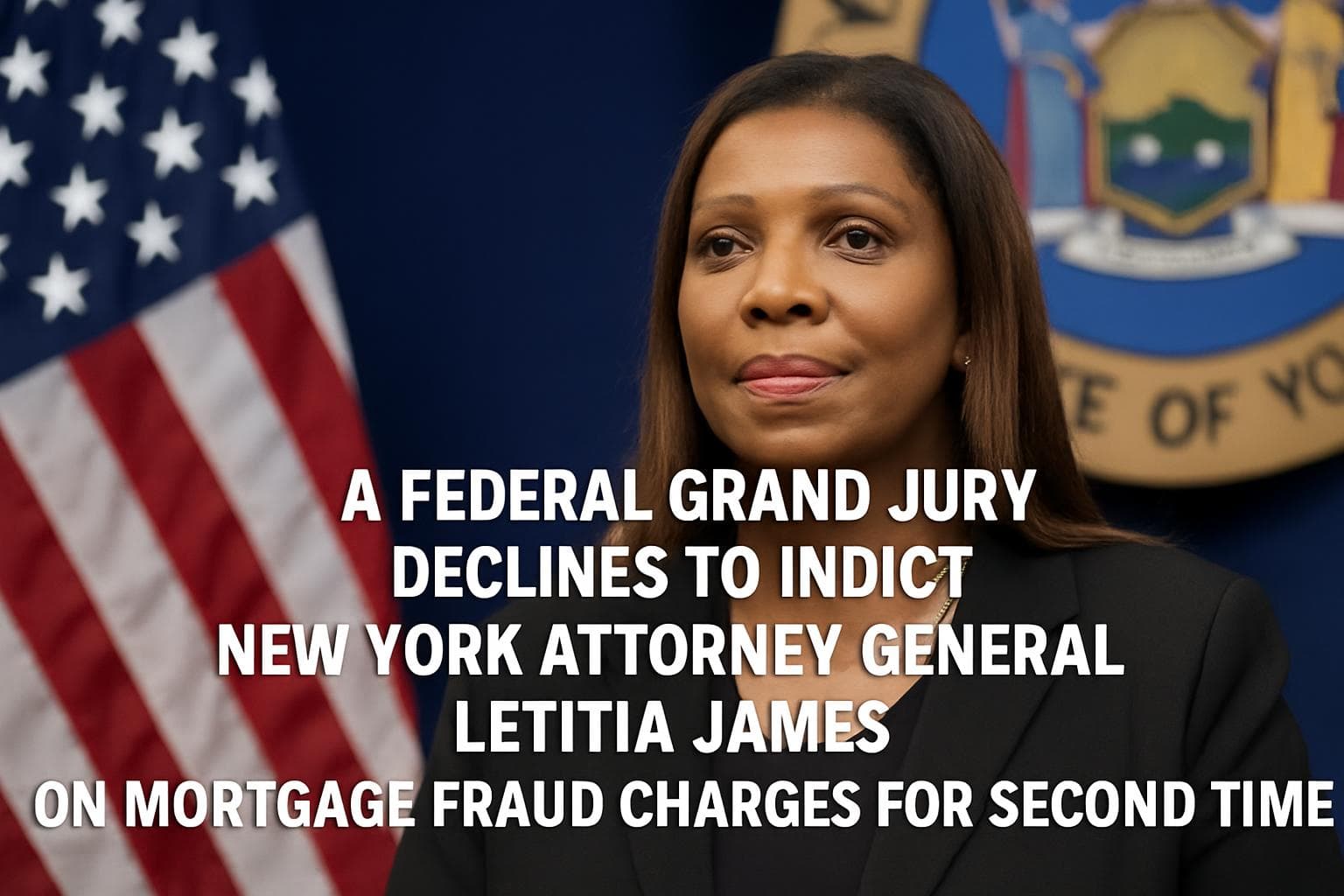
- A federal grand jury has declined to indict New York Attorney General Letitia James on mortgage fraud charges for the second time in a week.
- The case against James, seen as politically motivated, was initially dismissed due to the improper appointment of a prosecutor by the Trump administration.
- James was accused of bank fraud for allegedly misrepresenting a property purchase in Norfolk, Virginia, as a secondary residence.
- Legal experts and James' lawyer argue the charges lack sufficient evidence and criticize the Department of Justice's integrity.
- The Justice Department has not commented on the grand jury's decision, which is notably rare in federal cases.
In a significant legal development, a federal grand jury has once more declined to indict New York Attorney General Letitia James on charges of mortgage fraud. This marks the second time within a week that such charges have been dismissed, dealing a blow to the Trump administration's efforts to prosecute one of its political adversaries.
Background of the Case
The allegations against James stem from a property purchase in Norfolk, Virginia, where she was accused of bank fraud and making false statements by claiming the home as a secondary residence. Prosecutors argued that this misrepresentation allowed her to secure favorable loan terms. However, James has consistently denied any wrongdoing, and legal experts have described the allegations as insubstantial.
Political Context and Legal Proceedings
The case has been mired in controversy, with accusations of political motivation. A judge previously dismissed the charges after ruling that the prosecutor, appointed by the Trump administration, was not legally in the position. Despite this, the Department of Justice attempted to refile the charges, only to face rejection from grand juries in both Norfolk and Alexandria, Virginia.
Reactions and Implications
James' lawyer, Abbe Lowell, has criticized the Department of Justice for pursuing what he describes as a politically driven vendetta, stating that the case has tarnished the department's reputation. The Justice Department has yet to comment on the grand jury's decision, which is notably rare, as grand juries typically indict in the majority of cases presented to them.
WHAT THIS MIGHT MEAN
The repeated refusal of grand juries to indict Letitia James raises questions about the future of the case and the motivations behind it. Legal experts suggest that the Department of Justice may face increased scrutiny over its handling of politically sensitive cases, particularly those involving high-profile figures like James. If the department chooses to pursue the charges further, it may need to present new evidence or risk further damage to its credibility.
Politically, the case highlights ongoing tensions between the Trump administration and its perceived adversaries. As the legal proceedings unfold, they may influence public perception of the justice system's impartiality and the extent to which political motivations can impact legal actions.
Related Articles
Trump Administration Sues Harvard Over Alleged Non-Compliance in Admissions Investigation

Arrest of Andrew Mountbatten-Windsor Captured in Iconic Photograph
Andrew Mountbatten-Windsor's Arrest Sparks International Calls for Justice
Andrew Mountbatten-Windsor Arrested Amid Misconduct Allegations

Andrew Mountbatten-Windsor Arrested: A Royal Scandal Unfolds
Clintons to Testify as Epstein Files Spark Allegations of Cover-Up
Grand Jury Declines to Indict Letitia James on Mortgage Fraud Charges Again
In This Article
 Sofia Romano| Published
 HIGHLIGHTS
- A federal grand jury has declined to indict New York Attorney General Letitia James on mortgage fraud charges for the second time in a week.
- The case against James, seen as politically motivated, was initially dismissed due to the improper appointment of a prosecutor by the Trump administration.
- James was accused of bank fraud for allegedly misrepresenting a property purchase in Norfolk, Virginia, as a secondary residence.
- Legal experts and James' lawyer argue the charges lack sufficient evidence and criticize the Department of Justice's integrity.
- The Justice Department has not commented on the grand jury's decision, which is notably rare in federal cases.
In a significant legal development, a federal grand jury has once more declined to indict New York Attorney General Letitia James on charges of mortgage fraud. This marks the second time within a week that such charges have been dismissed, dealing a blow to the Trump administration's efforts to prosecute one of its political adversaries.
Background of the Case
The allegations against James stem from a property purchase in Norfolk, Virginia, where she was accused of bank fraud and making false statements by claiming the home as a secondary residence. Prosecutors argued that this misrepresentation allowed her to secure favorable loan terms. However, James has consistently denied any wrongdoing, and legal experts have described the allegations as insubstantial.
Political Context and Legal Proceedings
The case has been mired in controversy, with accusations of political motivation. A judge previously dismissed the charges after ruling that the prosecutor, appointed by the Trump administration, was not legally in the position. Despite this, the Department of Justice attempted to refile the charges, only to face rejection from grand juries in both Norfolk and Alexandria, Virginia.
Reactions and Implications
James' lawyer, Abbe Lowell, has criticized the Department of Justice for pursuing what he describes as a politically driven vendetta, stating that the case has tarnished the department's reputation. The Justice Department has yet to comment on the grand jury's decision, which is notably rare, as grand juries typically indict in the majority of cases presented to them.
WHAT THIS MIGHT MEAN
The repeated refusal of grand juries to indict Letitia James raises questions about the future of the case and the motivations behind it. Legal experts suggest that the Department of Justice may face increased scrutiny over its handling of politically sensitive cases, particularly those involving high-profile figures like James. If the department chooses to pursue the charges further, it may need to present new evidence or risk further damage to its credibility.
Politically, the case highlights ongoing tensions between the Trump administration and its perceived adversaries. As the legal proceedings unfold, they may influence public perception of the justice system's impartiality and the extent to which political motivations can impact legal actions.
Related Articles
Trump Administration Sues Harvard Over Alleged Non-Compliance in Admissions Investigation
Arrest of Andrew Mountbatten-Windsor Captured in Iconic Photograph
Andrew Mountbatten-Windsor's Arrest Sparks International Calls for Justice
Andrew Mountbatten-Windsor Arrested Amid Misconduct Allegations
Andrew Mountbatten-Windsor Arrested: A Royal Scandal Unfolds
Clintons to Testify as Epstein Files Spark Allegations of Cover-Up