
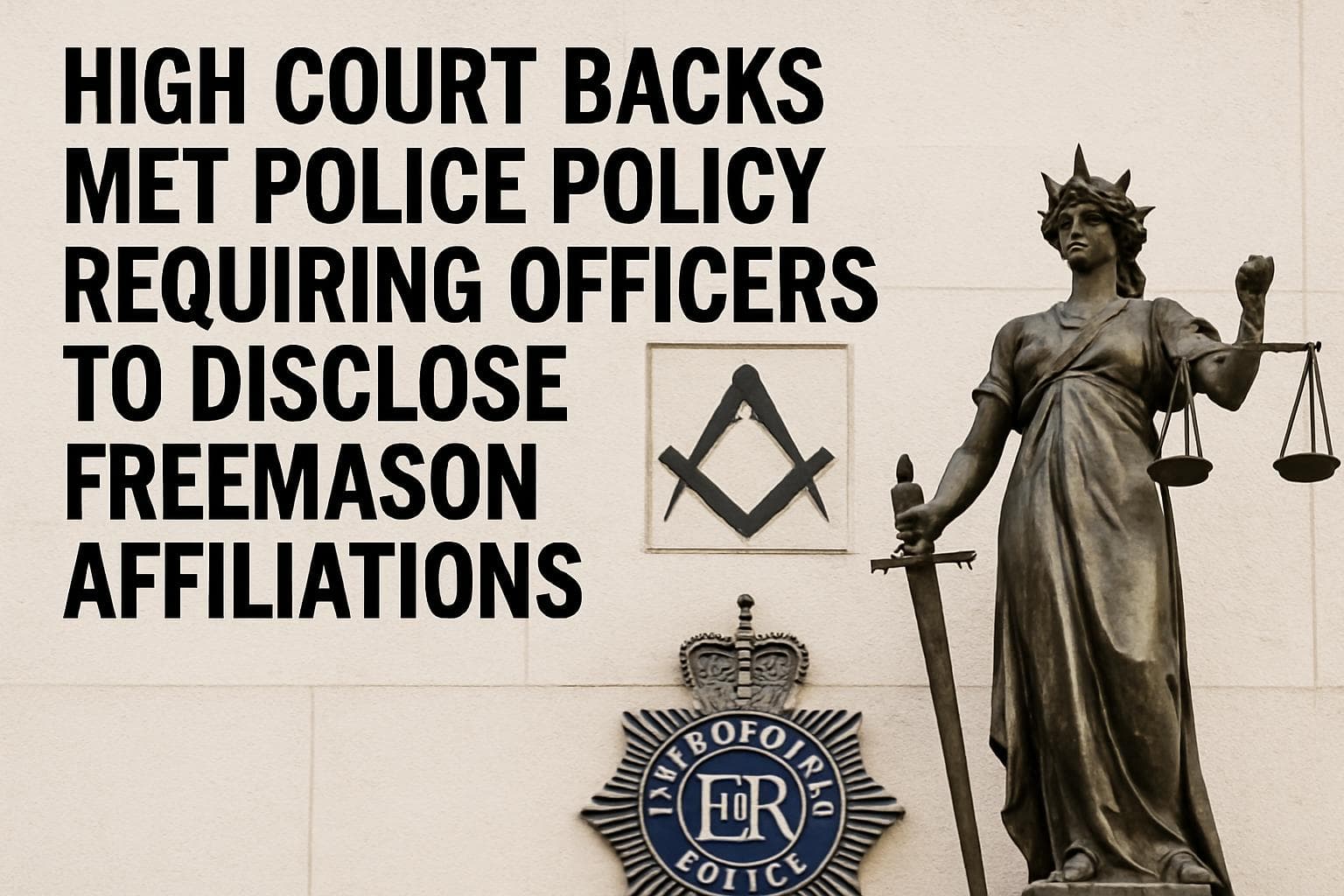
High Court Upholds Met Police's Freemasons Disclosure Policy
In This Article
HIGHLIGHTS
- The High Court dismissed a legal challenge by Freemasons against the Metropolitan Police's policy requiring officers to declare membership in secretive organizations.
- Mr Justice Chamberlain ruled the policy as lawful and proportionate, aimed at maintaining public trust in policing.
- The policy mandates disclosure of membership in organizations with confidential structures, impacting around 400 Met officers and staff.
- Freemasons argued the policy violated privacy and equality rights, but the court found these claims not "reasonably arguable."
- The Met asserts the policy prevents potential bias and conflicts of loyalty, enhancing transparency and trust.
In a significant ruling, the High Court has upheld the Metropolitan Police's policy requiring officers to declare membership in organizations like the Freemasons, dismissing a legal challenge that claimed the policy infringed on human rights. Mr Justice Chamberlain ruled that the policy serves a legitimate aim of maintaining public trust in policing and is proportionate.
Background and Legal Challenge
The legal challenge was initiated by three Freemason bodies and two serving police officers, who argued that the policy breached privacy rights and was discriminatory under equality laws. The policy, introduced in December, requires officers and staff to declare membership in any organization with confidential membership and hierarchical structures. This move was part of the Met's effort to enhance transparency and prevent potential conflicts of interest.
Court's Rationale
In a detailed 17-page ruling, Mr Justice Chamberlain stated that the grounds for the legal challenge were not "reasonably arguable." He emphasized that the policy is designed to eliminate both actual and perceived bias, ensuring that officers discharge their duties without improper influence. The court found that the policy was neither discriminatory nor unduly stigmatizing against Freemasons.
Met's Position and Response
Commander Simon Messinger, representing the Met, welcomed the judgment, stating that the policy change was driven by concerns over impartiality and conflicts of loyalty. He highlighted the importance of maintaining public trust, asserting that the policy prioritizes transparency over organizational secrecy. The Met reported that around 400 officers and staff have already made declarations under the new policy.
Freemasons' Perspective
Adrian Marsh, grand secretary of the United Grand Lodge of England, expressed disappointment with the ruling, maintaining that the policy discriminates against Freemasons. He argued that the policy does not contribute to the Met's mandate of building public trust and reducing crime. Despite the setback, the Freemasons continue to advocate for their members' rights.
WHAT THIS MIGHT MEAN
The High Court's decision reinforces the Metropolitan Police's commitment to transparency and public trust, setting a precedent for similar policies in other organizations. While the ruling may face criticism from privacy advocates, it underscores the balance between individual rights and public interest. Moving forward, the Met may continue to refine its policies to address concerns while ensuring accountability. Legal experts suggest that this case could influence future debates on privacy and transparency within public institutions.
Related Articles
High Court Rules Palestine Action Ban Unlawful, Government to Appeal
UK Police Intensify Investigation into Andrew Mountbatten-Windsor Amid Misconduct Allegations
Prince Andrew's Arrest Raises Questions About Royal Succession and Monarchy's Future
Noel Clarke Arrested Over 2007 Attempted Rape Allegation
Allegations of Unlawful Reporting Methods in Stephen Lawrence Case Denied by Ex-Daily Mail Reporter
Mountbatten-Windsor Under Scrutiny Amid Epstein Scandal Allegations
High Court Upholds Met Police's Freemasons Disclosure Policy
In This Article
 Sofia Romano| Published
 HIGHLIGHTS
- The High Court dismissed a legal challenge by Freemasons against the Metropolitan Police's policy requiring officers to declare membership in secretive organizations.
- Mr Justice Chamberlain ruled the policy as lawful and proportionate, aimed at maintaining public trust in policing.
- The policy mandates disclosure of membership in organizations with confidential structures, impacting around 400 Met officers and staff.
- Freemasons argued the policy violated privacy and equality rights, but the court found these claims not "reasonably arguable."
- The Met asserts the policy prevents potential bias and conflicts of loyalty, enhancing transparency and trust.
In a significant ruling, the High Court has upheld the Metropolitan Police's policy requiring officers to declare membership in organizations like the Freemasons, dismissing a legal challenge that claimed the policy infringed on human rights. Mr Justice Chamberlain ruled that the policy serves a legitimate aim of maintaining public trust in policing and is proportionate.
Background and Legal Challenge
The legal challenge was initiated by three Freemason bodies and two serving police officers, who argued that the policy breached privacy rights and was discriminatory under equality laws. The policy, introduced in December, requires officers and staff to declare membership in any organization with confidential membership and hierarchical structures. This move was part of the Met's effort to enhance transparency and prevent potential conflicts of interest.
Court's Rationale
In a detailed 17-page ruling, Mr Justice Chamberlain stated that the grounds for the legal challenge were not "reasonably arguable." He emphasized that the policy is designed to eliminate both actual and perceived bias, ensuring that officers discharge their duties without improper influence. The court found that the policy was neither discriminatory nor unduly stigmatizing against Freemasons.
Met's Position and Response
Commander Simon Messinger, representing the Met, welcomed the judgment, stating that the policy change was driven by concerns over impartiality and conflicts of loyalty. He highlighted the importance of maintaining public trust, asserting that the policy prioritizes transparency over organizational secrecy. The Met reported that around 400 officers and staff have already made declarations under the new policy.
Freemasons' Perspective
Adrian Marsh, grand secretary of the United Grand Lodge of England, expressed disappointment with the ruling, maintaining that the policy discriminates against Freemasons. He argued that the policy does not contribute to the Met's mandate of building public trust and reducing crime. Despite the setback, the Freemasons continue to advocate for their members' rights.
WHAT THIS MIGHT MEAN
The High Court's decision reinforces the Metropolitan Police's commitment to transparency and public trust, setting a precedent for similar policies in other organizations. While the ruling may face criticism from privacy advocates, it underscores the balance between individual rights and public interest. Moving forward, the Met may continue to refine its policies to address concerns while ensuring accountability. Legal experts suggest that this case could influence future debates on privacy and transparency within public institutions.
Related Articles
High Court Rules Palestine Action Ban Unlawful, Government to Appeal
UK Police Intensify Investigation into Andrew Mountbatten-Windsor Amid Misconduct Allegations
Prince Andrew's Arrest Raises Questions About Royal Succession and Monarchy's Future
Noel Clarke Arrested Over 2007 Attempted Rape Allegation
Allegations of Unlawful Reporting Methods in Stephen Lawrence Case Denied by Ex-Daily Mail Reporter
Mountbatten-Windsor Under Scrutiny Amid Epstein Scandal Allegations