
HS2's Longest Tunnel Completed Amidst Ongoing Challenges
In This Article
HIGHLIGHTS
- Construction of HS2's longest tunnel under the Chiltern Hills is complete, featuring extensions to prevent sonic booms.
- The 10-mile tunnel is part of the HS2 project, aiming to connect London and Birmingham via high-speed rail.
- HS2 Ltd acknowledges significant work remains on the 140-mile route, with costs potentially reaching £66bn.
- The project has faced delays and cost overruns, with the completion date now uncertain.
- The Chiltern tunnel's construction involved innovative engineering solutions, including ventilation shafts for safety and environmental considerations.
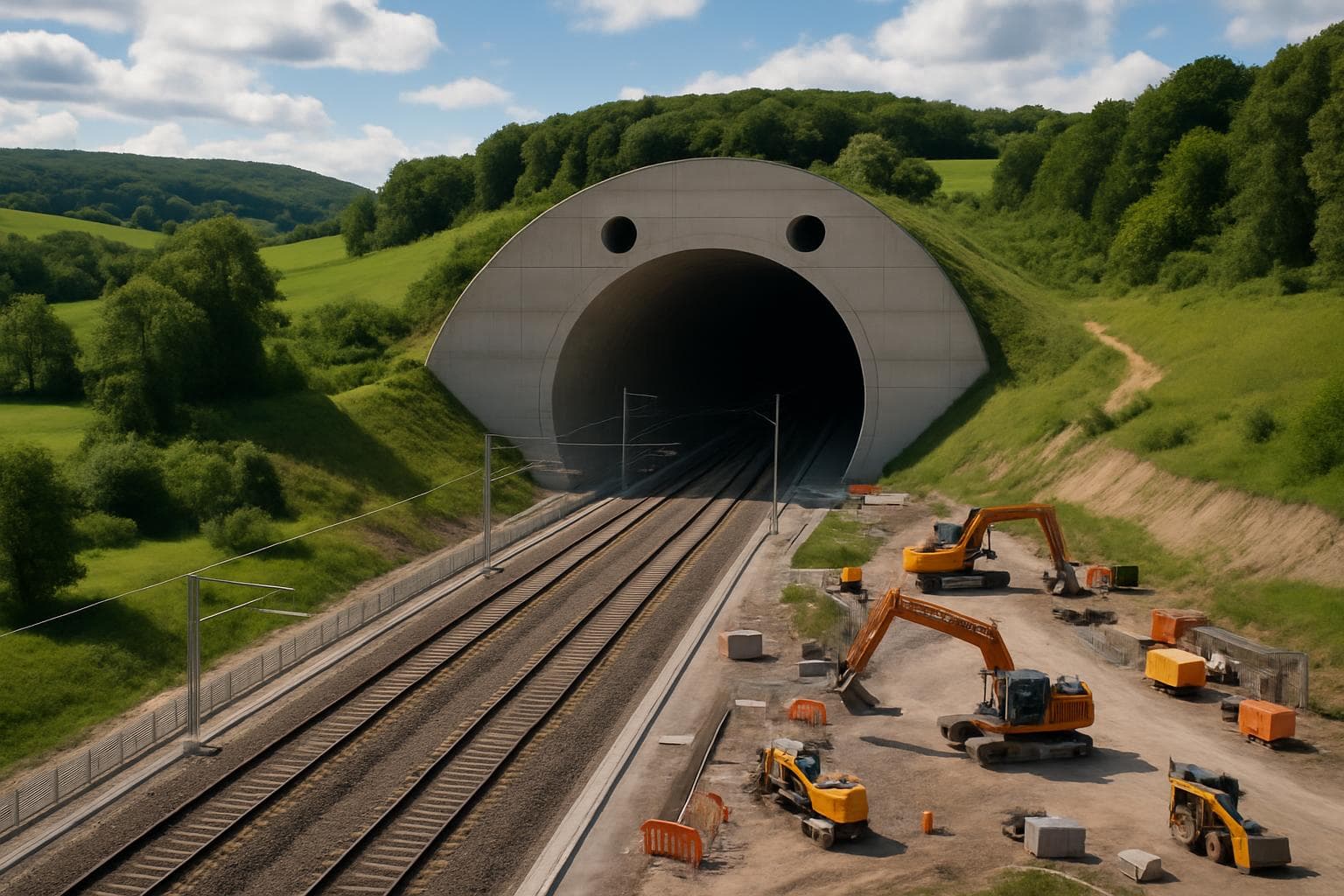
The construction of the longest tunnel for the HS2 project, running beneath the Chiltern Hills, has been completed, marking a significant milestone in the ambitious high-speed rail initiative. This 10-mile (16km) tunnel, designed to connect London and Birmingham, features innovative engineering solutions, including extensions with ventilation holes to prevent sonic booms as trains travel at speeds of up to 200mph (322km/h).
Engineering Feats and Environmental Considerations
The Chiltern tunnel, a key component of the HS2 project, showcases advanced engineering techniques. The tunnel includes 220-meter-long extensions with ventilation holes to mitigate the risk of sonic booms, a phenomenon first observed in Japan's Shinkansen trains. The construction involved two boring machines, which began their work in May and June 2021 and completed the tunneling in early 2024. The project also includes five ventilation and access shafts, reaching depths of up to 78 meters, and 40 passages linking the two tunnels for emergency access.
Challenges and Delays
Despite the completion of this major section, the HS2 project continues to face significant challenges. Originally planned to extend from London to Birmingham and further to Manchester and Leeds, the project has been scaled back due to rising costs. The estimated cost for the London to Birmingham line alone could reach £66bn, and the completion date remains uncertain, with previous targets of 2026 and 2029-2033 now deemed unachievable.
Community Impact and Future Prospects
The construction has not been without controversy, particularly concerning its impact on local communities and the environment. Efforts have been made to mitigate these effects, such as rerouting work traffic and using excavated earth to create calcareous grassland, a rare habitat. Mark Clapp, HS2 Ltd's head of civil engineering, praised the dedication of those involved, stating their work will "stand the test of time."
WHAT THIS MIGHT MEAN
As the HS2 project progresses, the focus will likely shift to addressing the remaining construction challenges and managing costs. The completion of the Chiltern tunnel is a positive step, but the broader project still faces scrutiny over its financial viability and environmental impact. Future developments will depend on securing additional funding and political support, as well as overcoming logistical hurdles. The project's success could set a precedent for future infrastructure projects in the UK, potentially influencing public and governmental attitudes towards large-scale engineering endeavors.
Related Articles

Arrest of Andrew Mountbatten-Windsor Captured in Iconic Photograph

Breakthrough Drug Offers Hope for Children with Severe Epilepsy

Labour MP's Husband Arrested in UK-China Espionage Probe

Bafta Film Awards 2023: A Night of Glamour, Talent, and Fashion Statements

US Supreme Court Ruling Sparks Trade Uncertainty in Asia and Beyond

Trump's New Tariff Strategy Sparks Global Trade Uncertainty
HS2's Longest Tunnel Completed Amidst Ongoing Challenges
In This Article
 Leila Hassan| Published
 HIGHLIGHTS
- Construction of HS2's longest tunnel under the Chiltern Hills is complete, featuring extensions to prevent sonic booms.
- The 10-mile tunnel is part of the HS2 project, aiming to connect London and Birmingham via high-speed rail.
- HS2 Ltd acknowledges significant work remains on the 140-mile route, with costs potentially reaching £66bn.
- The project has faced delays and cost overruns, with the completion date now uncertain.
- The Chiltern tunnel's construction involved innovative engineering solutions, including ventilation shafts for safety and environmental considerations.
The construction of the longest tunnel for the HS2 project, running beneath the Chiltern Hills, has been completed, marking a significant milestone in the ambitious high-speed rail initiative. This 10-mile (16km) tunnel, designed to connect London and Birmingham, features innovative engineering solutions, including extensions with ventilation holes to prevent sonic booms as trains travel at speeds of up to 200mph (322km/h).
Engineering Feats and Environmental Considerations
The Chiltern tunnel, a key component of the HS2 project, showcases advanced engineering techniques. The tunnel includes 220-meter-long extensions with ventilation holes to mitigate the risk of sonic booms, a phenomenon first observed in Japan's Shinkansen trains. The construction involved two boring machines, which began their work in May and June 2021 and completed the tunneling in early 2024. The project also includes five ventilation and access shafts, reaching depths of up to 78 meters, and 40 passages linking the two tunnels for emergency access.
Challenges and Delays
Despite the completion of this major section, the HS2 project continues to face significant challenges. Originally planned to extend from London to Birmingham and further to Manchester and Leeds, the project has been scaled back due to rising costs. The estimated cost for the London to Birmingham line alone could reach £66bn, and the completion date remains uncertain, with previous targets of 2026 and 2029-2033 now deemed unachievable.
Community Impact and Future Prospects
The construction has not been without controversy, particularly concerning its impact on local communities and the environment. Efforts have been made to mitigate these effects, such as rerouting work traffic and using excavated earth to create calcareous grassland, a rare habitat. Mark Clapp, HS2 Ltd's head of civil engineering, praised the dedication of those involved, stating their work will "stand the test of time."
WHAT THIS MIGHT MEAN
As the HS2 project progresses, the focus will likely shift to addressing the remaining construction challenges and managing costs. The completion of the Chiltern tunnel is a positive step, but the broader project still faces scrutiny over its financial viability and environmental impact. Future developments will depend on securing additional funding and political support, as well as overcoming logistical hurdles. The project's success could set a precedent for future infrastructure projects in the UK, potentially influencing public and governmental attitudes towards large-scale engineering endeavors.
Related Articles
Arrest of Andrew Mountbatten-Windsor Captured in Iconic Photograph
Breakthrough Drug Offers Hope for Children with Severe Epilepsy
Labour MP's Husband Arrested in UK-China Espionage Probe
Bafta Film Awards 2023: A Night of Glamour, Talent, and Fashion Statements
US Supreme Court Ruling Sparks Trade Uncertainty in Asia and Beyond
Trump's New Tariff Strategy Sparks Global Trade Uncertainty