
India's Triumph in Controversial Champions Trophy Raises Questions About Cricket's Future
In This Article
HIGHLIGHTS
- India clinched the 2025 Champions Trophy in Dubai, defeating New Zealand by four wickets, solidifying their dominance in international cricket.
- The tournament faced criticism for perceived advantages given to India, including playing all matches in one city, while other teams traveled extensively.
- The International Cricket Council (ICC) faced challenges balancing India's market influence with fair competition, as India refused to play in Pakistan.
- Despite the controversy, India's cricket team showcased exceptional skill, with key performances from Rohit Sharma and KL Rahul.
- The tournament's organization and scheduling issues raised concerns about the future of international cricket events and potential audience apathy.
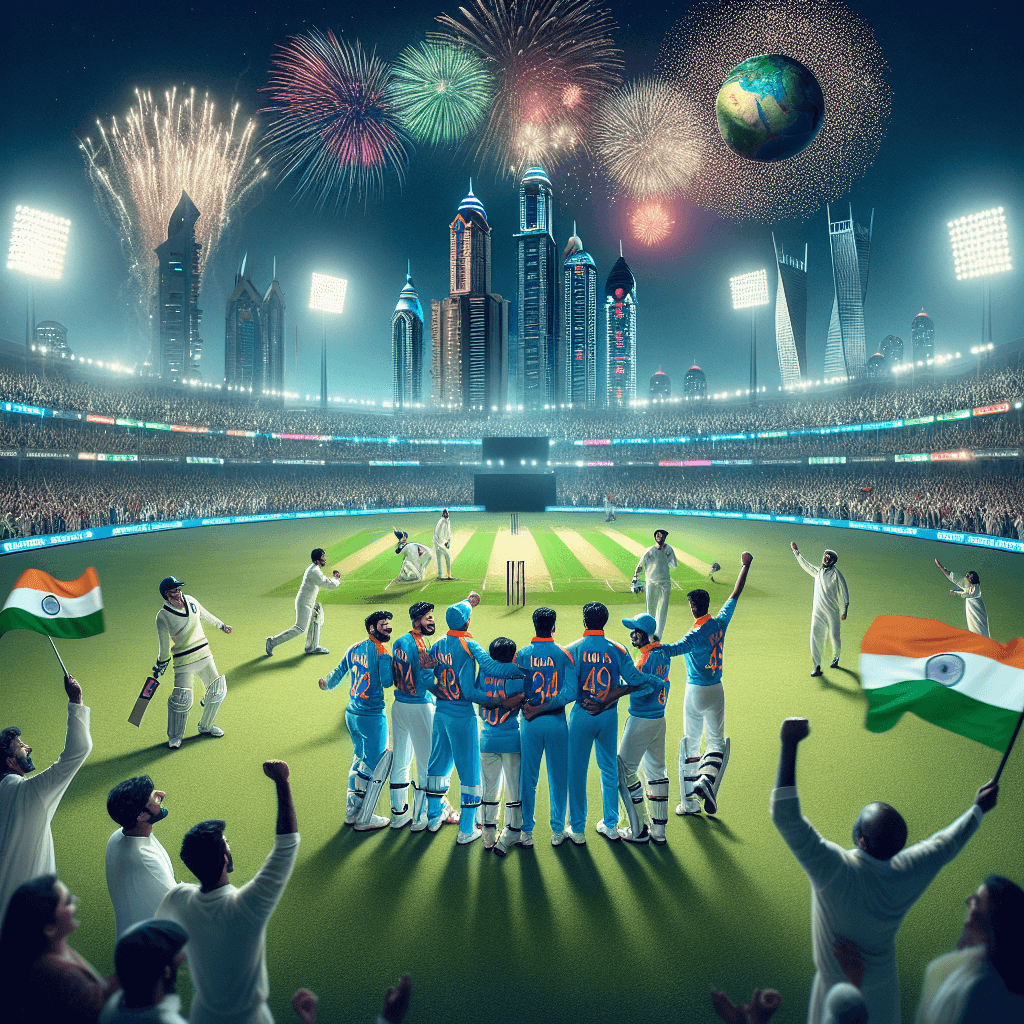
India emerged victorious in the 2025 Champions Trophy, defeating New Zealand by four wickets in a tense final held at the Dubai International Stadium. This victory further cements India's position as a powerhouse in international cricket, following their T20 World Cup win last June. However, the tournament was overshadowed by controversies surrounding India's perceived advantages and the broader implications for the sport's future.
Tournament Controversy and India's Advantage
The Champions Trophy, originally set to conclude in Pakistan, was relocated to Dubai due to India's refusal to play in Pakistan. This decision by the International Cricket Council (ICC) allowed India to play all their matches in one city, while other teams, like New Zealand, traveled over 7,000 kilometers throughout the tournament. Critics argue that this arrangement favored India, with South Africa's David Miller openly supporting New Zealand in the final as a form of protest.
Despite these controversies, India's players demonstrated remarkable skill and composure. Rohit Sharma's brisk 76 runs and KL Rahul's steady finish were pivotal in chasing down New Zealand's target of 252. The Indian team's spin attack, led by Kuldeep Yadav and Ravindra Jadeja, played a crucial role in restricting New Zealand's scoring opportunities.
Organizational Challenges and Future Implications
The ICC faced significant challenges in organizing the tournament, balancing India's market influence with the need for fair competition. The tournament's chaotic scheduling, confirmed just 57 days before it began, and the lack of media presence from other cricketing nations, highlighted concerns about the sport's future. The absence of written journalists from semi-finalist countries like Australia and South Africa raised questions about the tournament's global appeal.
Despite these issues, the quality of cricket on display was undeniable. Individual performances, such as Josh Inglis' century against England and Azmatullah Omarzai's all-round display, showcased the talent present in international cricket. However, the frequent scheduling of ICC events, with a major tournament every year until 2031, risks audience fatigue and apathy.
WHAT THIS MIGHT MEAN
Looking ahead, the ICC faces a critical juncture in addressing the balance between commercial interests and maintaining the integrity of international cricket. The upcoming women's World Cup and men's T20 World Cup, both hosted in India, will test the ICC's ability to ensure fair competition amidst geopolitical tensions. Experts suggest that the ICC must prioritize transparent scheduling and equitable conditions to preserve the sport's global appeal and prevent further controversies. As cricket continues to evolve, the governing bodies must navigate these challenges to sustain the sport's growth and popularity worldwide.
Related Articles

Canada and Australia Forge Strategic Partnership Amid Global Uncertainty
Canada Calls for De-escalation Amid US-Israel Strikes on Iran

Trump's New Tariff Strategy Sparks Global Trade Uncertainty

Sisters Tragically Drown at Eryri National Park's Watkin Path
Iran Postpones Khamenei Funeral Amid Escalating US-Israeli Strikes

Saharan Dust to Illuminate UK Skies with Vivid Sunrises and Sunsets
India's Triumph in Controversial Champions Trophy Raises Questions About Cricket's Future
In This Article
 Marcus Blake| Published
 HIGHLIGHTS
- India clinched the 2025 Champions Trophy in Dubai, defeating New Zealand by four wickets, solidifying their dominance in international cricket.
- The tournament faced criticism for perceived advantages given to India, including playing all matches in one city, while other teams traveled extensively.
- The International Cricket Council (ICC) faced challenges balancing India's market influence with fair competition, as India refused to play in Pakistan.
- Despite the controversy, India's cricket team showcased exceptional skill, with key performances from Rohit Sharma and KL Rahul.
- The tournament's organization and scheduling issues raised concerns about the future of international cricket events and potential audience apathy.
India emerged victorious in the 2025 Champions Trophy, defeating New Zealand by four wickets in a tense final held at the Dubai International Stadium. This victory further cements India's position as a powerhouse in international cricket, following their T20 World Cup win last June. However, the tournament was overshadowed by controversies surrounding India's perceived advantages and the broader implications for the sport's future.
Tournament Controversy and India's Advantage
The Champions Trophy, originally set to conclude in Pakistan, was relocated to Dubai due to India's refusal to play in Pakistan. This decision by the International Cricket Council (ICC) allowed India to play all their matches in one city, while other teams, like New Zealand, traveled over 7,000 kilometers throughout the tournament. Critics argue that this arrangement favored India, with South Africa's David Miller openly supporting New Zealand in the final as a form of protest.
Despite these controversies, India's players demonstrated remarkable skill and composure. Rohit Sharma's brisk 76 runs and KL Rahul's steady finish were pivotal in chasing down New Zealand's target of 252. The Indian team's spin attack, led by Kuldeep Yadav and Ravindra Jadeja, played a crucial role in restricting New Zealand's scoring opportunities.
Organizational Challenges and Future Implications
The ICC faced significant challenges in organizing the tournament, balancing India's market influence with the need for fair competition. The tournament's chaotic scheduling, confirmed just 57 days before it began, and the lack of media presence from other cricketing nations, highlighted concerns about the sport's future. The absence of written journalists from semi-finalist countries like Australia and South Africa raised questions about the tournament's global appeal.
Despite these issues, the quality of cricket on display was undeniable. Individual performances, such as Josh Inglis' century against England and Azmatullah Omarzai's all-round display, showcased the talent present in international cricket. However, the frequent scheduling of ICC events, with a major tournament every year until 2031, risks audience fatigue and apathy.
WHAT THIS MIGHT MEAN
Looking ahead, the ICC faces a critical juncture in addressing the balance between commercial interests and maintaining the integrity of international cricket. The upcoming women's World Cup and men's T20 World Cup, both hosted in India, will test the ICC's ability to ensure fair competition amidst geopolitical tensions. Experts suggest that the ICC must prioritize transparent scheduling and equitable conditions to preserve the sport's global appeal and prevent further controversies. As cricket continues to evolve, the governing bodies must navigate these challenges to sustain the sport's growth and popularity worldwide.
Related Articles
Canada and Australia Forge Strategic Partnership Amid Global Uncertainty
Canada Calls for De-escalation Amid US-Israel Strikes on Iran
Trump's New Tariff Strategy Sparks Global Trade Uncertainty
Sisters Tragically Drown at Eryri National Park's Watkin Path
Iran Postpones Khamenei Funeral Amid Escalating US-Israeli Strikes
Saharan Dust to Illuminate UK Skies with Vivid Sunrises and Sunsets