
Interest Rates Held Steady as Economic Data Shapes Future Decisions
In This Article
HIGHLIGHTS
- The Bank of England is expected to hold interest rates at 4% as the chancellor's Budget approaches, with potential cuts anticipated in December.
- Inflation in the UK was 3.8% in September, above the 2% target, but food and drink prices rose at their slowest rate in over a year.
- The Reserve Bank of Australia (RBA) maintained its interest rate, focusing on inflation control over unemployment concerns.
- Australia's unemployment rate is projected to stabilize at 4.4% until 2027, despite current figures at 4.5%.
- Economic data, including household spending and inflation figures, will influence future monetary policy decisions in both the UK and Australia.
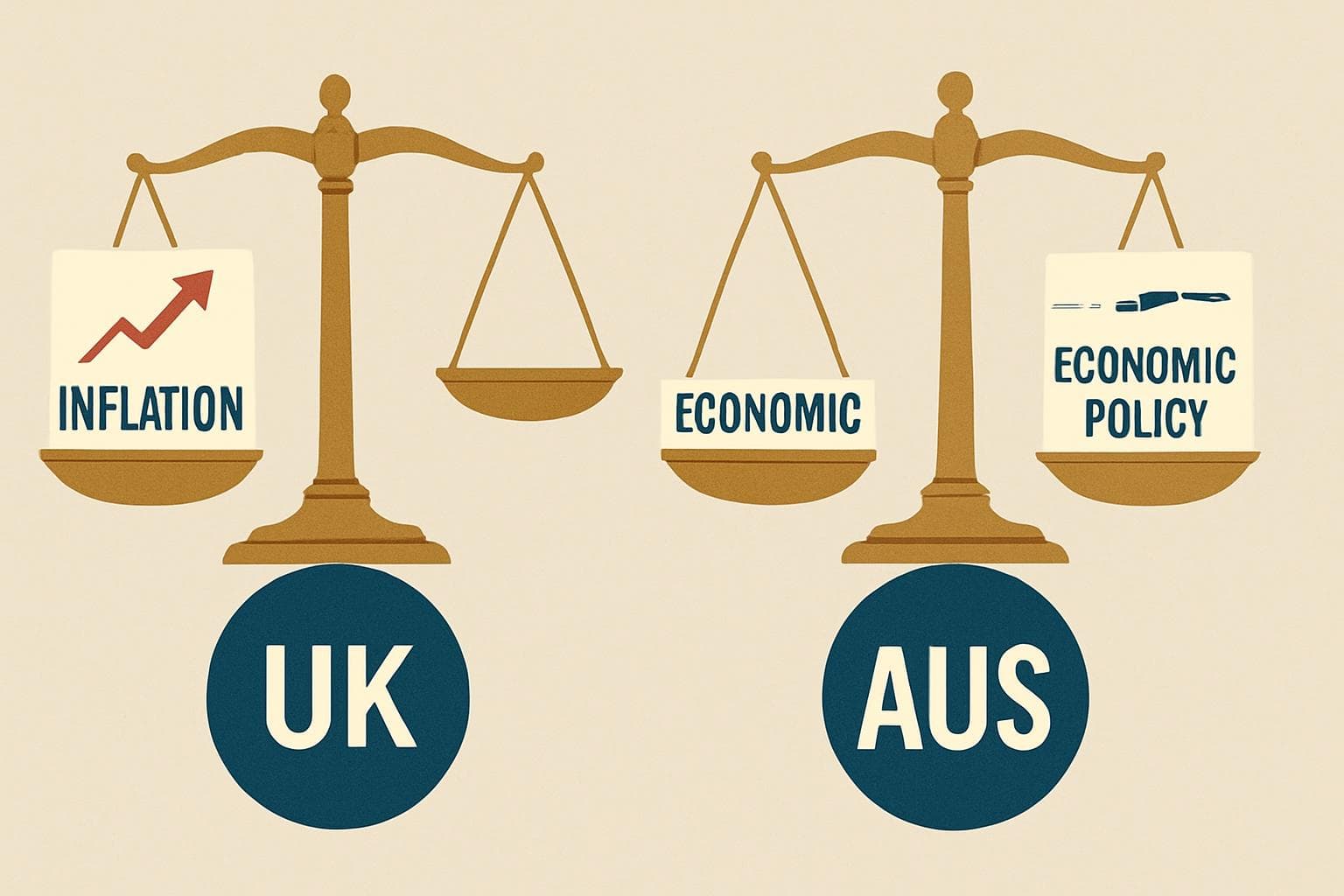
As the UK and Australia navigate complex economic landscapes, central banks in both countries have opted to maintain current interest rates, with future adjustments hinging on forthcoming economic data and fiscal policies.
Bank of England Holds Rates Amid Budget Anticipation
The Bank of England's Monetary Policy Committee (MPC) is widely expected to hold interest rates at 4% following their final meeting before the chancellor's Budget announcement. Despite some analysts suggesting that recent inflation data could justify a rate cut, most experts predict such a move is more likely in December. The inflation rate in September was recorded at 3.8%, exceeding the Bank's 2% target, though food and drink prices saw their slowest increase in over a year, easing some financial pressure on households.
Danni Hewson, head of financial analysis at AJ Bell, noted that while there is a one in three chance of a rate cut to 3.75%, the odds favor maintaining the current rate. The MPC's decision will be closely tied to the economic implications of Chancellor Rachel Reeves' upcoming Budget, set for 26 November, which aims to curb inflation and potentially pave the way for future rate reductions.
Reserve Bank of Australia Prioritizes Inflation Control
Across the globe, the Reserve Bank of Australia (RBA) has also decided to keep its interest rate unchanged, with Governor Michele Bullock emphasizing the board's focus on returning inflation to a sustainable level. Despite a rise in unemployment to 4.5%, the RBA projects stabilization at 4.4% through 2027. The decision reflects a prioritization of inflation control over immediate unemployment concerns.
Recent data from the Australian Bureau of Statistics highlighted a modest 0.5% increase in household spending for the September quarter, a slowdown from the previous quarter's 1.2% growth. This data, alongside upcoming wages and GDP figures, will inform the RBA's future policy decisions, with the next board meeting scheduled for 9 December.
WHAT THIS MIGHT MEAN
Looking ahead, the Bank of England's decision to hold rates could be influenced by the chancellor's Budget, particularly if it includes measures that effectively address inflation without exacerbating economic pressures. A rate cut in December remains a possibility if the Budget aligns with the Bank's inflation targets.
In Australia, the RBA's focus on inflation suggests that any future rate adjustments will depend heavily on forthcoming economic indicators, including wages and GDP data. As both central banks navigate these economic challenges, their decisions will significantly impact borrowing costs and economic stability in their respective countries.
Related Articles

Middle East Conflict Drives UK Energy Prices to New Highs

Canada and Australia Forge Strategic Partnership Amid Global Uncertainty

Trump's New Tariff Strategy Sparks Global Trade Uncertainty

UK Government to Reform Asylum Seeker Support and Employment Policies

UK Faces Dilemmas Amid Iran Conflict and China Spying Allegations

UK Reinforces Military Presence in Cyprus Amid Middle East Tensions
Interest Rates Held Steady as Economic Data Shapes Future Decisions
In This Article
 Daniel Rivera| Published
 HIGHLIGHTS
- The Bank of England is expected to hold interest rates at 4% as the chancellor's Budget approaches, with potential cuts anticipated in December.
- Inflation in the UK was 3.8% in September, above the 2% target, but food and drink prices rose at their slowest rate in over a year.
- The Reserve Bank of Australia (RBA) maintained its interest rate, focusing on inflation control over unemployment concerns.
- Australia's unemployment rate is projected to stabilize at 4.4% until 2027, despite current figures at 4.5%.
- Economic data, including household spending and inflation figures, will influence future monetary policy decisions in both the UK and Australia.
As the UK and Australia navigate complex economic landscapes, central banks in both countries have opted to maintain current interest rates, with future adjustments hinging on forthcoming economic data and fiscal policies.
Bank of England Holds Rates Amid Budget Anticipation
The Bank of England's Monetary Policy Committee (MPC) is widely expected to hold interest rates at 4% following their final meeting before the chancellor's Budget announcement. Despite some analysts suggesting that recent inflation data could justify a rate cut, most experts predict such a move is more likely in December. The inflation rate in September was recorded at 3.8%, exceeding the Bank's 2% target, though food and drink prices saw their slowest increase in over a year, easing some financial pressure on households.
Danni Hewson, head of financial analysis at AJ Bell, noted that while there is a one in three chance of a rate cut to 3.75%, the odds favor maintaining the current rate. The MPC's decision will be closely tied to the economic implications of Chancellor Rachel Reeves' upcoming Budget, set for 26 November, which aims to curb inflation and potentially pave the way for future rate reductions.
Reserve Bank of Australia Prioritizes Inflation Control
Across the globe, the Reserve Bank of Australia (RBA) has also decided to keep its interest rate unchanged, with Governor Michele Bullock emphasizing the board's focus on returning inflation to a sustainable level. Despite a rise in unemployment to 4.5%, the RBA projects stabilization at 4.4% through 2027. The decision reflects a prioritization of inflation control over immediate unemployment concerns.
Recent data from the Australian Bureau of Statistics highlighted a modest 0.5% increase in household spending for the September quarter, a slowdown from the previous quarter's 1.2% growth. This data, alongside upcoming wages and GDP figures, will inform the RBA's future policy decisions, with the next board meeting scheduled for 9 December.
WHAT THIS MIGHT MEAN
Looking ahead, the Bank of England's decision to hold rates could be influenced by the chancellor's Budget, particularly if it includes measures that effectively address inflation without exacerbating economic pressures. A rate cut in December remains a possibility if the Budget aligns with the Bank's inflation targets.
In Australia, the RBA's focus on inflation suggests that any future rate adjustments will depend heavily on forthcoming economic indicators, including wages and GDP data. As both central banks navigate these economic challenges, their decisions will significantly impact borrowing costs and economic stability in their respective countries.
Related Articles
Middle East Conflict Drives UK Energy Prices to New Highs
Canada and Australia Forge Strategic Partnership Amid Global Uncertainty
Trump's New Tariff Strategy Sparks Global Trade Uncertainty
UK Government to Reform Asylum Seeker Support and Employment Policies
UK Faces Dilemmas Amid Iran Conflict and China Spying Allegations
UK Reinforces Military Presence in Cyprus Amid Middle East Tensions