
Jimmy Lai Sentenced to 20 Years in Hong Kong: A Blow to Press Freedom and Pro-Democracy Activism
In This Article
HIGHLIGHTS
- Jimmy Lai, a prominent pro-democracy activist, has been sentenced to 20 years in prison under Hong Kong's national security law.
- The UK government, including Prime Minister Keir Starmer, has faced criticism for not securing Lai's release during diplomatic engagements with China.
- Human rights organizations have condemned the sentence, calling it a "death sentence" for the 78-year-old and a blow to press freedom in Hong Kong.
- Hong Kong's chief executive, John Lee, praised the sentencing as a victory for national security, describing Lai's actions as "heinous."
- Lai's family and international observers fear that the harsh sentence reflects a broader crackdown on dissent and independent journalism in Hong Kong.
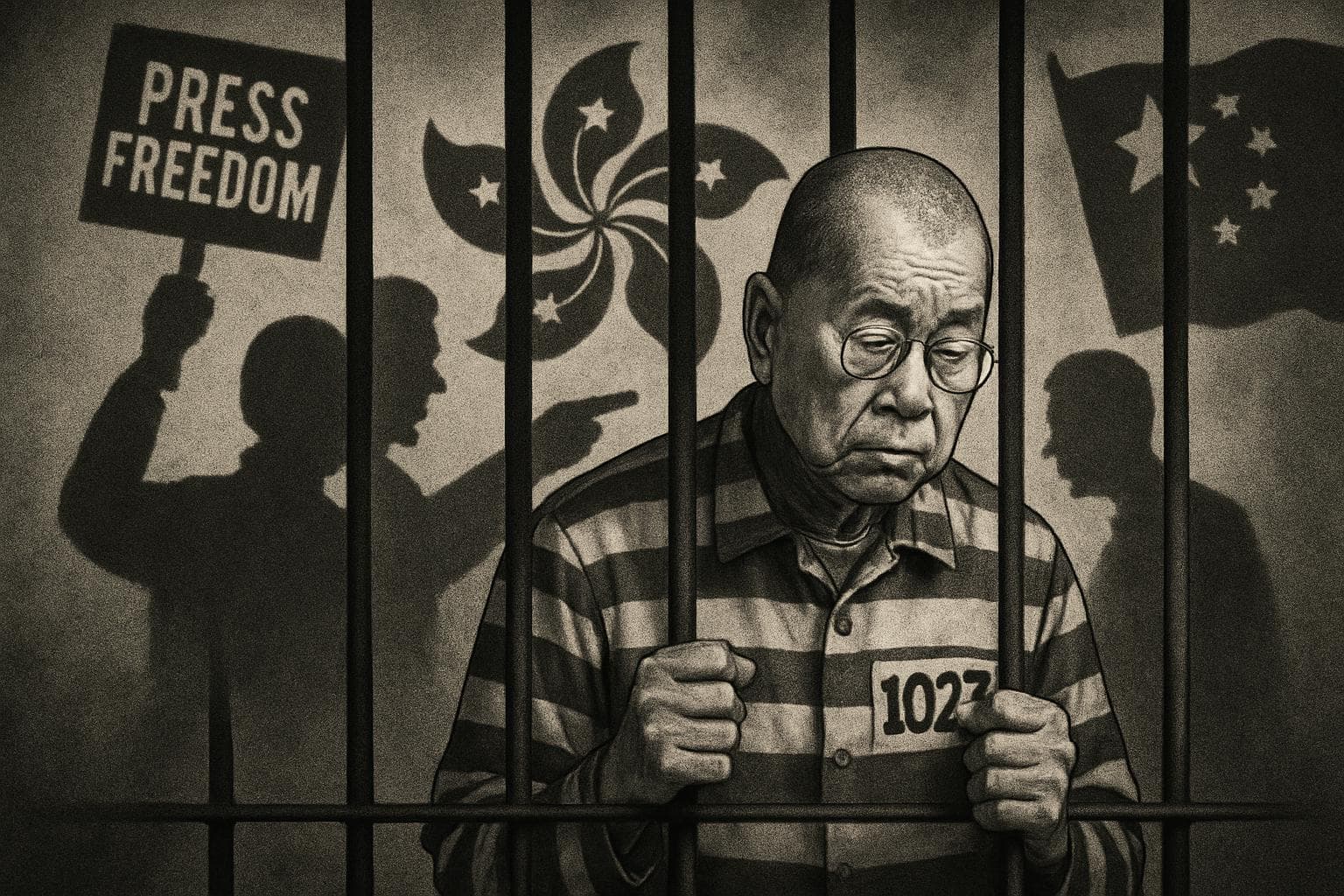
In a landmark case that underscores the tense political climate in Hong Kong, media tycoon and pro-democracy advocate Jimmy Lai has been sentenced to 20 years in prison. The 78-year-old was convicted under the controversial national security law, a move that has drawn widespread condemnation from human rights groups and international observers.
Diplomatic Tensions and Criticism
The sentencing has sparked criticism of the UK government, particularly Prime Minister Keir Starmer, for not leveraging diplomatic channels to secure Lai's release during his recent visit to Beijing. The UK's All-Party Parliamentary Group on Arbitrary Detention and Hostage Affairs expressed disappointment, stating that the opportunity to advocate for Lai was "squandered by weak diplomacy." Lai's son, Sebastien, echoed these sentiments, describing the diplomatic efforts as a "wasted opportunity."
Reactions from Human Rights Organizations
Human rights organizations have been vocal in their condemnation of the sentence. Reporters Without Borders declared that the decision marks the "complete collapse of press freedom in Hong Kong," while Amnesty International described it as a "grim milestone" in the city's transformation under Chinese influence. Human Rights Watch labeled the sentence as "cruel and profoundly unjust," highlighting the Chinese government's determination to silence dissent.
Government and Legal Perspectives
Hong Kong's chief executive, John Lee, welcomed the sentencing, characterizing Lai's actions as "heinous" and a threat to national security. Lee emphasized that the harsh sentence demonstrates the rule of law and justice in Hong Kong. Meanwhile, Chinese state media has portrayed Lai as an "anti-government instigator," further fueling the narrative of his prosecution as politically motivated.
The Broader Implications
Lai's case is emblematic of the broader crackdown on pro-democracy activism and press freedom in Hong Kong. The closure of Apple Daily, the newspaper he founded, in 2021 marked a significant blow to independent journalism in the region. Lai's family fears that the sentence effectively serves as a death sentence, given his age and health concerns.
WHAT THIS MIGHT MEAN
The sentencing of Jimmy Lai is likely to exacerbate tensions between Hong Kong and Western governments, particularly the UK, which has called for his release. As diplomatic efforts continue, the case could become a focal point for international human rights advocacy, potentially influencing future relations with China. Domestically, the harsh sentence may deter pro-democracy activism, further consolidating Beijing's control over Hong Kong. Experts suggest that this case could set a precedent for how dissent is handled under the national security law, with significant implications for the city's legal and political landscape.
Related Articles

UK Faces Dilemmas Amid Iran Conflict and China Spying Allegations
Labour MP's Husband Arrested in UK-China Espionage Probe
UK-Iran Tensions: Starmer Defends Cautious Approach Amid Trump Criticism
Diplomatic Tensions Rise as Trump Criticizes Starmer's Iran Policy
Prince Andrew's Ties to Epstein Under Scrutiny Amid Calls for Inquiry
Government Criticized for Mishandling Maccabi Tel Aviv Fan Ban
Jimmy Lai Sentenced to 20 Years in Hong Kong: A Blow to Press Freedom and Pro-Democracy Activism
In This Article
 Ethan Brooks| Published
 HIGHLIGHTS
- Jimmy Lai, a prominent pro-democracy activist, has been sentenced to 20 years in prison under Hong Kong's national security law.
- The UK government, including Prime Minister Keir Starmer, has faced criticism for not securing Lai's release during diplomatic engagements with China.
- Human rights organizations have condemned the sentence, calling it a "death sentence" for the 78-year-old and a blow to press freedom in Hong Kong.
- Hong Kong's chief executive, John Lee, praised the sentencing as a victory for national security, describing Lai's actions as "heinous."
- Lai's family and international observers fear that the harsh sentence reflects a broader crackdown on dissent and independent journalism in Hong Kong.
In a landmark case that underscores the tense political climate in Hong Kong, media tycoon and pro-democracy advocate Jimmy Lai has been sentenced to 20 years in prison. The 78-year-old was convicted under the controversial national security law, a move that has drawn widespread condemnation from human rights groups and international observers.
Diplomatic Tensions and Criticism
The sentencing has sparked criticism of the UK government, particularly Prime Minister Keir Starmer, for not leveraging diplomatic channels to secure Lai's release during his recent visit to Beijing. The UK's All-Party Parliamentary Group on Arbitrary Detention and Hostage Affairs expressed disappointment, stating that the opportunity to advocate for Lai was "squandered by weak diplomacy." Lai's son, Sebastien, echoed these sentiments, describing the diplomatic efforts as a "wasted opportunity."
Reactions from Human Rights Organizations
Human rights organizations have been vocal in their condemnation of the sentence. Reporters Without Borders declared that the decision marks the "complete collapse of press freedom in Hong Kong," while Amnesty International described it as a "grim milestone" in the city's transformation under Chinese influence. Human Rights Watch labeled the sentence as "cruel and profoundly unjust," highlighting the Chinese government's determination to silence dissent.
Government and Legal Perspectives
Hong Kong's chief executive, John Lee, welcomed the sentencing, characterizing Lai's actions as "heinous" and a threat to national security. Lee emphasized that the harsh sentence demonstrates the rule of law and justice in Hong Kong. Meanwhile, Chinese state media has portrayed Lai as an "anti-government instigator," further fueling the narrative of his prosecution as politically motivated.
The Broader Implications
Lai's case is emblematic of the broader crackdown on pro-democracy activism and press freedom in Hong Kong. The closure of Apple Daily, the newspaper he founded, in 2021 marked a significant blow to independent journalism in the region. Lai's family fears that the sentence effectively serves as a death sentence, given his age and health concerns.
WHAT THIS MIGHT MEAN
The sentencing of Jimmy Lai is likely to exacerbate tensions between Hong Kong and Western governments, particularly the UK, which has called for his release. As diplomatic efforts continue, the case could become a focal point for international human rights advocacy, potentially influencing future relations with China. Domestically, the harsh sentence may deter pro-democracy activism, further consolidating Beijing's control over Hong Kong. Experts suggest that this case could set a precedent for how dissent is handled under the national security law, with significant implications for the city's legal and political landscape.
Related Articles
UK Faces Dilemmas Amid Iran Conflict and China Spying Allegations
Labour MP's Husband Arrested in UK-China Espionage Probe
UK-Iran Tensions: Starmer Defends Cautious Approach Amid Trump Criticism
Diplomatic Tensions Rise as Trump Criticizes Starmer's Iran Policy
Prince Andrew's Ties to Epstein Under Scrutiny Amid Calls for Inquiry
Government Criticized for Mishandling Maccabi Tel Aviv Fan Ban