
Keir Starmer Faces Resignation Calls Amid Mandelson-Epstein Scandal
In This Article
HIGHLIGHTS
- Keir Starmer faces calls for resignation over appointing Peter Mandelson as US ambassador amid Epstein ties.
- Starmer admits being misled by Mandelson about his relationship with Jeffrey Epstein, a convicted paedophile.
- Labour MPs express dissatisfaction, with some calling for the sacking of Starmer's chief of staff, Morgan McSweeney.
- The UK government plans to release documents related to Mandelson's appointment, with oversight by a security committee.
- Opposition leaders criticize Starmer's judgment, urging a focus on pressing national issues.
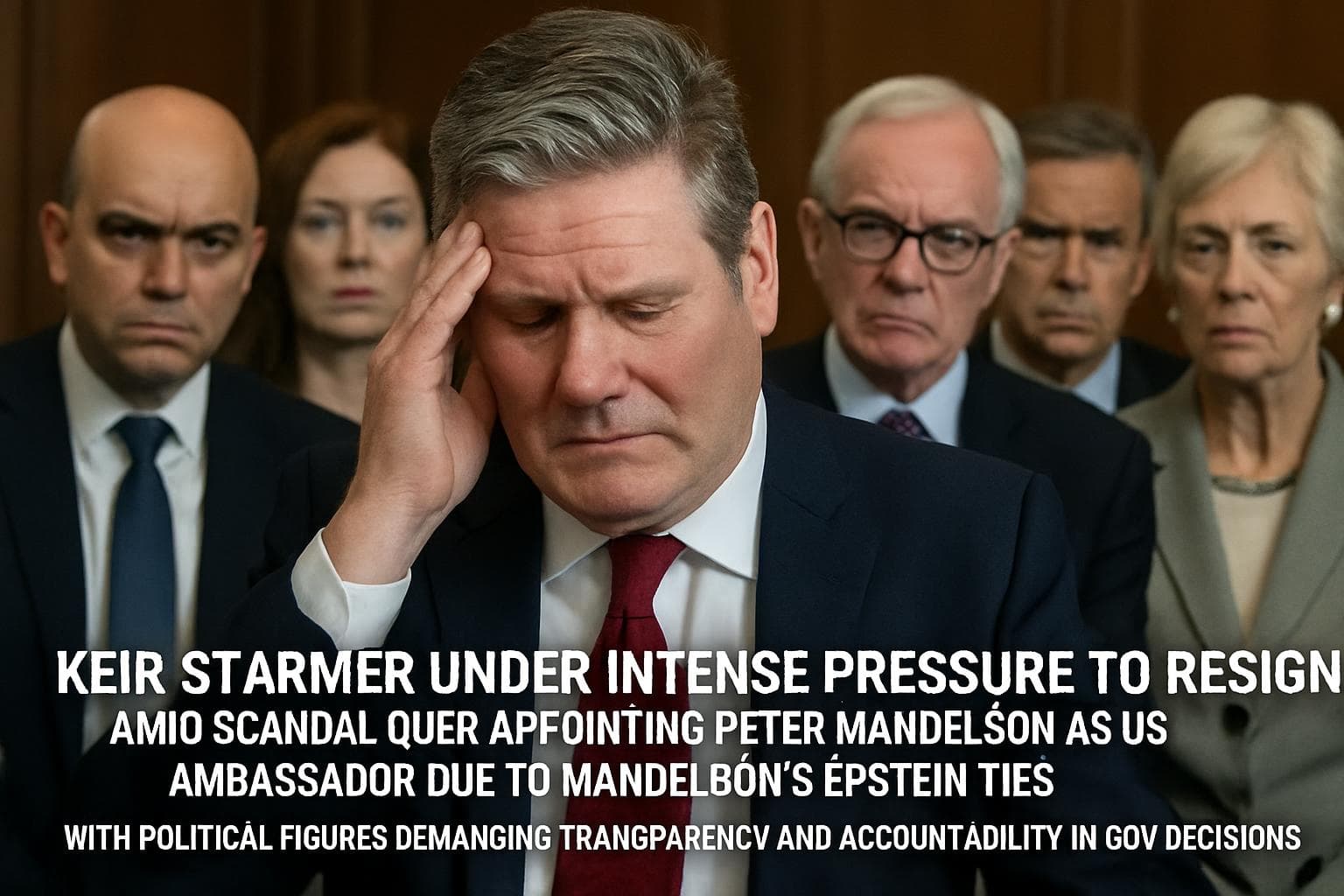
Prime Minister Keir Starmer is under mounting pressure to resign following the controversial appointment of Peter Mandelson as US ambassador, a decision overshadowed by Mandelson's ties to Jeffrey Epstein, a convicted paedophile. The scandal has sparked outrage among Labour MPs and opposition parties, questioning Starmer's judgment and leadership.
Mounting Pressure from Within
The controversy erupted after it was revealed that Starmer was aware of Mandelson's ongoing friendship with Epstein when he appointed him. In a tense session at the House of Commons, Starmer admitted that Mandelson had repeatedly lied about the extent of his relationship with Epstein. A Welsh Labour MP, speaking anonymously, called for Starmer to "do the decent thing" and resign, while others suggested sacking his chief of staff, Morgan McSweeney, for poor advice.
Government Transparency and Security Oversight
In response to the uproar, the UK government has committed to releasing all relevant documents concerning Mandelson's appointment, with sensitive information reviewed by a cross-party security committee. Angela Rayner, the former deputy prime minister, has been instrumental in advocating for this oversight. Labour MP Steve Witherden expressed his willingness to oppose any government plan that limits document transparency, emphasizing the need for accountability.
Opposition Criticism and Broader Implications
The scandal has drawn sharp criticism from opposition leaders. Conservative Shadow Welsh Secretary Mims Davies described the situation as "jaw-dropping," highlighting the need to prioritize Epstein's victims. Tory leader Kemi Badenoch criticized Starmer for ignoring security advice, while Liberal Democrat leader Ed Davey called for a no-confidence vote, stressing the need for government focus on national issues like the cost-of-living crisis and NHS reforms.
WHAT THIS MIGHT MEAN
The unfolding scandal could significantly impact Keir Starmer's political future and the Labour Party's stability. If the released documents reveal further negligence or misconduct, Starmer may face intensified calls for resignation or a no-confidence vote. The situation also underscores the importance of rigorous vetting processes for high-profile appointments, potentially leading to policy reforms. As the political landscape shifts, Starmer's ability to navigate this crisis will be crucial in determining his leadership's longevity and the Labour Party's direction.
Related Articles

UK Government to Reform Asylum Seeker Support and Employment Policies

UK Faces Dilemmas Amid Iran Conflict and China Spying Allegations

Labour MP's Husband Arrested in UK-China Espionage Probe

UK-Iran Tensions: Starmer Defends Cautious Approach Amid Trump Criticism

Diplomatic Tensions Rise as Trump Criticizes Starmer's Iran Policy

Prince Andrew's Ties to Epstein Under Scrutiny Amid Calls for Inquiry
Keir Starmer Faces Resignation Calls Amid Mandelson-Epstein Scandal
In This Article
 Ethan Brooks| Published
 HIGHLIGHTS
- Keir Starmer faces calls for resignation over appointing Peter Mandelson as US ambassador amid Epstein ties.
- Starmer admits being misled by Mandelson about his relationship with Jeffrey Epstein, a convicted paedophile.
- Labour MPs express dissatisfaction, with some calling for the sacking of Starmer's chief of staff, Morgan McSweeney.
- The UK government plans to release documents related to Mandelson's appointment, with oversight by a security committee.
- Opposition leaders criticize Starmer's judgment, urging a focus on pressing national issues.
Prime Minister Keir Starmer is under mounting pressure to resign following the controversial appointment of Peter Mandelson as US ambassador, a decision overshadowed by Mandelson's ties to Jeffrey Epstein, a convicted paedophile. The scandal has sparked outrage among Labour MPs and opposition parties, questioning Starmer's judgment and leadership.
Mounting Pressure from Within
The controversy erupted after it was revealed that Starmer was aware of Mandelson's ongoing friendship with Epstein when he appointed him. In a tense session at the House of Commons, Starmer admitted that Mandelson had repeatedly lied about the extent of his relationship with Epstein. A Welsh Labour MP, speaking anonymously, called for Starmer to "do the decent thing" and resign, while others suggested sacking his chief of staff, Morgan McSweeney, for poor advice.
Government Transparency and Security Oversight
In response to the uproar, the UK government has committed to releasing all relevant documents concerning Mandelson's appointment, with sensitive information reviewed by a cross-party security committee. Angela Rayner, the former deputy prime minister, has been instrumental in advocating for this oversight. Labour MP Steve Witherden expressed his willingness to oppose any government plan that limits document transparency, emphasizing the need for accountability.
Opposition Criticism and Broader Implications
The scandal has drawn sharp criticism from opposition leaders. Conservative Shadow Welsh Secretary Mims Davies described the situation as "jaw-dropping," highlighting the need to prioritize Epstein's victims. Tory leader Kemi Badenoch criticized Starmer for ignoring security advice, while Liberal Democrat leader Ed Davey called for a no-confidence vote, stressing the need for government focus on national issues like the cost-of-living crisis and NHS reforms.
WHAT THIS MIGHT MEAN
The unfolding scandal could significantly impact Keir Starmer's political future and the Labour Party's stability. If the released documents reveal further negligence or misconduct, Starmer may face intensified calls for resignation or a no-confidence vote. The situation also underscores the importance of rigorous vetting processes for high-profile appointments, potentially leading to policy reforms. As the political landscape shifts, Starmer's ability to navigate this crisis will be crucial in determining his leadership's longevity and the Labour Party's direction.
Related Articles
UK Government to Reform Asylum Seeker Support and Employment Policies
UK Faces Dilemmas Amid Iran Conflict and China Spying Allegations
Labour MP's Husband Arrested in UK-China Espionage Probe
UK-Iran Tensions: Starmer Defends Cautious Approach Amid Trump Criticism
Diplomatic Tensions Rise as Trump Criticizes Starmer's Iran Policy
Prince Andrew's Ties to Epstein Under Scrutiny Amid Calls for Inquiry