
Decision Delayed in Kneecap Rapper's Terror Charge Case
In This Article
HIGHLIGHTS
- Liam Óg Ó hAnnaidh, known as Mo Chara from the rap group Kneecap, faces a postponed decision on a terror charge related to allegedly displaying a Hezbollah flag.
- The case hinges on whether the charge was filed within the legal six-month timeframe, with the defense citing a technical error.
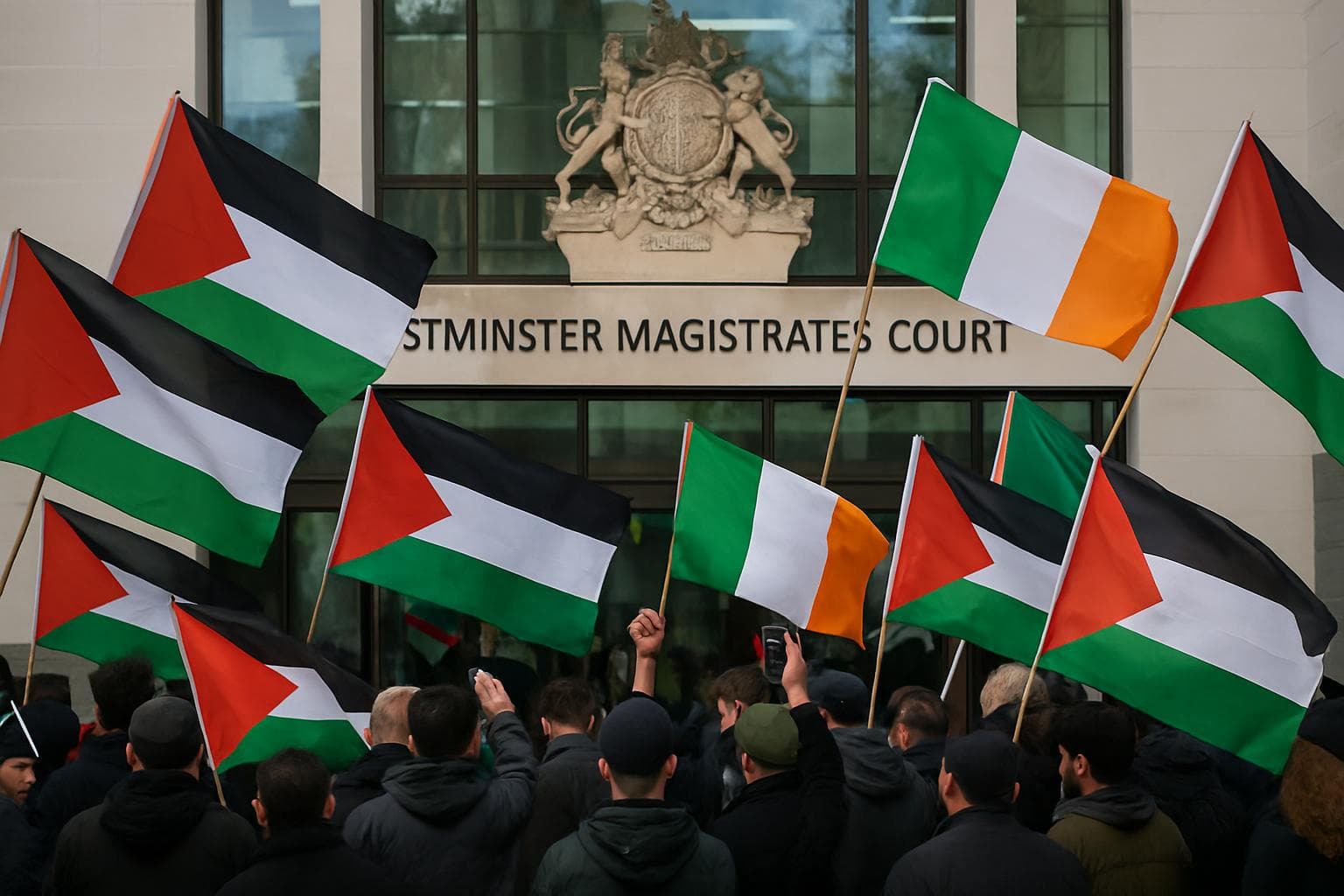
- Hundreds of supporters, including Kneecap band members, gathered outside Westminster Magistrates' Court, waving Palestinian and Irish flags.
- The Metropolitan Police imposed restrictions on protests outside the court to prevent disruption, arresting one individual for allegedly supporting Palestine Action.
- Chief Magistrate Paul Goldspring will rule on the jurisdiction to try the case on 26 September, with Ó hAnnaidh remaining on unconditional bail.
The legal proceedings against Liam Óg Ó hAnnaidh, a member of the Irish-speaking rap group Kneecap, have been postponed, with a decision now expected on 26 September. Ó hAnnaidh, who performs under the stage name Mo Chara, is accused of displaying a Hezbollah flag during a performance in London last year. The charge has sparked significant public interest, with the rapper's supporters gathering in large numbers outside Westminster Magistrates' Court.
Legal Proceedings and Defense Arguments
The central issue in the case is whether the charge was filed within the required six-month period. Ó hAnnaidh's defense team, led by Brenda Campbell KC, argues that the charge should be dismissed due to a procedural error. They claim that the Attorney General's consent was not obtained before the police informed Ó hAnnaidh of the charge on 21 May, which they argue falls outside the legal timeframe. Prosecutor Michael Bisgrove contends that such permission was not necessary until the defendant's first court appearance.
Public Support and Police Response
The court appearance drew hundreds of supporters, including Ó hAnnaidh's bandmates, who waved Palestinian and Irish flags. The Metropolitan Police, citing concerns over potential disruptions, imposed specific conditions on the protest areas. Despite these measures, the scene remained charged, with one individual arrested for allegedly supporting the proscribed group Palestine Action.
Cultural and Political Context
Kneecap, known for their provocative lyrics and political themes, have consistently attracted controversy. The band has framed the legal proceedings as politically motivated, suggesting that the case serves as a distraction from broader issues concerning Palestine. In a statement, the band criticized police actions as attempts to portray their support base as problematic.
WHAT THIS MIGHT MEAN
As the court prepares to rule on the jurisdictional aspects of the case, the outcome could set a significant precedent for how similar charges are handled in the future. If the case is dismissed, it may embolden public demonstrations and further politicize the narrative surrounding Kneecap and their supporters. Conversely, if the trial proceeds, it could lead to heightened tensions and increased scrutiny of public protests linked to politically sensitive issues. Legal experts suggest that the case underscores the complexities of balancing free expression with national security concerns, a debate likely to continue regardless of the court's decision.
Related Articles
UK Police Intensify Investigation into Andrew Mountbatten-Windsor Amid Misconduct Allegations
Prince Andrew's Arrest Raises Questions About Royal Succession and Monarchy's Future
Palestine Action Activists to Face Retrial Over Elbit Systems Break-In
High Court Upholds Met Police's Freemasons Disclosure Policy
Labour MP's Husband Arrested in UK-China Espionage Probe
Nottingham Attacks Inquiry: Families Demand Accountability and Truth
Decision Delayed in Kneecap Rapper's Terror Charge Case
In This Article
 Sofia Romano| Published
 HIGHLIGHTS
- Liam Óg Ó hAnnaidh, known as Mo Chara from the rap group Kneecap, faces a postponed decision on a terror charge related to allegedly displaying a Hezbollah flag.
- The case hinges on whether the charge was filed within the legal six-month timeframe, with the defense citing a technical error.
- Hundreds of supporters, including Kneecap band members, gathered outside Westminster Magistrates' Court, waving Palestinian and Irish flags.
- The Metropolitan Police imposed restrictions on protests outside the court to prevent disruption, arresting one individual for allegedly supporting Palestine Action.
- Chief Magistrate Paul Goldspring will rule on the jurisdiction to try the case on 26 September, with Ó hAnnaidh remaining on unconditional bail.
The legal proceedings against Liam Óg Ó hAnnaidh, a member of the Irish-speaking rap group Kneecap, have been postponed, with a decision now expected on 26 September. Ó hAnnaidh, who performs under the stage name Mo Chara, is accused of displaying a Hezbollah flag during a performance in London last year. The charge has sparked significant public interest, with the rapper's supporters gathering in large numbers outside Westminster Magistrates' Court.
Legal Proceedings and Defense Arguments
The central issue in the case is whether the charge was filed within the required six-month period. Ó hAnnaidh's defense team, led by Brenda Campbell KC, argues that the charge should be dismissed due to a procedural error. They claim that the Attorney General's consent was not obtained before the police informed Ó hAnnaidh of the charge on 21 May, which they argue falls outside the legal timeframe. Prosecutor Michael Bisgrove contends that such permission was not necessary until the defendant's first court appearance.
Public Support and Police Response
The court appearance drew hundreds of supporters, including Ó hAnnaidh's bandmates, who waved Palestinian and Irish flags. The Metropolitan Police, citing concerns over potential disruptions, imposed specific conditions on the protest areas. Despite these measures, the scene remained charged, with one individual arrested for allegedly supporting the proscribed group Palestine Action.
Cultural and Political Context
Kneecap, known for their provocative lyrics and political themes, have consistently attracted controversy. The band has framed the legal proceedings as politically motivated, suggesting that the case serves as a distraction from broader issues concerning Palestine. In a statement, the band criticized police actions as attempts to portray their support base as problematic.
WHAT THIS MIGHT MEAN
As the court prepares to rule on the jurisdictional aspects of the case, the outcome could set a significant precedent for how similar charges are handled in the future. If the case is dismissed, it may embolden public demonstrations and further politicize the narrative surrounding Kneecap and their supporters. Conversely, if the trial proceeds, it could lead to heightened tensions and increased scrutiny of public protests linked to politically sensitive issues. Legal experts suggest that the case underscores the complexities of balancing free expression with national security concerns, a debate likely to continue regardless of the court's decision.
Related Articles
UK Police Intensify Investigation into Andrew Mountbatten-Windsor Amid Misconduct Allegations
Prince Andrew's Arrest Raises Questions About Royal Succession and Monarchy's Future
Palestine Action Activists to Face Retrial Over Elbit Systems Break-In
High Court Upholds Met Police's Freemasons Disclosure Policy
Labour MP's Husband Arrested in UK-China Espionage Probe
Nottingham Attacks Inquiry: Families Demand Accountability and Truth