
Labour Faces Backlash Over U-turn on Workers' Rights
In This Article
HIGHLIGHTS
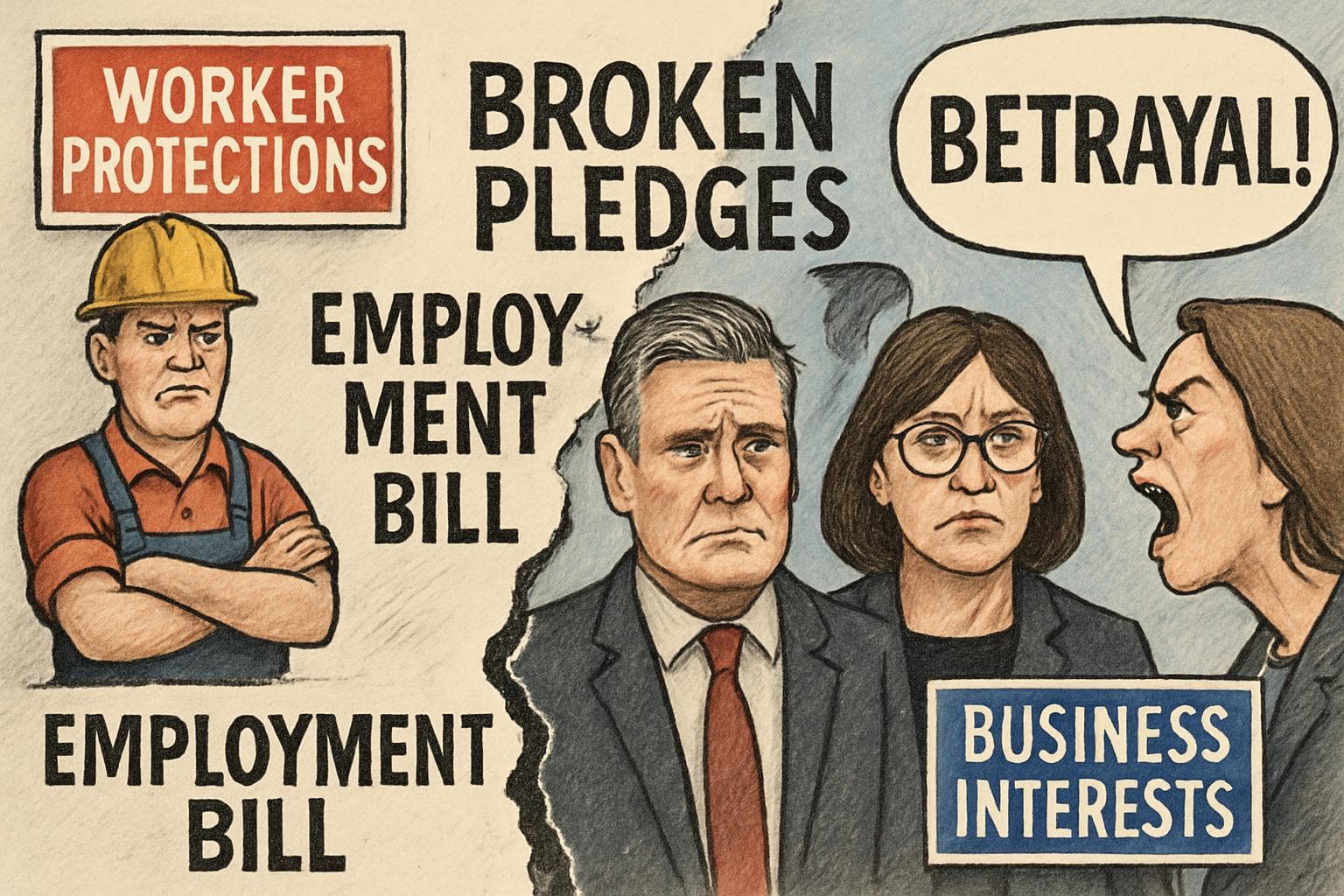
- Labour Party faces backlash after U-turn on day-one unfair dismissal rights, reducing the period to six months.
- The decision, seen as a breach of Labour's manifesto, has sparked criticism from MPs and union leaders.
- Business groups support the compromise, arguing it balances worker protection with business flexibility.
- The revised employment rights bill retains day-one rights for sick pay and parental leave, effective April 2026.
- Labour MPs demand further concessions on issues like bogus self-employment to uphold the "make work pay" agenda.
The Labour Party is under fire from its own MPs and union leaders following a controversial U-turn on workers' rights, specifically the right to claim unfair dismissal from the first day of employment. The decision to amend the employment rights bill, reducing the qualifying period from two years to six months, has been met with significant criticism, with many viewing it as a breach of Labour's manifesto commitments.
Manifesto Breach Sparks Outcry
The original proposal, which promised day-one protection against unfair dismissal, was a key element of Labour's employment rights agenda. However, the government announced on Thursday that it would instead implement a six-month qualifying period. This move has been described as a "complete betrayal" by Labour MP Andy McDonald, who, along with others, has vowed to campaign for the reversal of this decision.
Balancing Act Between Business and Worker Protections
While the U-turn has angered many within the Labour Party, it has been welcomed by business groups who argue that immediate unfair dismissal rights could deter hiring. Education Secretary Bridget Phillipson defended the decision as a "pragmatic" compromise to ensure the passage of the broader employment rights bill, which includes day-one rights for sick pay and parental leave, set to take effect in April 2026.
Calls for Further Concessions
Despite the compromise, Labour MPs are pushing for additional protections in other areas, such as tackling bogus self-employment. Former employment minister Justin Madders expressed concerns about the government's commitment to the remaining elements of the "make work pay" agenda, urging assurances that the rest of the bill will be delivered.
Political Implications and Future Prospects
The revised bill is expected to pass through the Commons, despite backbench discontent. Angela Rayner, who initially spearheaded the legislation, is not expected to lead a rebellion, focusing instead on ensuring the bill's timely passage. The government maintains that the compromise was necessary to avoid further delays and to secure the implementation of crucial worker protections.
WHAT THIS MIGHT MEAN
The Labour Party's decision to amend its stance on unfair dismissal rights could have significant political repercussions. Internally, the move has strained relations with backbench MPs and union leaders, potentially impacting party unity. Externally, the compromise may bolster Labour's appeal to business groups, but risks alienating core supporters who prioritize worker protections.
Looking ahead, Labour's ability to deliver on other manifesto commitments, such as addressing bogus self-employment and zero-hours contracts, will be crucial in maintaining credibility. The party's handling of these issues will likely influence its standing in the upcoming elections and its broader "make work pay" agenda.
As the employment rights bill progresses, the government will need to navigate the delicate balance between appeasing business interests and fulfilling its promises to workers, a challenge that will test Labour's leadership and policy priorities in the coming months.
Related Articles

Keir Starmer Resolute Amid Calls for Resignation and Party Turmoil
UK Government to Reform Asylum Seeker Support and Employment Policies

UK Faces Dilemmas Amid Iran Conflict and China Spying Allegations

Labour MP's Husband Arrested in UK-China Espionage Probe

Prince Andrew's Ties to Epstein Under Scrutiny Amid Calls for Inquiry

US Congress Seeks Testimony from Peter Mandelson Over Epstein Ties
Labour Faces Backlash Over U-turn on Workers' Rights
In This Article
 Ethan Brooks| Published
 HIGHLIGHTS
- Labour Party faces backlash after U-turn on day-one unfair dismissal rights, reducing the period to six months.
- The decision, seen as a breach of Labour's manifesto, has sparked criticism from MPs and union leaders.
- Business groups support the compromise, arguing it balances worker protection with business flexibility.
- The revised employment rights bill retains day-one rights for sick pay and parental leave, effective April 2026.
- Labour MPs demand further concessions on issues like bogus self-employment to uphold the "make work pay" agenda.
The Labour Party is under fire from its own MPs and union leaders following a controversial U-turn on workers' rights, specifically the right to claim unfair dismissal from the first day of employment. The decision to amend the employment rights bill, reducing the qualifying period from two years to six months, has been met with significant criticism, with many viewing it as a breach of Labour's manifesto commitments.
Manifesto Breach Sparks Outcry
The original proposal, which promised day-one protection against unfair dismissal, was a key element of Labour's employment rights agenda. However, the government announced on Thursday that it would instead implement a six-month qualifying period. This move has been described as a "complete betrayal" by Labour MP Andy McDonald, who, along with others, has vowed to campaign for the reversal of this decision.
Balancing Act Between Business and Worker Protections
While the U-turn has angered many within the Labour Party, it has been welcomed by business groups who argue that immediate unfair dismissal rights could deter hiring. Education Secretary Bridget Phillipson defended the decision as a "pragmatic" compromise to ensure the passage of the broader employment rights bill, which includes day-one rights for sick pay and parental leave, set to take effect in April 2026.
Calls for Further Concessions
Despite the compromise, Labour MPs are pushing for additional protections in other areas, such as tackling bogus self-employment. Former employment minister Justin Madders expressed concerns about the government's commitment to the remaining elements of the "make work pay" agenda, urging assurances that the rest of the bill will be delivered.
Political Implications and Future Prospects
The revised bill is expected to pass through the Commons, despite backbench discontent. Angela Rayner, who initially spearheaded the legislation, is not expected to lead a rebellion, focusing instead on ensuring the bill's timely passage. The government maintains that the compromise was necessary to avoid further delays and to secure the implementation of crucial worker protections.
WHAT THIS MIGHT MEAN
The Labour Party's decision to amend its stance on unfair dismissal rights could have significant political repercussions. Internally, the move has strained relations with backbench MPs and union leaders, potentially impacting party unity. Externally, the compromise may bolster Labour's appeal to business groups, but risks alienating core supporters who prioritize worker protections.
Looking ahead, Labour's ability to deliver on other manifesto commitments, such as addressing bogus self-employment and zero-hours contracts, will be crucial in maintaining credibility. The party's handling of these issues will likely influence its standing in the upcoming elections and its broader "make work pay" agenda.
As the employment rights bill progresses, the government will need to navigate the delicate balance between appeasing business interests and fulfilling its promises to workers, a challenge that will test Labour's leadership and policy priorities in the coming months.
Related Articles
Keir Starmer Resolute Amid Calls for Resignation and Party Turmoil
UK Government to Reform Asylum Seeker Support and Employment Policies
UK Faces Dilemmas Amid Iran Conflict and China Spying Allegations
Labour MP's Husband Arrested in UK-China Espionage Probe
Prince Andrew's Ties to Epstein Under Scrutiny Amid Calls for Inquiry
US Congress Seeks Testimony from Peter Mandelson Over Epstein Ties