
Labour's Employment Rights Bill Set to Transform Workers' Protections
In This Article
HIGHLIGHTS
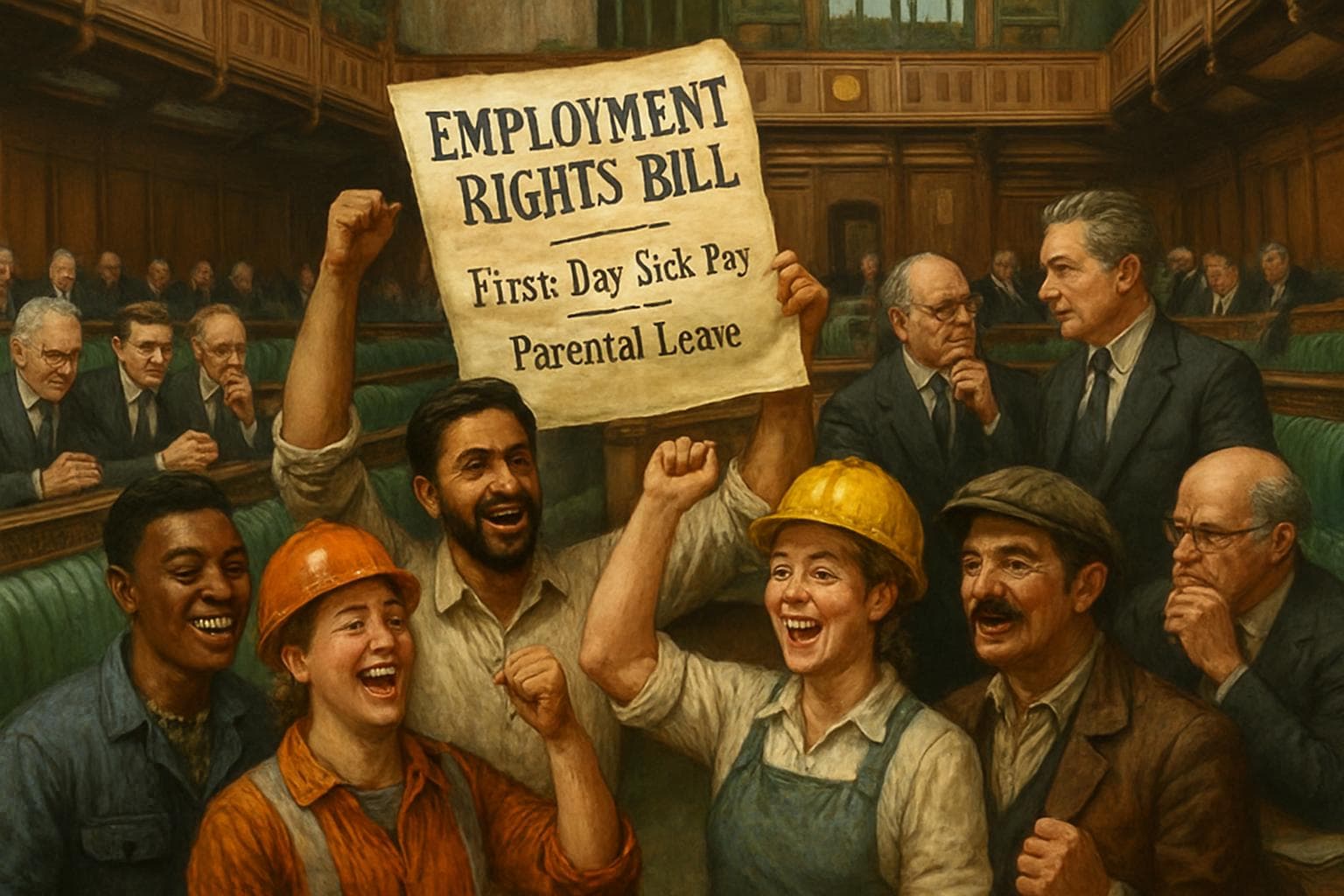
- The Employment Rights Bill, a key Labour initiative, has cleared its final parliamentary hurdle and is expected to become law by Christmas.
- The bill introduces significant changes, including sick pay and parental leave from day one, but excludes Northern Ireland.
- Trade unions celebrate the bill as a "generational shift" for workers' rights, emphasizing the need for swift implementation.
- The bill faced opposition from Conservative peers and business groups, leading to concessions such as a six-month qualifying period for unfair dismissal.
- Critics argue the legislation will increase costs for small businesses and potentially impact unemployment rates.
The Employment Rights Bill, a cornerstone of Labour's legislative agenda, is poised to become law after overcoming its final parliamentary challenge. The bill, which promises to significantly enhance workers' rights, is expected to receive royal assent by Christmas, marking a pivotal moment for employment legislation in the UK.
Historic Legislation for Workers' Rights
The bill's passage through the House of Lords was marked by intense debate, with Conservative peers initially opposing several provisions. However, the withdrawal of an amendment by Lord Sharpe, the shadow business and trade minister, cleared the way for the bill's approval. Prime Minister Sir Keir Starmer hailed the development as a "major victory for working people," emphasizing the bill's potential to upgrade workers' rights across England, Scotland, and Wales.
Key Provisions and Trade Union Support
Among its key provisions, the bill grants workers access to sick pay and parental leave from the first day of employment, while also introducing protections for pregnant women and new mothers. Although Labour initially aimed to include day-one rights to claim unfair dismissal, this was replaced with a six-month qualifying period following negotiations with trade unions and business groups. Trade unions, including Unite and the Trades Union Congress (TUC), have praised the legislation as a "historic day" for workers, urging swift implementation to ensure its benefits are felt nationwide.
Business Concerns and Political Reactions
Despite the bill's passage, it has faced criticism from business groups and Conservative politicians. Shadow business secretary Andrew Griffith warned that the legislation could impose additional costs on small businesses, potentially leading to hiring freezes and increased unemployment. Recent figures indicate a rise in UK unemployment to 5.1% in the three months to October, up from 4.3% a year earlier. Business organizations, such as the British Chambers of Commerce, have expressed concerns about the bill's impact on the economy, though they ultimately supported its passage with the six-month qualifying period intact.
WHAT THIS MIGHT MEAN
As the Employment Rights Bill moves towards becoming law, its implementation will be closely watched by both supporters and critics. The government faces the challenge of drafting secondary legislation to ensure the bill's provisions are effectively enforced, with trade unions advocating for robust measures to prevent exploitation by employers. The impact on small businesses and the broader economy remains a contentious issue, with potential implications for employment rates and business operations. Experts suggest that the success of the bill will depend on careful collaboration between the government, employers, and unions to uphold the spirit of the legislation and deliver meaningful improvements in workers' rights.
Related Articles

Sisters Tragically Drown at Eryri National Park's Watkin Path

Labour MP's Husband Arrested in UK-China Espionage Probe

Saharan Dust to Illuminate UK Skies with Vivid Sunrises and Sunsets

UK Defence Faces Scrutiny Amid Ajax Armoured Vehicle Delays and Soldier Safety Concerns

Global Counsel Faces Collapse Amidst Epstein Scandal Fallout

Reform UK Aims to Reshape Welsh Politics with New Manifesto
Labour's Employment Rights Bill Set to Transform Workers' Protections
In This Article
 Ethan Brooks| Published
 HIGHLIGHTS
- The Employment Rights Bill, a key Labour initiative, has cleared its final parliamentary hurdle and is expected to become law by Christmas.
- The bill introduces significant changes, including sick pay and parental leave from day one, but excludes Northern Ireland.
- Trade unions celebrate the bill as a "generational shift" for workers' rights, emphasizing the need for swift implementation.
- The bill faced opposition from Conservative peers and business groups, leading to concessions such as a six-month qualifying period for unfair dismissal.
- Critics argue the legislation will increase costs for small businesses and potentially impact unemployment rates.
The Employment Rights Bill, a cornerstone of Labour's legislative agenda, is poised to become law after overcoming its final parliamentary challenge. The bill, which promises to significantly enhance workers' rights, is expected to receive royal assent by Christmas, marking a pivotal moment for employment legislation in the UK.
Historic Legislation for Workers' Rights
The bill's passage through the House of Lords was marked by intense debate, with Conservative peers initially opposing several provisions. However, the withdrawal of an amendment by Lord Sharpe, the shadow business and trade minister, cleared the way for the bill's approval. Prime Minister Sir Keir Starmer hailed the development as a "major victory for working people," emphasizing the bill's potential to upgrade workers' rights across England, Scotland, and Wales.
Key Provisions and Trade Union Support
Among its key provisions, the bill grants workers access to sick pay and parental leave from the first day of employment, while also introducing protections for pregnant women and new mothers. Although Labour initially aimed to include day-one rights to claim unfair dismissal, this was replaced with a six-month qualifying period following negotiations with trade unions and business groups. Trade unions, including Unite and the Trades Union Congress (TUC), have praised the legislation as a "historic day" for workers, urging swift implementation to ensure its benefits are felt nationwide.
Business Concerns and Political Reactions
Despite the bill's passage, it has faced criticism from business groups and Conservative politicians. Shadow business secretary Andrew Griffith warned that the legislation could impose additional costs on small businesses, potentially leading to hiring freezes and increased unemployment. Recent figures indicate a rise in UK unemployment to 5.1% in the three months to October, up from 4.3% a year earlier. Business organizations, such as the British Chambers of Commerce, have expressed concerns about the bill's impact on the economy, though they ultimately supported its passage with the six-month qualifying period intact.
WHAT THIS MIGHT MEAN
As the Employment Rights Bill moves towards becoming law, its implementation will be closely watched by both supporters and critics. The government faces the challenge of drafting secondary legislation to ensure the bill's provisions are effectively enforced, with trade unions advocating for robust measures to prevent exploitation by employers. The impact on small businesses and the broader economy remains a contentious issue, with potential implications for employment rates and business operations. Experts suggest that the success of the bill will depend on careful collaboration between the government, employers, and unions to uphold the spirit of the legislation and deliver meaningful improvements in workers' rights.
Related Articles
Sisters Tragically Drown at Eryri National Park's Watkin Path
Labour MP's Husband Arrested in UK-China Espionage Probe
Saharan Dust to Illuminate UK Skies with Vivid Sunrises and Sunsets
UK Defence Faces Scrutiny Amid Ajax Armoured Vehicle Delays and Soldier Safety Concerns
Global Counsel Faces Collapse Amidst Epstein Scandal Fallout
Reform UK Aims to Reshape Welsh Politics with New Manifesto