
Lib Dems Propose Replacing Treasury with New Department for Growth
In This Article
HIGHLIGHTS
- The Liberal Democrats propose replacing the UK Treasury with a new Department for Growth, aiming to boost long-term economic prosperity.
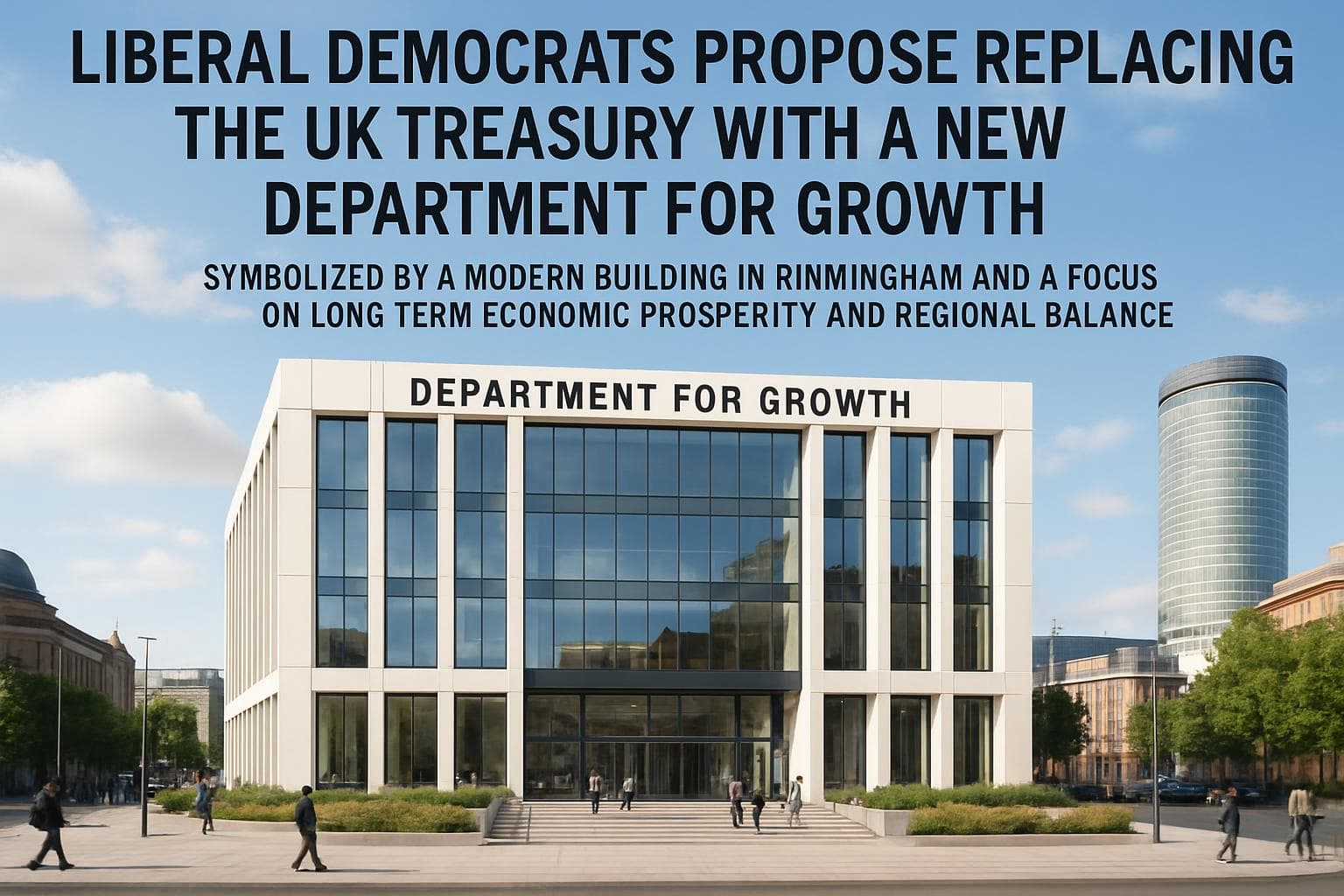
- The new department would be based in Birmingham, reflecting a strategy to decentralize economic power from London.
- The plan includes merging the Department for Business and Trade into the new growth-focused department.
- A separate Department for Public Expenditure would be created to oversee government spending.
- Critics, including the Labour Party, argue that the proposal lacks detailed costings and recall past austerity measures under the Lib Dems.
In a bold policy shift, the Liberal Democrats have announced plans to dismantle the UK Treasury, replacing it with a new Department for Growth. This initiative, unveiled by the party's deputy leader Daisy Cooper, aims to foster long-term economic prosperity and address the UK's cost-of-living crisis. The proposed department would be headquartered in Birmingham, a move intended to rebalance economic power away from London.
A New Economic Vision
The Liberal Democrats' plan involves merging the current Department for Business and Trade into the new Department for Growth. This restructuring is designed to create a cohesive economic strategy, focusing on improving living standards and boosting prosperity. Cooper criticized the existing "Treasury brain" mindset, which she claims prioritizes short-term fiscal goals over sustainable growth. "For too long, political parties have allowed the Treasury tail to wag the political dog," she stated, emphasizing the need for a strategic shift.
Decentralizing Economic Power
By situating the new department in Birmingham, the Liberal Democrats aim to address regional economic imbalances. Cooper highlighted the importance of this move, stating that it sends a strong signal about the need to bridge the economic gap between London and other UK cities. The plan also includes establishing a separate Department for Public Expenditure to manage government spending and ensure value for money.
Political Reactions and Criticisms
The proposal has sparked debate among political circles. A Labour Party spokesperson criticized the lack of detailed costings and recalled the Lib Dems' role in austerity measures during their coalition with the Conservatives from 2010 to 2015. Despite these criticisms, Cooper extended an invitation to moderate Conservatives, emphasizing that "moderates are welcome" in the Liberal Democrats.
WHAT THIS MIGHT MEAN
If implemented, the Liberal Democrats' proposal could significantly alter the UK's economic governance structure. By decentralizing economic power and focusing on long-term growth, the plan may attract support from regions outside London. However, the lack of detailed financial projections could pose challenges in gaining widespread political backing. Experts suggest that the success of this initiative would depend on its ability to deliver tangible economic benefits and address regional disparities. As the political landscape evolves, the proposal may influence broader discussions on economic reform and decentralization in the UK.
Related Articles

Labour MP's Husband Arrested in UK-China Espionage Probe
UK Government to Reform Asylum Seeker Support and Employment Policies

UK Faces Dilemmas Amid Iran Conflict and China Spying Allegations

Bafta Film Awards 2023: A Night of Glamour, Talent, and Fashion Statements

UK Government Announces Major Overhaul of SEND System with £3.4 Billion Investment

Nottingham Attacks Inquiry: Families Demand Accountability and Truth
Lib Dems Propose Replacing Treasury with New Department for Growth
In This Article
 Daniel Rivera| Published
 HIGHLIGHTS
- The Liberal Democrats propose replacing the UK Treasury with a new Department for Growth, aiming to boost long-term economic prosperity.
- The new department would be based in Birmingham, reflecting a strategy to decentralize economic power from London.
- The plan includes merging the Department for Business and Trade into the new growth-focused department.
- A separate Department for Public Expenditure would be created to oversee government spending.
- Critics, including the Labour Party, argue that the proposal lacks detailed costings and recall past austerity measures under the Lib Dems.
In a bold policy shift, the Liberal Democrats have announced plans to dismantle the UK Treasury, replacing it with a new Department for Growth. This initiative, unveiled by the party's deputy leader Daisy Cooper, aims to foster long-term economic prosperity and address the UK's cost-of-living crisis. The proposed department would be headquartered in Birmingham, a move intended to rebalance economic power away from London.
A New Economic Vision
The Liberal Democrats' plan involves merging the current Department for Business and Trade into the new Department for Growth. This restructuring is designed to create a cohesive economic strategy, focusing on improving living standards and boosting prosperity. Cooper criticized the existing "Treasury brain" mindset, which she claims prioritizes short-term fiscal goals over sustainable growth. "For too long, political parties have allowed the Treasury tail to wag the political dog," she stated, emphasizing the need for a strategic shift.
Decentralizing Economic Power
By situating the new department in Birmingham, the Liberal Democrats aim to address regional economic imbalances. Cooper highlighted the importance of this move, stating that it sends a strong signal about the need to bridge the economic gap between London and other UK cities. The plan also includes establishing a separate Department for Public Expenditure to manage government spending and ensure value for money.
Political Reactions and Criticisms
The proposal has sparked debate among political circles. A Labour Party spokesperson criticized the lack of detailed costings and recalled the Lib Dems' role in austerity measures during their coalition with the Conservatives from 2010 to 2015. Despite these criticisms, Cooper extended an invitation to moderate Conservatives, emphasizing that "moderates are welcome" in the Liberal Democrats.
WHAT THIS MIGHT MEAN
If implemented, the Liberal Democrats' proposal could significantly alter the UK's economic governance structure. By decentralizing economic power and focusing on long-term growth, the plan may attract support from regions outside London. However, the lack of detailed financial projections could pose challenges in gaining widespread political backing. Experts suggest that the success of this initiative would depend on its ability to deliver tangible economic benefits and address regional disparities. As the political landscape evolves, the proposal may influence broader discussions on economic reform and decentralization in the UK.
Related Articles
Labour MP's Husband Arrested in UK-China Espionage Probe
UK Government to Reform Asylum Seeker Support and Employment Policies
UK Faces Dilemmas Amid Iran Conflict and China Spying Allegations
Bafta Film Awards 2023: A Night of Glamour, Talent, and Fashion Statements
UK Government Announces Major Overhaul of SEND System with £3.4 Billion Investment
Nottingham Attacks Inquiry: Families Demand Accountability and Truth