
Liverpool Extends Dog Ban as UK Government Targets 'For-Profit' Litter Enforcement
In This Article
HIGHLIGHTS
- Liverpool City Council has extended a Public Space Protection Order (PSPO) banning dogs from over 70 playgrounds for three more years due to strong public support.
- The PSPO requires dog owners to clean up after their pets and keep them under control, with breaches resulting in a £100 fine.
- The UK government plans to end "for-profit" litter enforcement contracts, where private firms receive a portion of fines, to ensure fairer practices.
- Critics argue that private enforcement leads to excessive fines for minor offences, with at least 75% of PSPO penalties issued by private companies.
- New statutory guidance aims to modernize enforcement practices, but its effectiveness remains debated.
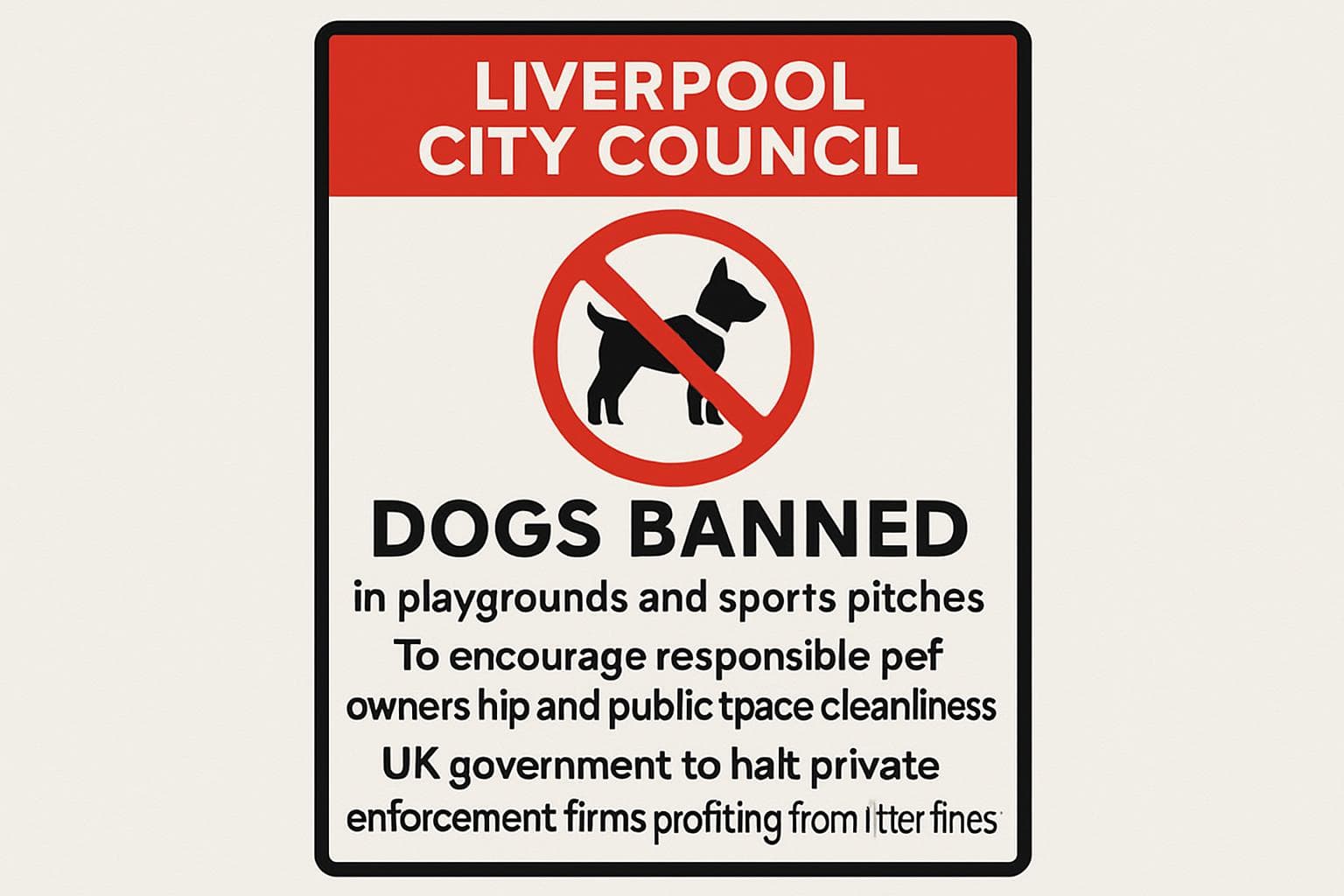
Liverpool City Council has decided to extend a Public Space Protection Order (PSPO) that bans dogs from more than 70 playgrounds and sports pitches for an additional three years. This decision follows strong public support for the measure, initially adopted in 2022 to address dog fouling and inappropriate behavior in public spaces. The PSPO mandates that dog owners clean up after their pets and maintain control over them in designated areas. Breaching these rules can result in a £100 fine, with 319 fixed penalty notices (FPNs) and 100 warnings issued since the order's inception.
Councillor Laura Robertson-Collins emphasized the importance of community cooperation, stating, "It's about working together to create a city we can all be proud of." She noted that most dog owners are responsible and that the order supports them while encouraging others to follow their example. To enforce the PSPO, Liverpool has employed external officers to educate dog owners and issue fines when necessary.
Meanwhile, the UK government is preparing to crack down on "for-profit" litter enforcement practices. Under new statutory guidance, councils will be required to terminate contracts with private firms that receive a percentage of each fine issued. Currently, fixed penalty notices for littering and PSPO breaches range from £100 to £200, with potential court fines reaching £1,000 for severe offenses.
Critics, including Josie Appleton of the Manifesto Club, argue that private enforcement results in excessive fines for minor infractions, with private companies responsible for at least 75% of PSPO penalties. The Ministry of Housing, Communities and Local Government aims to implement guidance that ensures local authorities exercise their powers consistently and appropriately.
The debate continues over the practical impact of statutory guidance, as existing codes of practice are often non-binding. Nayan Kisten, a resident of Tonbridge, Kent, shared his experience of being falsely accused of spitting by private enforcement officers, highlighting concerns over the pressure and fear associated with such fines.
WHAT THIS MIGHT MEAN
The extension of Liverpool's PSPO reflects a broader trend of local authorities using such orders to manage public spaces. As the UK government moves to end "for-profit" litter enforcement, councils may need to reassess their contracts with private firms. This shift could lead to more equitable enforcement practices, but the effectiveness of new statutory guidance will depend on its implementation and adherence by local authorities.
If successful, these changes could reduce the number of fines issued for minor offenses and restore public trust in enforcement processes. However, the transition may face challenges, particularly from private firms that have benefited from existing arrangements. The government's commitment to modernizing enforcement practices will be crucial in ensuring fair and consistent application of the law across the country.
Related Articles
UK Police Intensify Investigation into Andrew Mountbatten-Windsor Amid Misconduct Allegations

Crackdown on Waste Crime: £1.2 Million Fine and New Drone Unit to Combat Illegal Dumping

Prince Andrew's Arrest Intensifies Scrutiny on Royal Succession and Prince William's Future Role

Middle East Conflict Drives UK Energy Prices to New Highs

Government Announces £4 Billion Overhaul of SEND Support in England

UK Government Announces Major Overhaul of SEND System with £3.4 Billion Investment
Liverpool Extends Dog Ban as UK Government Targets 'For-Profit' Litter Enforcement
In This Article
 Sofia Romano| Published
 HIGHLIGHTS
- Liverpool City Council has extended a Public Space Protection Order (PSPO) banning dogs from over 70 playgrounds for three more years due to strong public support.
- The PSPO requires dog owners to clean up after their pets and keep them under control, with breaches resulting in a £100 fine.
- The UK government plans to end "for-profit" litter enforcement contracts, where private firms receive a portion of fines, to ensure fairer practices.
- Critics argue that private enforcement leads to excessive fines for minor offences, with at least 75% of PSPO penalties issued by private companies.
- New statutory guidance aims to modernize enforcement practices, but its effectiveness remains debated.
Liverpool City Council has decided to extend a Public Space Protection Order (PSPO) that bans dogs from more than 70 playgrounds and sports pitches for an additional three years. This decision follows strong public support for the measure, initially adopted in 2022 to address dog fouling and inappropriate behavior in public spaces. The PSPO mandates that dog owners clean up after their pets and maintain control over them in designated areas. Breaching these rules can result in a £100 fine, with 319 fixed penalty notices (FPNs) and 100 warnings issued since the order's inception.
Councillor Laura Robertson-Collins emphasized the importance of community cooperation, stating, "It's about working together to create a city we can all be proud of." She noted that most dog owners are responsible and that the order supports them while encouraging others to follow their example. To enforce the PSPO, Liverpool has employed external officers to educate dog owners and issue fines when necessary.
Meanwhile, the UK government is preparing to crack down on "for-profit" litter enforcement practices. Under new statutory guidance, councils will be required to terminate contracts with private firms that receive a percentage of each fine issued. Currently, fixed penalty notices for littering and PSPO breaches range from £100 to £200, with potential court fines reaching £1,000 for severe offenses.
Critics, including Josie Appleton of the Manifesto Club, argue that private enforcement results in excessive fines for minor infractions, with private companies responsible for at least 75% of PSPO penalties. The Ministry of Housing, Communities and Local Government aims to implement guidance that ensures local authorities exercise their powers consistently and appropriately.
The debate continues over the practical impact of statutory guidance, as existing codes of practice are often non-binding. Nayan Kisten, a resident of Tonbridge, Kent, shared his experience of being falsely accused of spitting by private enforcement officers, highlighting concerns over the pressure and fear associated with such fines.
WHAT THIS MIGHT MEAN
The extension of Liverpool's PSPO reflects a broader trend of local authorities using such orders to manage public spaces. As the UK government moves to end "for-profit" litter enforcement, councils may need to reassess their contracts with private firms. This shift could lead to more equitable enforcement practices, but the effectiveness of new statutory guidance will depend on its implementation and adherence by local authorities.
If successful, these changes could reduce the number of fines issued for minor offenses and restore public trust in enforcement processes. However, the transition may face challenges, particularly from private firms that have benefited from existing arrangements. The government's commitment to modernizing enforcement practices will be crucial in ensuring fair and consistent application of the law across the country.
Related Articles
UK Police Intensify Investigation into Andrew Mountbatten-Windsor Amid Misconduct Allegations
Crackdown on Waste Crime: £1.2 Million Fine and New Drone Unit to Combat Illegal Dumping
Prince Andrew's Arrest Intensifies Scrutiny on Royal Succession and Prince William's Future Role
Middle East Conflict Drives UK Energy Prices to New Highs
Government Announces £4 Billion Overhaul of SEND Support in England
UK Government Announces Major Overhaul of SEND System with £3.4 Billion Investment