
London Arrests Highlight Tensions Over Palestine Action Ban
In This Article
HIGHLIGHTS
- Twenty-nine individuals were arrested in London for supporting the newly banned group, Palestine Action, under the Terrorism Act 2000.
- The ban on Palestine Action came into effect after a failed legal attempt to block it, making support for the group a criminal offense.
- The protest was organized by Defend Our Juries, with participants including a priest and health professionals, who criticized the arrests.
- Home Secretary Yvette Cooper cited significant damage to military aircraft as a reason for the ban, linking it to the group's activities.
- The arrests have sparked debate over freedom of expression and the implications of labeling protest groups as terrorist organizations.
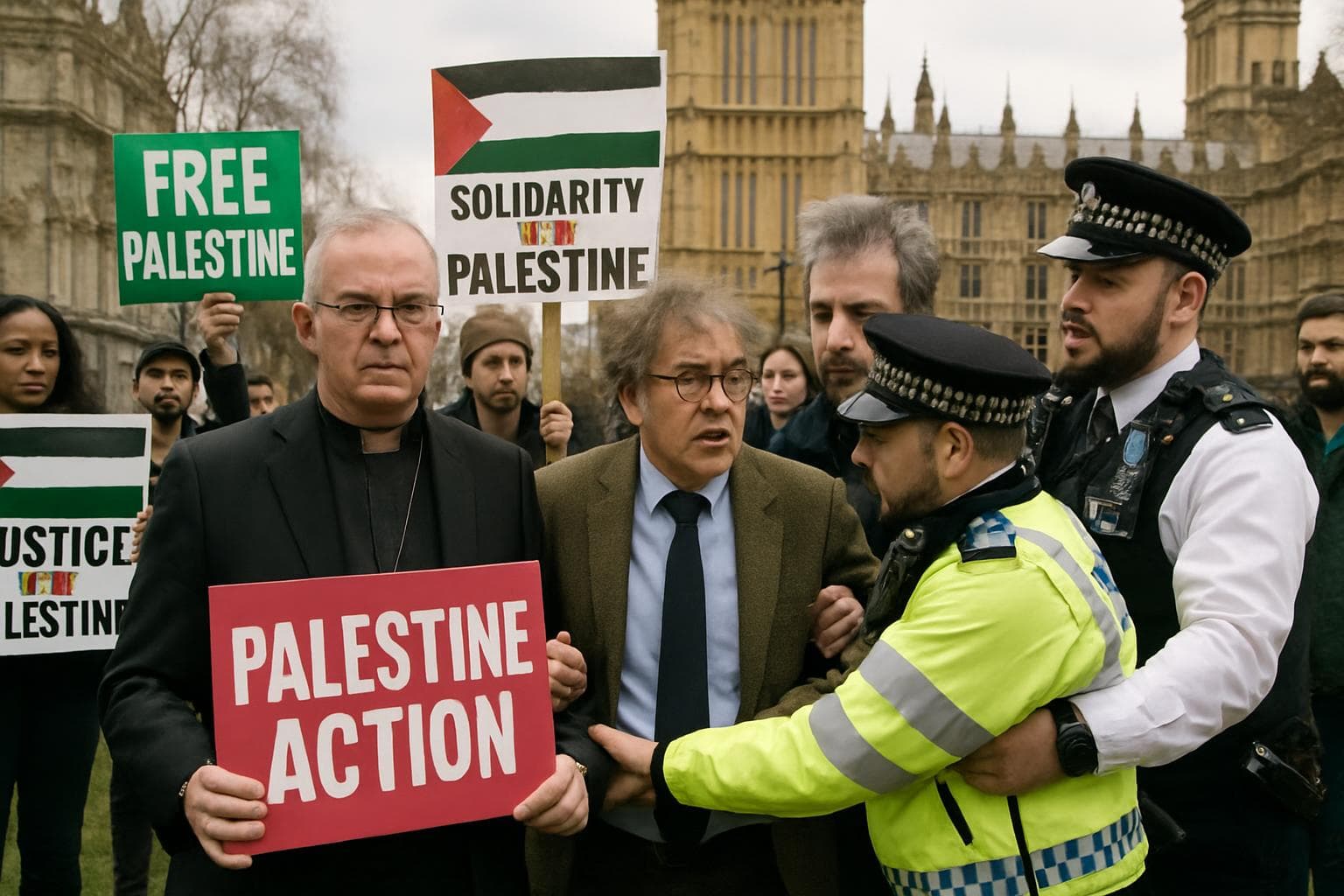
In a significant development in the ongoing debate over freedom of expression and national security, twenty-nine people were arrested in London for supporting the newly proscribed group, Palestine Action. The arrests occurred during a protest in Parliament Square, organized by the campaign group Defend Our Juries, following the group's designation as a terrorist organization under the Terrorism Act 2000.
Protest and Arrests
The protest, which took place near the Mahatma Gandhi statue, saw participants holding placards expressing support for Palestine Action. The Metropolitan Police, acting under the new legal framework, detained individuals on suspicion of offenses related to the proscription. Among those arrested were a priest, an emeritus professor, and several health professionals, highlighting the diverse backgrounds of the demonstrators.
Legal Context and Government Justification
The ban on Palestine Action was announced by Home Secretary Yvette Cooper, citing the group's involvement in causing approximately £7 million in damage to military aircraft at RAF Brize Norton. Cooper described the damage as "disgraceful" and emphasized the group's history of targeting arms companies amid the ongoing Gaza conflict. The High Court upheld the ban, with Mr. Justice Chamberlain stating that the public interest in maintaining the order outweighed the group's legal challenge.
Public Reaction and Criticism
The arrests have sparked a broader conversation about the implications of the ban. Tim Crosland of Defend Our Juries criticized the move, arguing that it criminalizes peaceful protest and equates it with terrorism. Environmental campaigner Donnachadh McCarthy expressed concerns over the potential for the government to label various forms of activism as terrorism, drawing parallels to authoritarian regimes.
Background on the Gaza Conflict
The backdrop to these events is the ongoing conflict in Gaza, which escalated following a Hamas attack on October 7, 2023, resulting in significant casualties. The situation has led to increased scrutiny of groups like Palestine Action, which have been active in protesting against arms companies involved in the conflict.
WHAT THIS MIGHT MEAN
The arrests in London could set a precedent for how protest groups are treated under anti-terrorism laws in the UK. Legal experts warn that this could lead to a chilling effect on freedom of expression, as individuals may fear severe penalties for participating in protests. Politically, the government's decision to ban Palestine Action may face challenges both domestically and internationally, as human rights organizations scrutinize the balance between security and civil liberties. As the situation in Gaza continues to evolve, the UK's approach to handling related protests will likely remain a contentious issue.
Related Articles
Labour MP's Husband Arrested in UK-China Espionage Probe
Nottingham Attacks Inquiry: Families Demand Accountability and Truth
Prince Andrew's Ties to Epstein Under Scrutiny Amid Calls for Inquiry
UK Police Intensify Investigation into Andrew Mountbatten-Windsor Amid Misconduct Allegations
Prince Andrew's Arrest Raises Questions About Royal Succession and Monarchy's Future

Global Counsel Faces Collapse Amidst Epstein Scandal Fallout
London Arrests Highlight Tensions Over Palestine Action Ban
In This Article
 Ethan Brooks| Published
 HIGHLIGHTS
- Twenty-nine individuals were arrested in London for supporting the newly banned group, Palestine Action, under the Terrorism Act 2000.
- The ban on Palestine Action came into effect after a failed legal attempt to block it, making support for the group a criminal offense.
- The protest was organized by Defend Our Juries, with participants including a priest and health professionals, who criticized the arrests.
- Home Secretary Yvette Cooper cited significant damage to military aircraft as a reason for the ban, linking it to the group's activities.
- The arrests have sparked debate over freedom of expression and the implications of labeling protest groups as terrorist organizations.
In a significant development in the ongoing debate over freedom of expression and national security, twenty-nine people were arrested in London for supporting the newly proscribed group, Palestine Action. The arrests occurred during a protest in Parliament Square, organized by the campaign group Defend Our Juries, following the group's designation as a terrorist organization under the Terrorism Act 2000.
Protest and Arrests
The protest, which took place near the Mahatma Gandhi statue, saw participants holding placards expressing support for Palestine Action. The Metropolitan Police, acting under the new legal framework, detained individuals on suspicion of offenses related to the proscription. Among those arrested were a priest, an emeritus professor, and several health professionals, highlighting the diverse backgrounds of the demonstrators.
Legal Context and Government Justification
The ban on Palestine Action was announced by Home Secretary Yvette Cooper, citing the group's involvement in causing approximately £7 million in damage to military aircraft at RAF Brize Norton. Cooper described the damage as "disgraceful" and emphasized the group's history of targeting arms companies amid the ongoing Gaza conflict. The High Court upheld the ban, with Mr. Justice Chamberlain stating that the public interest in maintaining the order outweighed the group's legal challenge.
Public Reaction and Criticism
The arrests have sparked a broader conversation about the implications of the ban. Tim Crosland of Defend Our Juries criticized the move, arguing that it criminalizes peaceful protest and equates it with terrorism. Environmental campaigner Donnachadh McCarthy expressed concerns over the potential for the government to label various forms of activism as terrorism, drawing parallels to authoritarian regimes.
Background on the Gaza Conflict
The backdrop to these events is the ongoing conflict in Gaza, which escalated following a Hamas attack on October 7, 2023, resulting in significant casualties. The situation has led to increased scrutiny of groups like Palestine Action, which have been active in protesting against arms companies involved in the conflict.
WHAT THIS MIGHT MEAN
The arrests in London could set a precedent for how protest groups are treated under anti-terrorism laws in the UK. Legal experts warn that this could lead to a chilling effect on freedom of expression, as individuals may fear severe penalties for participating in protests. Politically, the government's decision to ban Palestine Action may face challenges both domestically and internationally, as human rights organizations scrutinize the balance between security and civil liberties. As the situation in Gaza continues to evolve, the UK's approach to handling related protests will likely remain a contentious issue.
Related Articles
Labour MP's Husband Arrested in UK-China Espionage Probe
Nottingham Attacks Inquiry: Families Demand Accountability and Truth
Prince Andrew's Ties to Epstein Under Scrutiny Amid Calls for Inquiry
UK Police Intensify Investigation into Andrew Mountbatten-Windsor Amid Misconduct Allegations
Prince Andrew's Arrest Raises Questions About Royal Succession and Monarchy's Future
Global Counsel Faces Collapse Amidst Epstein Scandal Fallout