
London Boroughs and Reform UK: A Tale of Financial Struggles and Contested Savings
In This Article
HIGHLIGHTS
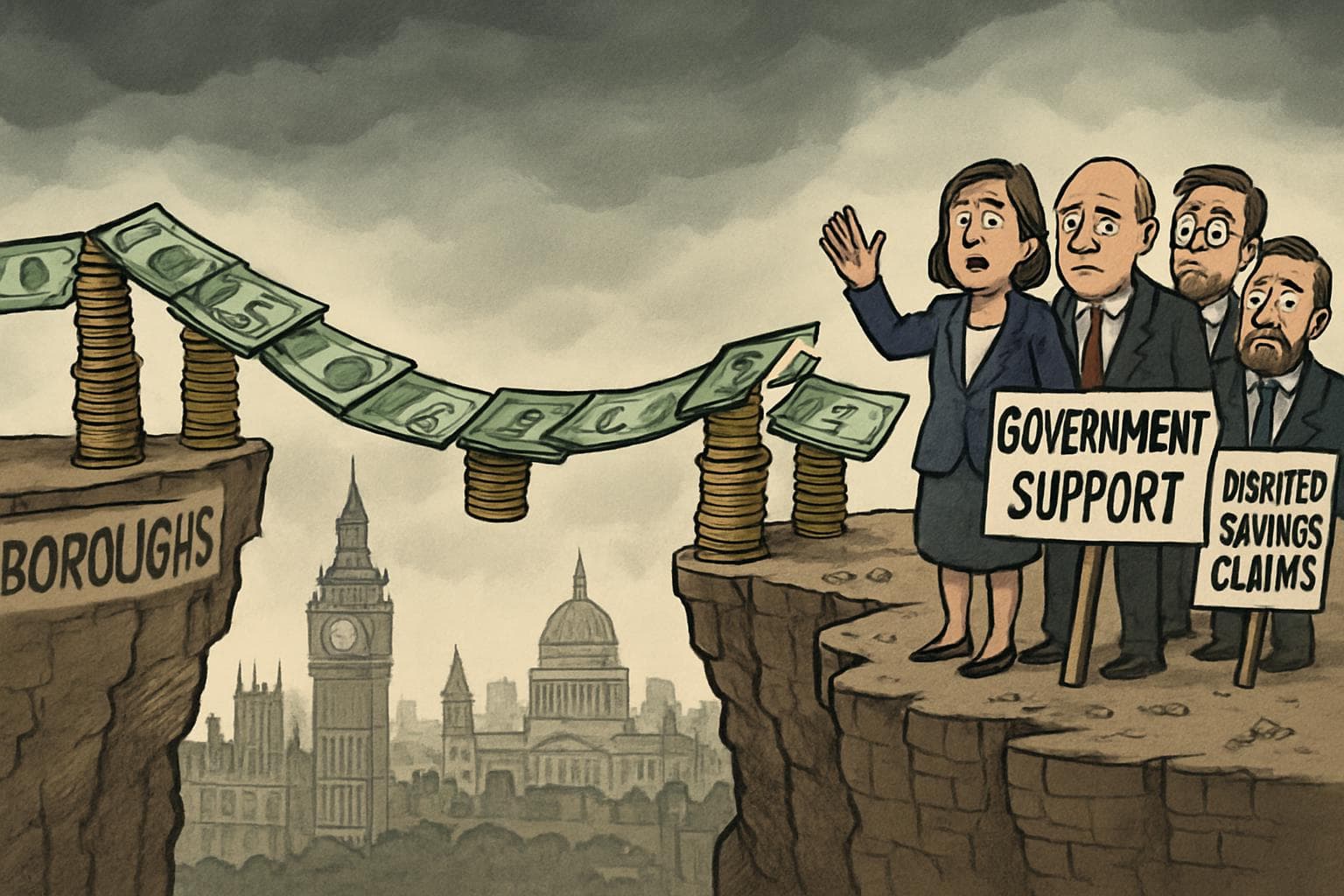
- London boroughs face a £1bn funding gap, potentially rising to £4.7bn by 2028-29, urging government intervention.
- Havering council leader Ray Morgon highlights severe financial strains, relying on Exceptional Financial Support to avoid bankruptcy.
- Reform UK claims £331m savings across 10 councils, but evidence and calculations remain unverified and disputed.
- Experts argue that Reform UK's savings claims are questionable, with many initiatives already in place before their tenure.
- Calls for increased government funding and fiscal powers to support essential services like social care and housing.
As London's boroughs grapple with a looming financial crisis, calls for government intervention grow louder. London Councils, representing the city's 32 boroughs and the City of London, warns of a daunting £1bn funding gap this year, potentially escalating to £4.7bn by 2028-29. The boroughs are urging the government to provide additional funding for temporary accommodation, transport infrastructure, and new fiscal powers to stabilize their financial footing.
Havering's Financial Struggles
Havering, a borough in east London, exemplifies the dire financial situation many councils face. Ray Morgon, leader of the Havering Residents Association, has been vocal about the borough's precarious position, relying heavily on Exceptional Financial Support from the government. Last year, Havering borrowed £88m to balance its books. Morgon emphasizes the need for government support, stating, "If the government wants councils to provide a good level of service, they must ensure sufficient funding."
Reform UK's Controversial Savings Claims
Meanwhile, Reform UK, led by Richard Tice, claims to have saved £331m across 10 English councils since May. However, these claims are under scrutiny, with experts questioning the validity of the figures. Despite repeated requests, Reform UK has yet to provide detailed evidence of these savings. Critics argue that many initiatives credited to Reform UK were already in motion before their involvement.
Expert Opinions on Local Government Efficiency
Local government experts, including Stuart Hoddinott from the Institute for Government, suggest that finding wasteful spending is challenging without significant trade-offs in services. Tony Travers from the London School of Economics notes that Reform UK's strategies mirror those of other political parties, indicating limited options for cost-cutting without affecting essential services.
WHAT THIS MIGHT MEAN
The financial challenges facing London's boroughs and the disputed savings claims by Reform UK highlight the complexities of local government funding. If the government fails to address the funding gaps, councils may face further cuts to essential services, impacting vulnerable populations reliant on social care and housing support. Conversely, if Reform UK can substantiate its savings claims, it may influence future cost-cutting strategies across councils. However, without transparent evidence, skepticism will likely persist, prompting calls for more robust fiscal oversight and innovative funding solutions to ensure sustainable local government operations.
Related Articles
Reform UK to Reinstate Two-Child Benefit Cap Amidst Political Controversy
Reform UK Aims to Reshape Welsh Politics with New Manifesto

Labour MP's Husband Arrested in UK-China Espionage Probe

Bafta Film Awards 2023: A Night of Glamour, Talent, and Fashion Statements
Nottingham Attacks Inquiry: Families Demand Accountability and Truth

Bafta Film Awards 2026: A Night of Glamour and Identity Challenges
London Boroughs and Reform UK: A Tale of Financial Struggles and Contested Savings
In This Article
 Daniel Rivera| Published
 HIGHLIGHTS
- London boroughs face a £1bn funding gap, potentially rising to £4.7bn by 2028-29, urging government intervention.
- Havering council leader Ray Morgon highlights severe financial strains, relying on Exceptional Financial Support to avoid bankruptcy.
- Reform UK claims £331m savings across 10 councils, but evidence and calculations remain unverified and disputed.
- Experts argue that Reform UK's savings claims are questionable, with many initiatives already in place before their tenure.
- Calls for increased government funding and fiscal powers to support essential services like social care and housing.
As London's boroughs grapple with a looming financial crisis, calls for government intervention grow louder. London Councils, representing the city's 32 boroughs and the City of London, warns of a daunting £1bn funding gap this year, potentially escalating to £4.7bn by 2028-29. The boroughs are urging the government to provide additional funding for temporary accommodation, transport infrastructure, and new fiscal powers to stabilize their financial footing.
Havering's Financial Struggles
Havering, a borough in east London, exemplifies the dire financial situation many councils face. Ray Morgon, leader of the Havering Residents Association, has been vocal about the borough's precarious position, relying heavily on Exceptional Financial Support from the government. Last year, Havering borrowed £88m to balance its books. Morgon emphasizes the need for government support, stating, "If the government wants councils to provide a good level of service, they must ensure sufficient funding."
Reform UK's Controversial Savings Claims
Meanwhile, Reform UK, led by Richard Tice, claims to have saved £331m across 10 English councils since May. However, these claims are under scrutiny, with experts questioning the validity of the figures. Despite repeated requests, Reform UK has yet to provide detailed evidence of these savings. Critics argue that many initiatives credited to Reform UK were already in motion before their involvement.
Expert Opinions on Local Government Efficiency
Local government experts, including Stuart Hoddinott from the Institute for Government, suggest that finding wasteful spending is challenging without significant trade-offs in services. Tony Travers from the London School of Economics notes that Reform UK's strategies mirror those of other political parties, indicating limited options for cost-cutting without affecting essential services.
WHAT THIS MIGHT MEAN
The financial challenges facing London's boroughs and the disputed savings claims by Reform UK highlight the complexities of local government funding. If the government fails to address the funding gaps, councils may face further cuts to essential services, impacting vulnerable populations reliant on social care and housing support. Conversely, if Reform UK can substantiate its savings claims, it may influence future cost-cutting strategies across councils. However, without transparent evidence, skepticism will likely persist, prompting calls for more robust fiscal oversight and innovative funding solutions to ensure sustainable local government operations.
Related Articles
Reform UK to Reinstate Two-Child Benefit Cap Amidst Political Controversy
Reform UK Aims to Reshape Welsh Politics with New Manifesto
Labour MP's Husband Arrested in UK-China Espionage Probe
Bafta Film Awards 2023: A Night of Glamour, Talent, and Fashion Statements
Nottingham Attacks Inquiry: Families Demand Accountability and Truth
Bafta Film Awards 2026: A Night of Glamour and Identity Challenges