
Mandelson Faces Calls for Resignation Amid Epstein Document Scandal
In This Article
HIGHLIGHTS
- Peter Mandelson is under scrutiny for allegedly sharing sensitive UK government documents with Jeffrey Epstein in 2009.
- Keir Starmer has called for Mandelson to resign from the House of Lords and urged reform of its disciplinary procedures.
- Gordon Brown has demanded a comprehensive Whitehall inquiry into Mandelson's conduct and the disclosure of government documents.
- Mandelson resigned from the Labour Party to avoid further embarrassment amid ongoing investigations.
- The UK government is considering changes to allow easier removal of peers who discredit the House of Lords.
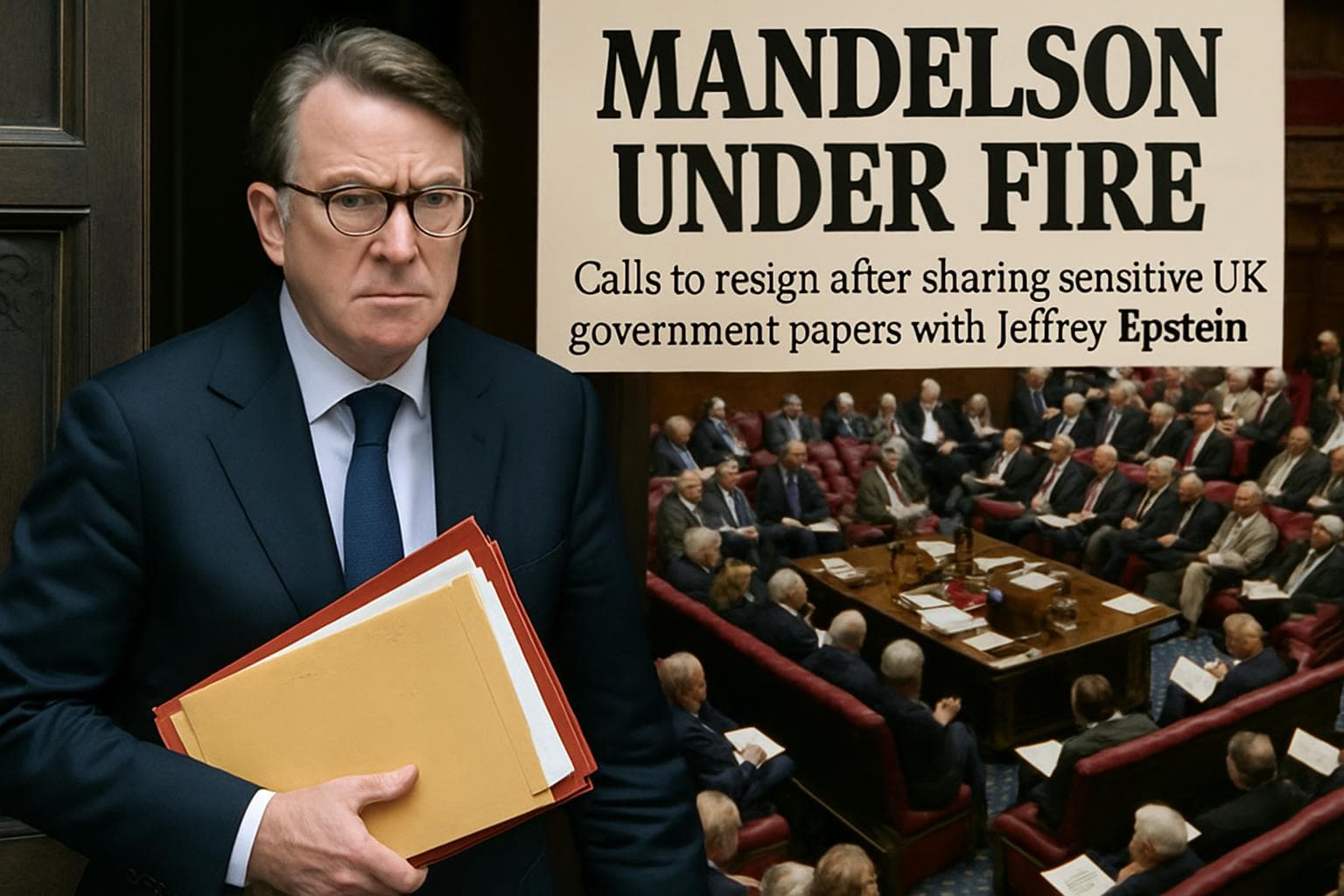
Peter Mandelson, a prominent figure in British politics, is facing intense scrutiny following revelations of his alleged involvement in sharing sensitive UK government documents with the late financier Jeffrey Epstein. The controversy has prompted calls for his resignation from the House of Lords and sparked discussions on reforming its disciplinary procedures.
Allegations and Political Reactions
The controversy erupted after the US Department of Justice released documents suggesting that Mandelson, while serving as business secretary in 2009, forwarded confidential UK government information to Epstein. The documents reportedly included details on £20 billion in asset sales and Labour's tax policy plans. Mandelson also allegedly attempted to influence government policy on bankers' bonuses at Epstein's behest.
In response, Keir Starmer, the current leader of the Labour Party, has demanded that Mandelson resign from the House of Lords. Starmer emphasized the need for modernizing the disciplinary processes within the chamber to facilitate the removal of peers who bring it into disrepute. "The prime minister believes that Peter Mandelson should not be a member of the House of Lords or use the title," stated Starmer's spokesperson.
Calls for Inquiry and Resignation
Former Prime Minister Gordon Brown has expressed shock at the revelations and called for a thorough Whitehall inquiry into Mandelson's conduct. Brown's demand for transparency aims to address the potential mishandling of sensitive government documents during Mandelson's tenure. Meanwhile, Mandelson has resigned from the Labour Party, citing a desire to prevent further embarrassment.
The UK government is also contemplating changes to the House of Lords' disciplinary procedures. A No 10 source indicated that while Mandelson has not assured his voluntary resignation, the government is keen to reform the process to allow for the easier removal of peers who compromise the chamber's integrity.
Implications for the Labour Party
The scandal has placed additional pressure on Starmer, with critics questioning the decision-making process behind Mandelson's appointment as the UK ambassador to Washington. The prime minister has ordered an urgent investigation into Mandelson's links with Epstein during his time in the Labour government, although a previous inquiry by the cabinet secretary last September yielded no significant findings.
WHAT THIS MIGHT MEAN
The unfolding scandal surrounding Peter Mandelson could have significant implications for both the Labour Party and the broader UK political landscape. If the Whitehall inquiry uncovers further evidence of misconduct, it may lead to legal proceedings and potentially reshape the House of Lords' disciplinary framework. The situation also presents an opportunity for Keir Starmer to demonstrate decisive leadership, potentially strengthening his position within the party. However, failure to address the issue effectively could result in lasting reputational damage for the Labour Party and fuel calls for broader political reform.
Related Articles

Prince Andrew's Ties to Epstein Under Scrutiny Amid Calls for Inquiry

UK Faces Dilemmas Amid Iran Conflict and China Spying Allegations

Labour MP's Husband Arrested in UK-China Espionage Probe

Prince Andrew's Arrest Intensifies Scrutiny on Royal Succession and Prince William's Future Role
UK Government to Reform Asylum Seeker Support and Employment Policies

UK-Iran Tensions: Starmer Defends Cautious Approach Amid Trump Criticism
Mandelson Faces Calls for Resignation Amid Epstein Document Scandal
In This Article
 Ethan Brooks| Published
 HIGHLIGHTS
- Peter Mandelson is under scrutiny for allegedly sharing sensitive UK government documents with Jeffrey Epstein in 2009.
- Keir Starmer has called for Mandelson to resign from the House of Lords and urged reform of its disciplinary procedures.
- Gordon Brown has demanded a comprehensive Whitehall inquiry into Mandelson's conduct and the disclosure of government documents.
- Mandelson resigned from the Labour Party to avoid further embarrassment amid ongoing investigations.
- The UK government is considering changes to allow easier removal of peers who discredit the House of Lords.
Peter Mandelson, a prominent figure in British politics, is facing intense scrutiny following revelations of his alleged involvement in sharing sensitive UK government documents with the late financier Jeffrey Epstein. The controversy has prompted calls for his resignation from the House of Lords and sparked discussions on reforming its disciplinary procedures.
Allegations and Political Reactions
The controversy erupted after the US Department of Justice released documents suggesting that Mandelson, while serving as business secretary in 2009, forwarded confidential UK government information to Epstein. The documents reportedly included details on £20 billion in asset sales and Labour's tax policy plans. Mandelson also allegedly attempted to influence government policy on bankers' bonuses at Epstein's behest.
In response, Keir Starmer, the current leader of the Labour Party, has demanded that Mandelson resign from the House of Lords. Starmer emphasized the need for modernizing the disciplinary processes within the chamber to facilitate the removal of peers who bring it into disrepute. "The prime minister believes that Peter Mandelson should not be a member of the House of Lords or use the title," stated Starmer's spokesperson.
Calls for Inquiry and Resignation
Former Prime Minister Gordon Brown has expressed shock at the revelations and called for a thorough Whitehall inquiry into Mandelson's conduct. Brown's demand for transparency aims to address the potential mishandling of sensitive government documents during Mandelson's tenure. Meanwhile, Mandelson has resigned from the Labour Party, citing a desire to prevent further embarrassment.
The UK government is also contemplating changes to the House of Lords' disciplinary procedures. A No 10 source indicated that while Mandelson has not assured his voluntary resignation, the government is keen to reform the process to allow for the easier removal of peers who compromise the chamber's integrity.
Implications for the Labour Party
The scandal has placed additional pressure on Starmer, with critics questioning the decision-making process behind Mandelson's appointment as the UK ambassador to Washington. The prime minister has ordered an urgent investigation into Mandelson's links with Epstein during his time in the Labour government, although a previous inquiry by the cabinet secretary last September yielded no significant findings.
WHAT THIS MIGHT MEAN
The unfolding scandal surrounding Peter Mandelson could have significant implications for both the Labour Party and the broader UK political landscape. If the Whitehall inquiry uncovers further evidence of misconduct, it may lead to legal proceedings and potentially reshape the House of Lords' disciplinary framework. The situation also presents an opportunity for Keir Starmer to demonstrate decisive leadership, potentially strengthening his position within the party. However, failure to address the issue effectively could result in lasting reputational damage for the Labour Party and fuel calls for broader political reform.
Related Articles
Prince Andrew's Ties to Epstein Under Scrutiny Amid Calls for Inquiry
UK Faces Dilemmas Amid Iran Conflict and China Spying Allegations
Labour MP's Husband Arrested in UK-China Espionage Probe
Prince Andrew's Arrest Intensifies Scrutiny on Royal Succession and Prince William's Future Role
UK Government to Reform Asylum Seeker Support and Employment Policies
UK-Iran Tensions: Starmer Defends Cautious Approach Amid Trump Criticism