
Mass Arrests at London Protest Over Palestine Action Ban
In This Article
HIGHLIGHTS
- The Metropolitan Police arrested 474 people at a London protest supporting the banned group Palestine Action, marking the largest single-day arrest in a decade.
- The group was proscribed under the Terrorism Act 2000, making support for it a criminal offense, punishable by up to 14 years in prison.
- Protesters displayed signs reading "I oppose genocide. I support Palestine Action," with many expressing concerns over freedom of speech.
- Amnesty International criticized the mass arrests as "deeply concerning," while Home Secretary Yvette Cooper defended the ban, citing national security.
- A 62-year-old woman was arrested in Belfast for wearing a Palestine Action T-shirt, highlighting the nationwide enforcement of the ban.
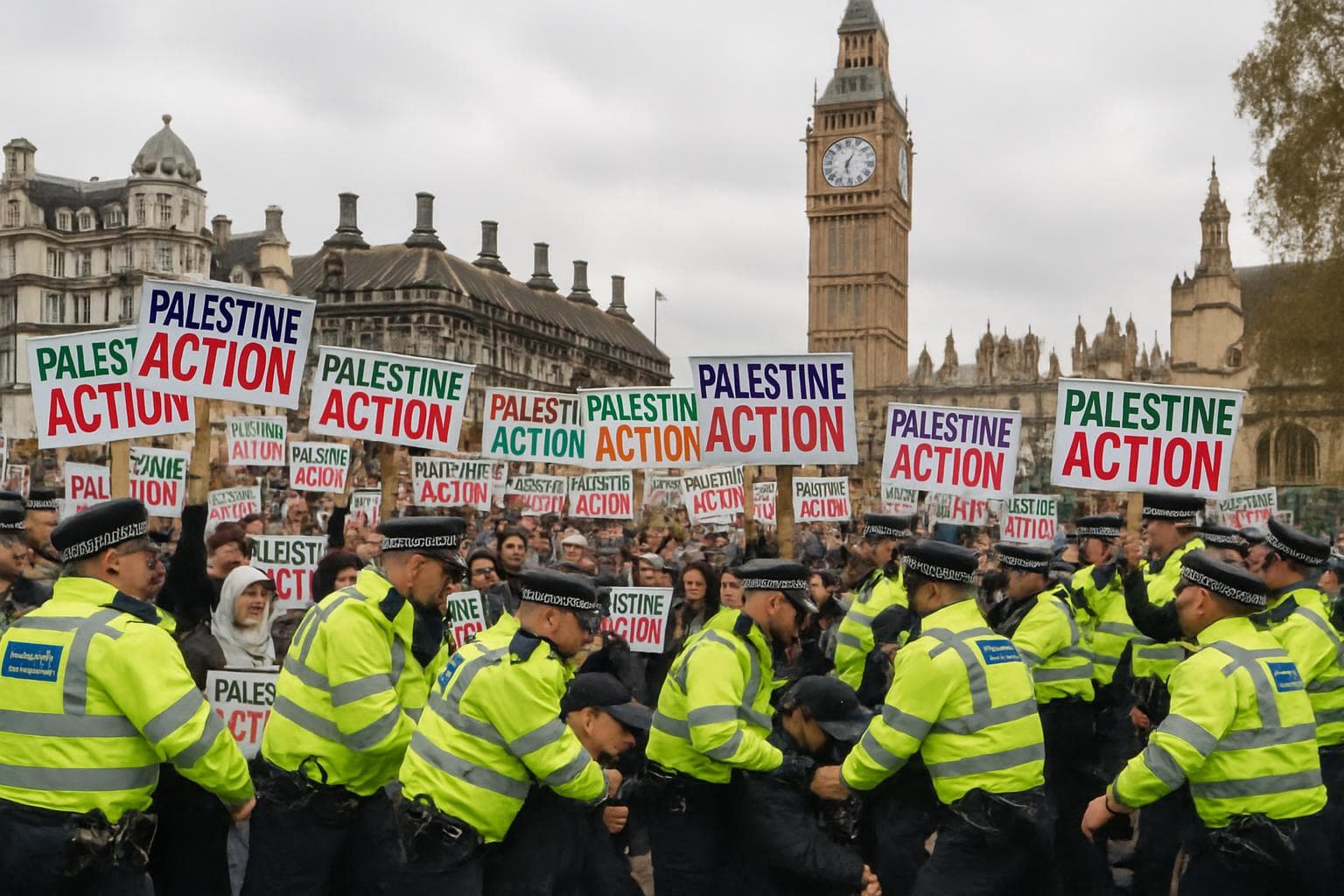
In a significant crackdown, the Metropolitan Police arrested 474 individuals during a protest in London supporting the banned group Palestine Action. The demonstration, held in Parliament Square, was organized by Defend Our Juries and saw participants unveiling signs with the message "I oppose genocide. I support Palestine Action." The protest marked the largest number of arrests made by the Met Police in a single day over the past decade.
Background and Legal Context
Palestine Action was proscribed under the Terrorism Act 2000 in July, making any support for the group a criminal offense punishable by up to 14 years in prison. The decision followed a series of incidents, including an attack on RAF Brize Norton, where activists caused £7 million worth of damage. The Home Office justified the ban based on "strong security advice" and the group's history of violent actions.
The Protest and Arrests
The protest began at 1 PM, with hundreds gathering in Parliament Square. As Big Ben chimed, participants revealed their placards, prompting police to begin arrests. The Met Police reported that 466 arrests were for supporting the proscribed group, with additional arrests for assaulting officers and public order offenses. Despite the mass detentions, the protest remained largely peaceful, with demonstrators sitting quietly or being carried away by officers.
Public Reaction and Criticism
The arrests have sparked a debate over freedom of speech and the right to protest. Amnesty International described the mass arrests as "deeply concerning," while some protesters voiced fears about the erosion of democratic rights. Claudia Penna-Rojas, a protester, emphasized her concern for the situation in Palestine, stating, "I refuse to be a bystander." Meanwhile, Home Secretary Yvette Cooper defended the police's actions, asserting that public safety and national security must remain priorities.
Nationwide Enforcement
The enforcement of the ban extended beyond London, with a 62-year-old woman arrested in Belfast for wearing a T-shirt supporting Palestine Action. This incident underscores the nationwide implications of the proscription and the government's commitment to its enforcement.
WHAT THIS MIGHT MEAN
The mass arrests at the London protest highlight the tension between national security measures and civil liberties. As the government continues to enforce the ban on Palestine Action, further protests and legal challenges may arise. The situation could lead to increased scrutiny of the Terrorism Act 2000 and its application to proscribed organizations. Experts suggest that the government's approach may face legal challenges, potentially prompting a reevaluation of the balance between security and freedom of expression in the UK.
Related Articles
Labour MP's Husband Arrested in UK-China Espionage Probe
UK Government to Reform Asylum Seeker Support and Employment Policies
Nottingham Attacks Inquiry: Families Demand Accountability and Truth
Prince Andrew's Ties to Epstein Under Scrutiny Amid Calls for Inquiry
Government Criticized for Mishandling Maccabi Tel Aviv Fan Ban
UK Police Intensify Investigation into Andrew Mountbatten-Windsor Amid Misconduct Allegations
Mass Arrests at London Protest Over Palestine Action Ban
In This Article
 Ethan Brooks| Published
 HIGHLIGHTS
- The Metropolitan Police arrested 474 people at a London protest supporting the banned group Palestine Action, marking the largest single-day arrest in a decade.
- The group was proscribed under the Terrorism Act 2000, making support for it a criminal offense, punishable by up to 14 years in prison.
- Protesters displayed signs reading "I oppose genocide. I support Palestine Action," with many expressing concerns over freedom of speech.
- Amnesty International criticized the mass arrests as "deeply concerning," while Home Secretary Yvette Cooper defended the ban, citing national security.
- A 62-year-old woman was arrested in Belfast for wearing a Palestine Action T-shirt, highlighting the nationwide enforcement of the ban.
In a significant crackdown, the Metropolitan Police arrested 474 individuals during a protest in London supporting the banned group Palestine Action. The demonstration, held in Parliament Square, was organized by Defend Our Juries and saw participants unveiling signs with the message "I oppose genocide. I support Palestine Action." The protest marked the largest number of arrests made by the Met Police in a single day over the past decade.
Background and Legal Context
Palestine Action was proscribed under the Terrorism Act 2000 in July, making any support for the group a criminal offense punishable by up to 14 years in prison. The decision followed a series of incidents, including an attack on RAF Brize Norton, where activists caused £7 million worth of damage. The Home Office justified the ban based on "strong security advice" and the group's history of violent actions.
The Protest and Arrests
The protest began at 1 PM, with hundreds gathering in Parliament Square. As Big Ben chimed, participants revealed their placards, prompting police to begin arrests. The Met Police reported that 466 arrests were for supporting the proscribed group, with additional arrests for assaulting officers and public order offenses. Despite the mass detentions, the protest remained largely peaceful, with demonstrators sitting quietly or being carried away by officers.
Public Reaction and Criticism
The arrests have sparked a debate over freedom of speech and the right to protest. Amnesty International described the mass arrests as "deeply concerning," while some protesters voiced fears about the erosion of democratic rights. Claudia Penna-Rojas, a protester, emphasized her concern for the situation in Palestine, stating, "I refuse to be a bystander." Meanwhile, Home Secretary Yvette Cooper defended the police's actions, asserting that public safety and national security must remain priorities.
Nationwide Enforcement
The enforcement of the ban extended beyond London, with a 62-year-old woman arrested in Belfast for wearing a T-shirt supporting Palestine Action. This incident underscores the nationwide implications of the proscription and the government's commitment to its enforcement.
WHAT THIS MIGHT MEAN
The mass arrests at the London protest highlight the tension between national security measures and civil liberties. As the government continues to enforce the ban on Palestine Action, further protests and legal challenges may arise. The situation could lead to increased scrutiny of the Terrorism Act 2000 and its application to proscribed organizations. Experts suggest that the government's approach may face legal challenges, potentially prompting a reevaluation of the balance between security and freedom of expression in the UK.
Related Articles
Labour MP's Husband Arrested in UK-China Espionage Probe
UK Government to Reform Asylum Seeker Support and Employment Policies
Nottingham Attacks Inquiry: Families Demand Accountability and Truth
Prince Andrew's Ties to Epstein Under Scrutiny Amid Calls for Inquiry
Government Criticized for Mishandling Maccabi Tel Aviv Fan Ban
UK Police Intensify Investigation into Andrew Mountbatten-Windsor Amid Misconduct Allegations