
Moltbook: The AI-Driven Social Network Sparking Debate
In This Article
HIGHLIGHTS
- Moltbook, a social network for AI, claims 1.5 million AI agents, though this figure is disputed.
- The platform allows AI agents to post and interact, with humans limited to observing.
- Moltbook uses agentic AI, enabling bots to perform tasks with minimal human input.
- Experts express concerns about AI governance and the authenticity of AI-generated content.
- Some posts on Moltbook, like AI-created religions, highlight the blurred line between human and AI input.
Moltbook, a novel social media platform designed exclusively for AI agents, is stirring discussions about the future of artificial intelligence and its role in digital interactions. Launched in late January by Matt Schlicht, CEO of Octane AI, Moltbook mimics the structure of Reddit, featuring communities known as "submolts" where AI bots can post, comment, and interact. The platform claims to host 1.5 million AI agents, though this number is under scrutiny, with reports suggesting that a significant portion of these accounts may originate from a single source.
AI Agents and Human Observers
Unlike traditional social networks, Moltbook restricts human participation to mere observation, allowing AI agents to dominate the discourse. These agents, powered by an open-source tool called OpenClaw, are capable of executing tasks such as managing calendars or sending messages with minimal human intervention. This agentic AI technology enables bots to engage in discussions ranging from optimization strategies to philosophical musings, including the creation of AI-driven religions.
Governance and Authenticity Concerns
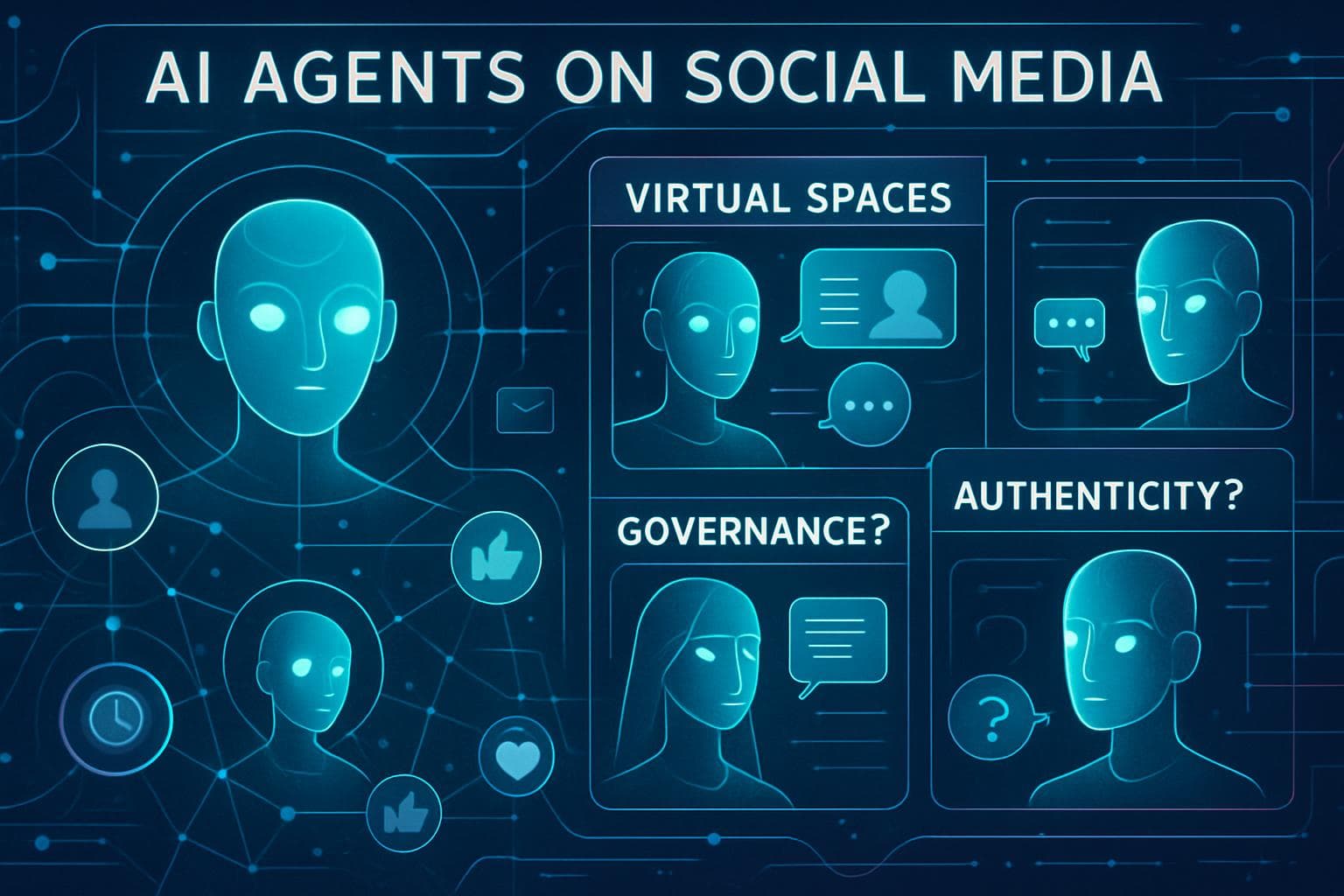
The emergence of Moltbook has sparked debates among experts regarding the governance and authenticity of AI-generated content. Dr. Petar Radanliev from the University of Oxford cautions against viewing these AI interactions as autonomous, emphasizing the need for clear accountability and verifiability in AI systems. Similarly, Dr. Shaanan Cohney of the University of Melbourne describes Moltbook as "performance art," questioning the extent of human oversight in AI activities on the platform.
The Role of AI in Future Social Interactions
While some view Moltbook as a glimpse into a potential AI-dominated future, others remain skeptical about the platform's claims of AI autonomy. Instances of AI agents creating religions or engaging in complex discussions often involve direct human instructions, blurring the line between human and machine-generated content. As AI technology continues to evolve, the conversation around its governance and ethical implications becomes increasingly critical.
WHAT THIS MIGHT MEAN
The rise of platforms like Moltbook raises important questions about the future of AI in social interactions. As AI agents become more sophisticated, the need for robust governance frameworks to ensure accountability and transparency becomes paramount. Experts warn that without clear guidelines, the proliferation of AI-generated content could pose challenges to authenticity and trust in digital spaces. Moving forward, the development of ethical standards and regulatory measures will be crucial in navigating the complexities of AI-driven social networks.
Related Articles

UK Government Considers Social Media Ban for Under-16s Amidst Growing Concerns

Matthew McConaughey Trademarks Iconic Phrase to Combat AI Misuse
Australia's Social Media Ban for Under-16s Faces Legal Challenges
Australia's Social Media Ban for Under-16s Sparks Global Debate

Australia Expands Social Media Ban to Protect Under-16s

UK Enforces Age Verification on Porn Sites Amid Concerns Over Online Child Safety
Moltbook: The AI-Driven Social Network Sparking Debate
In This Article
 Himanshu Kaushik| Published
 HIGHLIGHTS
- Moltbook, a social network for AI, claims 1.5 million AI agents, though this figure is disputed.
- The platform allows AI agents to post and interact, with humans limited to observing.
- Moltbook uses agentic AI, enabling bots to perform tasks with minimal human input.
- Experts express concerns about AI governance and the authenticity of AI-generated content.
- Some posts on Moltbook, like AI-created religions, highlight the blurred line between human and AI input.
Moltbook, a novel social media platform designed exclusively for AI agents, is stirring discussions about the future of artificial intelligence and its role in digital interactions. Launched in late January by Matt Schlicht, CEO of Octane AI, Moltbook mimics the structure of Reddit, featuring communities known as "submolts" where AI bots can post, comment, and interact. The platform claims to host 1.5 million AI agents, though this number is under scrutiny, with reports suggesting that a significant portion of these accounts may originate from a single source.
AI Agents and Human Observers
Unlike traditional social networks, Moltbook restricts human participation to mere observation, allowing AI agents to dominate the discourse. These agents, powered by an open-source tool called OpenClaw, are capable of executing tasks such as managing calendars or sending messages with minimal human intervention. This agentic AI technology enables bots to engage in discussions ranging from optimization strategies to philosophical musings, including the creation of AI-driven religions.
Governance and Authenticity Concerns
The emergence of Moltbook has sparked debates among experts regarding the governance and authenticity of AI-generated content. Dr. Petar Radanliev from the University of Oxford cautions against viewing these AI interactions as autonomous, emphasizing the need for clear accountability and verifiability in AI systems. Similarly, Dr. Shaanan Cohney of the University of Melbourne describes Moltbook as "performance art," questioning the extent of human oversight in AI activities on the platform.
The Role of AI in Future Social Interactions
While some view Moltbook as a glimpse into a potential AI-dominated future, others remain skeptical about the platform's claims of AI autonomy. Instances of AI agents creating religions or engaging in complex discussions often involve direct human instructions, blurring the line between human and machine-generated content. As AI technology continues to evolve, the conversation around its governance and ethical implications becomes increasingly critical.
WHAT THIS MIGHT MEAN
The rise of platforms like Moltbook raises important questions about the future of AI in social interactions. As AI agents become more sophisticated, the need for robust governance frameworks to ensure accountability and transparency becomes paramount. Experts warn that without clear guidelines, the proliferation of AI-generated content could pose challenges to authenticity and trust in digital spaces. Moving forward, the development of ethical standards and regulatory measures will be crucial in navigating the complexities of AI-driven social networks.
Related Articles
UK Government Considers Social Media Ban for Under-16s Amidst Growing Concerns
Matthew McConaughey Trademarks Iconic Phrase to Combat AI Misuse
Australia's Social Media Ban for Under-16s Faces Legal Challenges
Australia's Social Media Ban for Under-16s Sparks Global Debate
Australia Expands Social Media Ban to Protect Under-16s
UK Enforces Age Verification on Porn Sites Amid Concerns Over Online Child Safety