
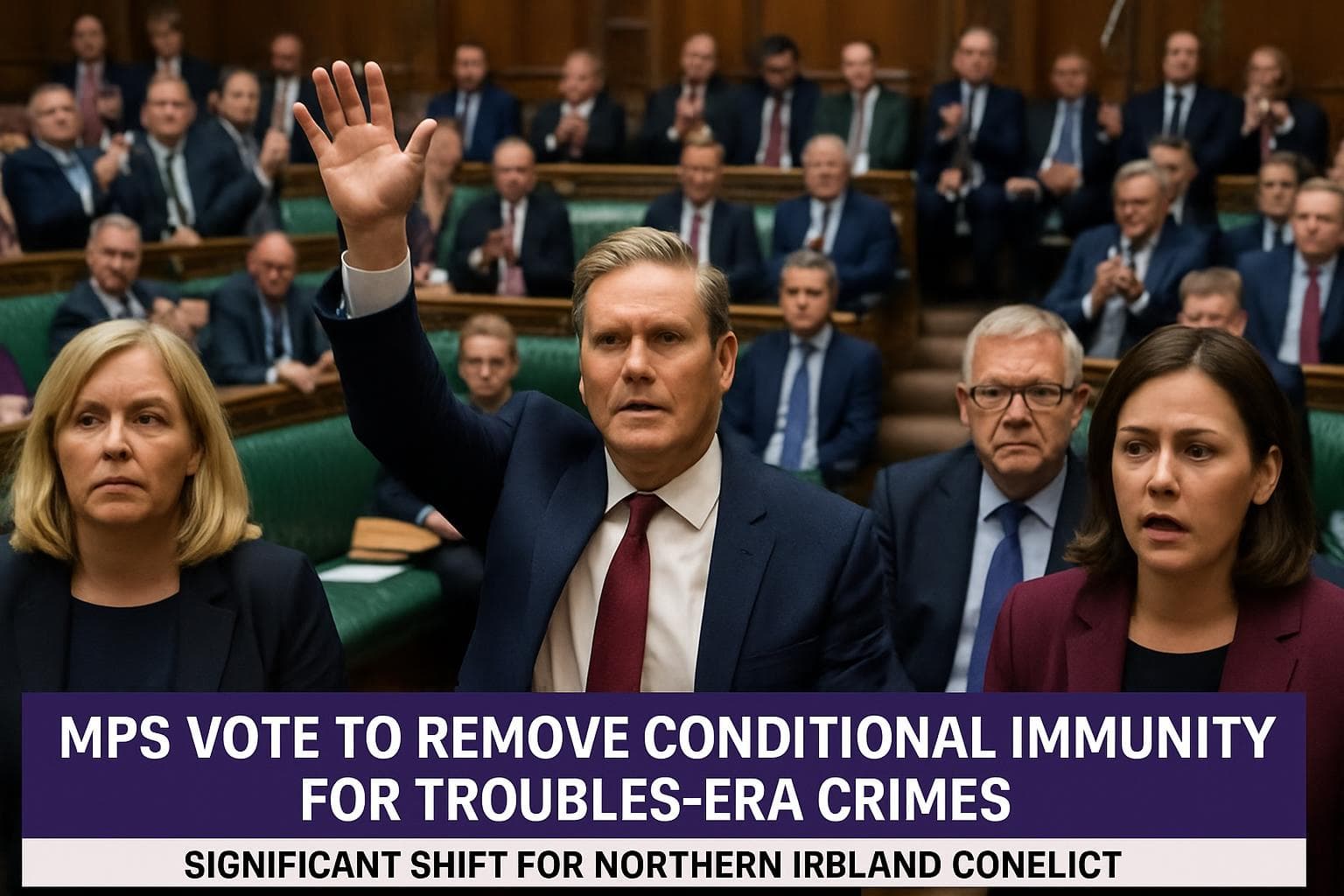
MPs Vote to Remove Conditional Immunity for Troubles-Era Crimes
In This Article
HIGHLIGHTS
- MPs voted to remove conditional immunity for Troubles-era crimes, a measure deemed unlawful and opposed by Northern Ireland parties and victims' groups.
- The Labour government is working to repeal the previous legacy act, introducing a new commission for independent oversight.
- British military veterans oppose the removal of immunity, fearing legal harassment, while some Tory MPs seek protections for veterans.
- Sinn Féin and other Northern Ireland leaders express concerns over potential special treatment for veterans in new legislation.
- The remedial order allows for the resumption of civil actions related to the Troubles, raising questions about funding for these cases.
In a significant legislative move, Members of Parliament have voted to eliminate a contentious clause granting conditional immunity from prosecution for crimes committed during the Troubles in Northern Ireland. This decision marks a pivotal shift in addressing the legacy of the conflict, as the clause had been previously criticized for being unlawful and was met with opposition from Northern Ireland parties and victims' groups.
Background and Legislative Changes
The previous Conservative government's legacy act included a provision that allowed individuals to avoid prosecution if they provided information on unresolved cases from the Troubles. However, Northern Ireland Secretary Hilary Benn emphasized that the legislation had "fundamentally failed" to build trust among communities. The Labour government is now in the process of repealing this act, proposing new legislation that includes the establishment of a legacy commission with independent oversight.
Veterans' Concerns and Political Reactions
The removal of the immunity clause has sparked backlash from British military veterans, who argue that it exposes them to potential legal harassment. Former SAS commanders have criticized the Labour government for leaving veterans vulnerable to what they describe as "money-hungry law firms." Despite these concerns, Prime Minister Keir Starmer assured that the new measures would protect veterans from vexatious prosecutions while fulfilling legal obligations under the European convention on human rights.
Northern Ireland's Response
Sinn Féin's vice-president and Northern Ireland First Minister Michelle O'Neill expressed apprehension over any suggestion of special treatment for veterans in the new legislation. She emphasized the importance of honoring commitments to victims and survivors. Meanwhile, Democratic Unionist Party leader Gavin Robinson questioned the financial implications of resuming civil actions related to the Troubles, highlighting concerns about budget constraints.
Future Implications
The remedial order passed by MPs allows for the resumption of approximately 230 civil actions that were previously scrapped under the original Legacy Act. This decision raises questions about the funding required to handle these cases and the broader implications for Northern Ireland's legal and political landscape.
WHAT THIS MIGHT MEAN
The removal of conditional immunity for Troubles-era crimes could lead to renewed legal actions and potentially open old wounds in Northern Ireland. As the Labour government works to implement new legislation, it must balance the demands for justice from victims' groups with the concerns of military veterans seeking protection from legal scrutiny. The outcome of these legislative changes could significantly impact the peace process and the relationship between the UK and Ireland, particularly if Dublin decides to proceed with or drop its case against the UK at the European court of human rights. As the situation unfolds, the government's ability to manage these complex dynamics will be crucial in shaping Northern Ireland's future.
Related Articles
Tragedy Strikes County Armagh: Three Dead in Multi-Vehicle Collision

UK Faces Dilemmas Amid Iran Conflict and China Spying Allegations
UK-Iran Tensions: Starmer Defends Cautious Approach Amid Trump Criticism

Saharan Dust to Illuminate UK Skies with Vivid Sunrises and Sunsets
Diplomatic Tensions Rise as Trump Criticizes Starmer's Iran Policy

Canada and Australia Forge Strategic Partnership Amid Global Uncertainty
MPs Vote to Remove Conditional Immunity for Troubles-Era Crimes
In This Article
 Alex Carter| Published
 HIGHLIGHTS
- MPs voted to remove conditional immunity for Troubles-era crimes, a measure deemed unlawful and opposed by Northern Ireland parties and victims' groups.
- The Labour government is working to repeal the previous legacy act, introducing a new commission for independent oversight.
- British military veterans oppose the removal of immunity, fearing legal harassment, while some Tory MPs seek protections for veterans.
- Sinn Féin and other Northern Ireland leaders express concerns over potential special treatment for veterans in new legislation.
- The remedial order allows for the resumption of civil actions related to the Troubles, raising questions about funding for these cases.
In a significant legislative move, Members of Parliament have voted to eliminate a contentious clause granting conditional immunity from prosecution for crimes committed during the Troubles in Northern Ireland. This decision marks a pivotal shift in addressing the legacy of the conflict, as the clause had been previously criticized for being unlawful and was met with opposition from Northern Ireland parties and victims' groups.
Background and Legislative Changes
The previous Conservative government's legacy act included a provision that allowed individuals to avoid prosecution if they provided information on unresolved cases from the Troubles. However, Northern Ireland Secretary Hilary Benn emphasized that the legislation had "fundamentally failed" to build trust among communities. The Labour government is now in the process of repealing this act, proposing new legislation that includes the establishment of a legacy commission with independent oversight.
Veterans' Concerns and Political Reactions
The removal of the immunity clause has sparked backlash from British military veterans, who argue that it exposes them to potential legal harassment. Former SAS commanders have criticized the Labour government for leaving veterans vulnerable to what they describe as "money-hungry law firms." Despite these concerns, Prime Minister Keir Starmer assured that the new measures would protect veterans from vexatious prosecutions while fulfilling legal obligations under the European convention on human rights.
Northern Ireland's Response
Sinn Féin's vice-president and Northern Ireland First Minister Michelle O'Neill expressed apprehension over any suggestion of special treatment for veterans in the new legislation. She emphasized the importance of honoring commitments to victims and survivors. Meanwhile, Democratic Unionist Party leader Gavin Robinson questioned the financial implications of resuming civil actions related to the Troubles, highlighting concerns about budget constraints.
Future Implications
The remedial order passed by MPs allows for the resumption of approximately 230 civil actions that were previously scrapped under the original Legacy Act. This decision raises questions about the funding required to handle these cases and the broader implications for Northern Ireland's legal and political landscape.
WHAT THIS MIGHT MEAN
The removal of conditional immunity for Troubles-era crimes could lead to renewed legal actions and potentially open old wounds in Northern Ireland. As the Labour government works to implement new legislation, it must balance the demands for justice from victims' groups with the concerns of military veterans seeking protection from legal scrutiny. The outcome of these legislative changes could significantly impact the peace process and the relationship between the UK and Ireland, particularly if Dublin decides to proceed with or drop its case against the UK at the European court of human rights. As the situation unfolds, the government's ability to manage these complex dynamics will be crucial in shaping Northern Ireland's future.
Related Articles
Tragedy Strikes County Armagh: Three Dead in Multi-Vehicle Collision
UK Faces Dilemmas Amid Iran Conflict and China Spying Allegations
UK-Iran Tensions: Starmer Defends Cautious Approach Amid Trump Criticism
Saharan Dust to Illuminate UK Skies with Vivid Sunrises and Sunsets
Diplomatic Tensions Rise as Trump Criticizes Starmer's Iran Policy
Canada and Australia Forge Strategic Partnership Amid Global Uncertainty