
Marks & Spencer CEO Criticizes Brexit Food Labelling as "Bureaucratic Madness"
In This Article
HIGHLIGHTS
- Marks & Spencer CEO Stuart Machin criticizes the extension of "Not for EU" labels on products shipped from Great Britain to Northern Ireland as "bureaucratic madness."
- The labelling requirement is part of the Windsor Framework, a revised Brexit deal aimed at easing trade between Northern Ireland and the EU.
- The UK government plans to align with EU agrifood rules, potentially reducing the need for such labels in the future.
- The final phase of the labelling requirement begins next week, affecting over 1,000 M&S products and requiring additional checks on 400 items.
- The government assures that many products, such as cakes and alcohol, will not need labelling, and future agreements will ease trade.
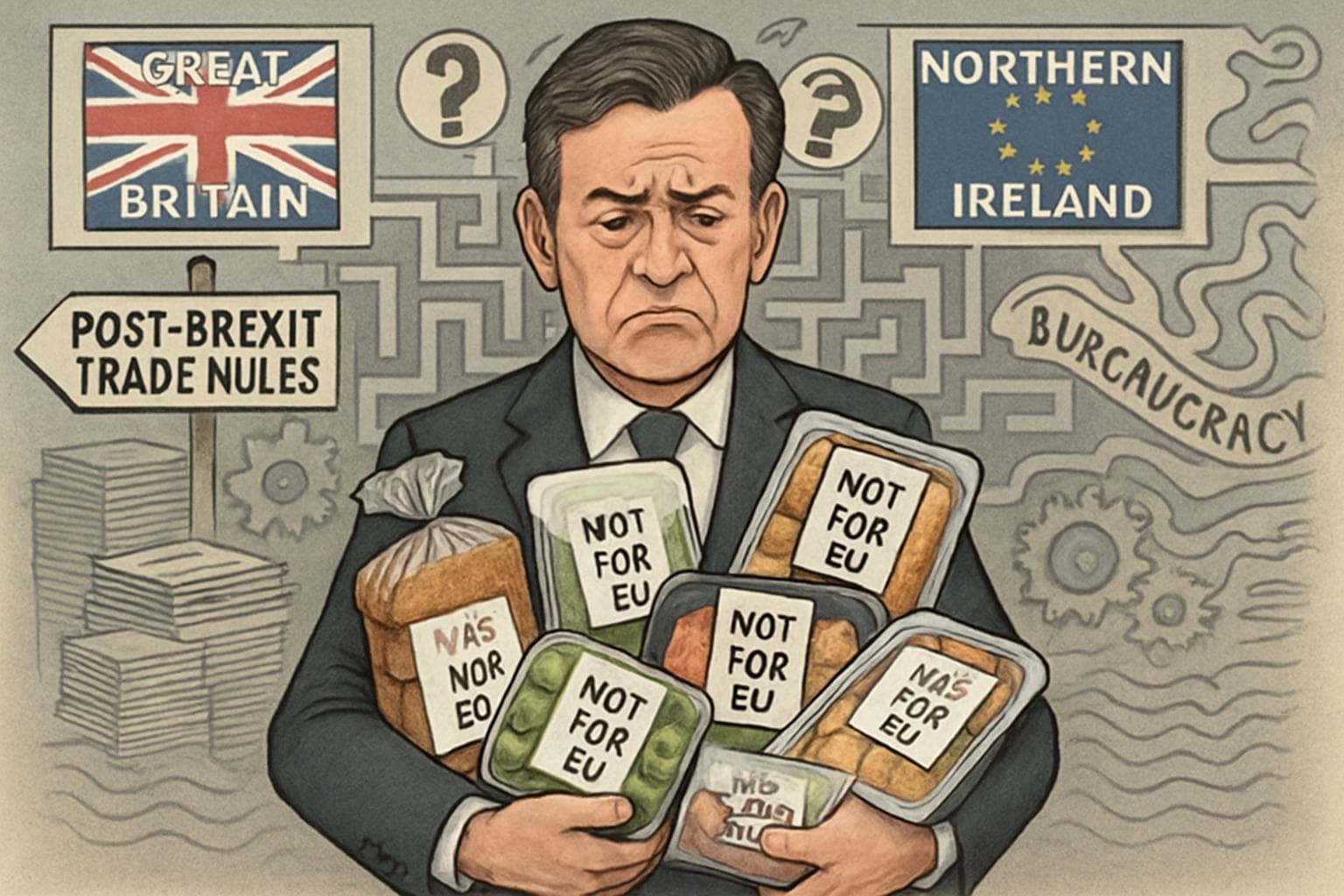
The chief executive of Marks & Spencer, Stuart Machin, has voiced strong opposition to the extension of "Not for EU" labels on products shipped from Great Britain to Northern Ireland, describing the move as "bureaucratic madness." This requirement, part of the Windsor Framework, aims to prevent goods intended for Northern Ireland from entering the EU single market via the Republic of Ireland.
The Windsor Framework and Its Implications
The Windsor Framework, a revision of the Northern Ireland Protocol, was designed to facilitate the movement of goods between Northern Ireland and the EU while maintaining the integrity of the EU single market. Under this framework, products from Great Britain destined for Northern Ireland must bear "Not for EU" labels, a measure that Machin argues adds unnecessary costs and confusion for retailers and consumers alike.
Impact on Marks & Spencer
Starting next week, Marks & Spencer will be required to label over 1,000 products with "Not for EU" tags, with an additional 400 items subject to further checks. Machin emphasized the burden this places on businesses, stating, "It's bureaucratic madness, confusing for customers, and completely unnecessary given the UK's high food standards."
Future Prospects and Government Response
The UK government has indicated that many products, such as cakes, bread, and alcohol, will be exempt from the labelling requirement. Additionally, ongoing negotiations with the EU aim to align UK agrifood rules with those of the EU, potentially reducing the need for such labels. A government spokesperson assured that agreements reached at the UK-EU Summit would simplify the movement of goods between the UK and Europe.
WHAT THIS MIGHT MEAN
As the final phase of the Windsor Framework's labelling requirement takes effect, businesses like Marks & Spencer face increased operational challenges. However, the anticipated UK-EU agrifood deal could alleviate some of these burdens by aligning standards and reducing trade barriers. Experts suggest that while the current measures are temporary, the long-term impact will depend on the successful negotiation and implementation of this deal.
Politically, the situation underscores the ongoing complexities of post-Brexit trade arrangements, particularly concerning Northern Ireland. The government's ability to navigate these challenges and secure favorable terms with the EU will be crucial in maintaining smooth trade relations and minimizing disruptions for businesses and consumers.
Related Articles
US Supreme Court Ruling on Tariffs Sparks Uncertainty for UK and Global Trade
Middle East Conflict Drives UK Energy Prices to New Highs

Saharan Dust to Illuminate UK Skies with Vivid Sunrises and Sunsets

Government Announces £4 Billion Overhaul of SEND Support in England
US Supreme Court Ruling Sparks Trade Uncertainty in Asia and Beyond
Trump's New Tariff Strategy Sparks Global Trade Uncertainty
Marks & Spencer CEO Criticizes Brexit Food Labelling as "Bureaucratic Madness"
In This Article
 Daniel Rivera| Published
 HIGHLIGHTS
- Marks & Spencer CEO Stuart Machin criticizes the extension of "Not for EU" labels on products shipped from Great Britain to Northern Ireland as "bureaucratic madness."
- The labelling requirement is part of the Windsor Framework, a revised Brexit deal aimed at easing trade between Northern Ireland and the EU.
- The UK government plans to align with EU agrifood rules, potentially reducing the need for such labels in the future.
- The final phase of the labelling requirement begins next week, affecting over 1,000 M&S products and requiring additional checks on 400 items.
- The government assures that many products, such as cakes and alcohol, will not need labelling, and future agreements will ease trade.
The chief executive of Marks & Spencer, Stuart Machin, has voiced strong opposition to the extension of "Not for EU" labels on products shipped from Great Britain to Northern Ireland, describing the move as "bureaucratic madness." This requirement, part of the Windsor Framework, aims to prevent goods intended for Northern Ireland from entering the EU single market via the Republic of Ireland.
The Windsor Framework and Its Implications
The Windsor Framework, a revision of the Northern Ireland Protocol, was designed to facilitate the movement of goods between Northern Ireland and the EU while maintaining the integrity of the EU single market. Under this framework, products from Great Britain destined for Northern Ireland must bear "Not for EU" labels, a measure that Machin argues adds unnecessary costs and confusion for retailers and consumers alike.
Impact on Marks & Spencer
Starting next week, Marks & Spencer will be required to label over 1,000 products with "Not for EU" tags, with an additional 400 items subject to further checks. Machin emphasized the burden this places on businesses, stating, "It's bureaucratic madness, confusing for customers, and completely unnecessary given the UK's high food standards."
Future Prospects and Government Response
The UK government has indicated that many products, such as cakes, bread, and alcohol, will be exempt from the labelling requirement. Additionally, ongoing negotiations with the EU aim to align UK agrifood rules with those of the EU, potentially reducing the need for such labels. A government spokesperson assured that agreements reached at the UK-EU Summit would simplify the movement of goods between the UK and Europe.
WHAT THIS MIGHT MEAN
As the final phase of the Windsor Framework's labelling requirement takes effect, businesses like Marks & Spencer face increased operational challenges. However, the anticipated UK-EU agrifood deal could alleviate some of these burdens by aligning standards and reducing trade barriers. Experts suggest that while the current measures are temporary, the long-term impact will depend on the successful negotiation and implementation of this deal.
Politically, the situation underscores the ongoing complexities of post-Brexit trade arrangements, particularly concerning Northern Ireland. The government's ability to navigate these challenges and secure favorable terms with the EU will be crucial in maintaining smooth trade relations and minimizing disruptions for businesses and consumers.
Related Articles
US Supreme Court Ruling on Tariffs Sparks Uncertainty for UK and Global Trade
Middle East Conflict Drives UK Energy Prices to New Highs
Saharan Dust to Illuminate UK Skies with Vivid Sunrises and Sunsets
Government Announces £4 Billion Overhaul of SEND Support in England
US Supreme Court Ruling Sparks Trade Uncertainty in Asia and Beyond
Trump's New Tariff Strategy Sparks Global Trade Uncertainty