
New Mansion Tax Targets High-Value Properties in England
In This Article
HIGHLIGHTS
- A new mansion tax will impose a surcharge on properties in England valued over £2 million starting in 2028.
- The tax is expected to generate £400 million annually by 2029-2030, according to the Office for Budget Responsibility.
- The surcharge will range from £2,500 to £7,500 depending on property value, with most affected homes located in London.
- Chancellor Rachel Reeves introduced the tax as part of her budget to address wealth inequality, though it faces criticism for not being comprehensive.
- The Local Government Association calls for collaboration with the government to ensure the tax supports local services effectively.
In a significant move to address wealth inequality, Chancellor Rachel Reeves has announced a new mansion tax targeting properties in England valued over £2 million. Set to take effect in 2028, the tax will impose an annual surcharge ranging from £2,500 to £7,500, depending on the property's value. This measure is part of Reeves's broader budget strategy, which also includes scrapping the two-child benefit cap and freezing income tax thresholds until 2030-31.
Tax Structure and Revenue Projections
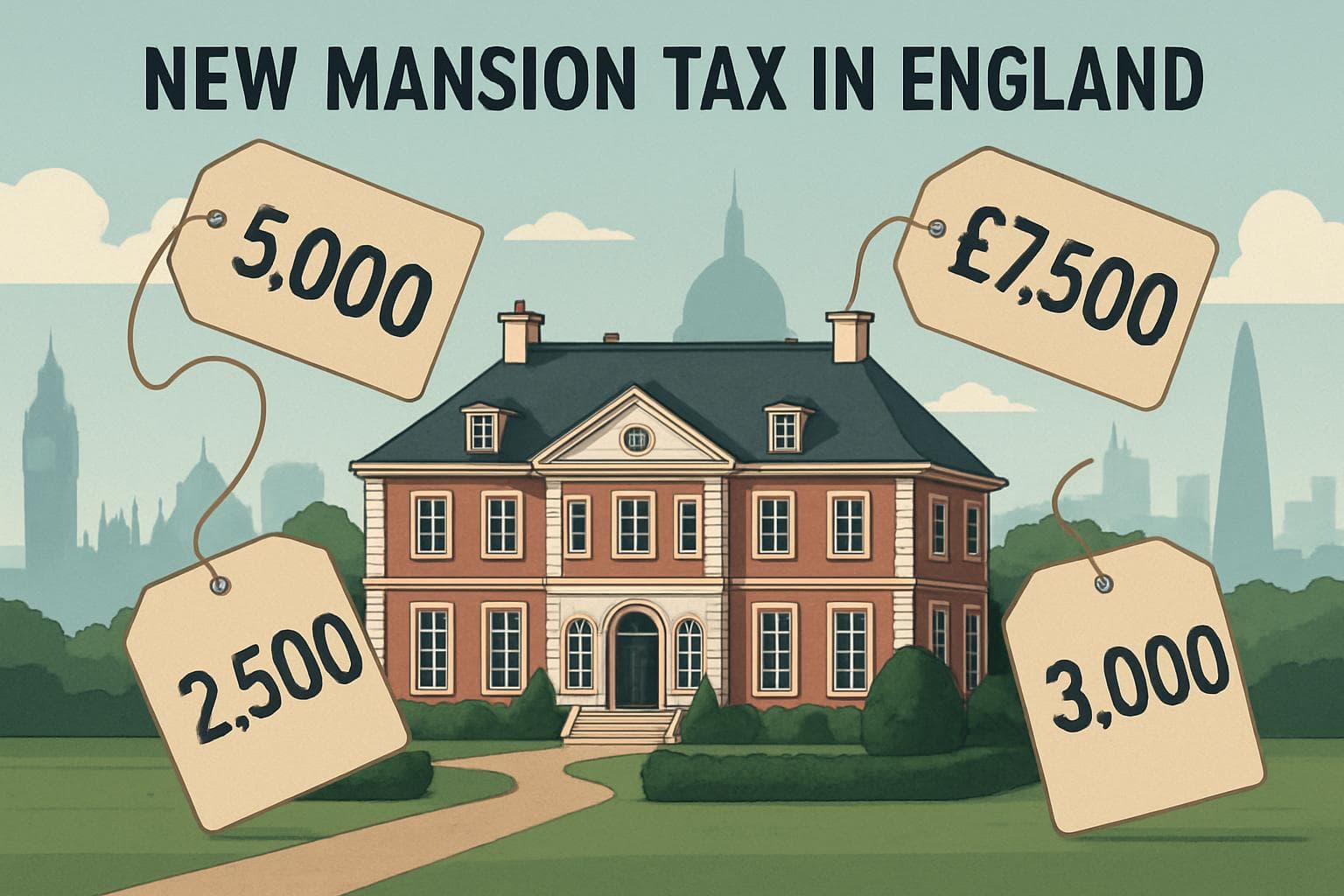
The mansion tax introduces four bands, with properties valued between £2 million and £2.5 million facing a £2,500 surcharge, while those over £5 million will incur a £7,500 charge. The Office for Budget Responsibility (OBR) anticipates that this tax will generate approximately £400 million annually by 2029-2030. The majority of affected properties are located in London, highlighting the city's concentration of high-value homes.
Reactions and Criticisms
While the tax aims to tackle wealth inequality, it has drawn criticism for its limited scope. The Institute for Fiscal Studies (IFS) argues that a comprehensive revaluation of council tax bands is overdue. "There's a reasonable case for levying more on high-value homes, but the design of this tax leaves much to be desired," the IFS stated. Estate agent Savills, however, views the measure as a "least worst outcome" for prime property owners, suggesting it may encourage older homeowners to downsize.
Local Government Concerns
The Local Government Association has urged the government to collaborate with regional councils to address practical concerns about the tax's implementation. Cllr Pete Marland emphasized that any additional funding should support local services, warning against potential confusion over accountability. "Council tax needs comprehensive, fair reform, and local government is ready to work with the government on this," Marland stated.
WHAT THIS MIGHT MEAN
The introduction of the mansion tax could have several implications for the UK housing market and local government funding. In the short term, the certainty provided by the tax may stimulate the housing market, as suggested by Savills. Over the longer term, the tax could incentivize downsizing among older homeowners, potentially freeing up larger homes for younger families.
Politically, the measure may bolster the Labour Party's stance on addressing wealth inequality, though it risks alienating high-value property owners. The effectiveness of the tax in reducing inequality will depend on its implementation and the extent to which additional revenue supports local services. As the policy unfolds, collaboration between the government and local councils will be crucial to ensure the tax achieves its intended goals without unintended consequences.
Related Articles

Trump Raises Import Tariffs to 15% After Supreme Court Setback

Labour MP's Husband Arrested in UK-China Espionage Probe

UK Government Announces Major Overhaul of SEND System with £3.4 Billion Investment

UK Government to Reform Asylum Seeker Support and Employment Policies

Breakthrough Drug Offers Hope for Children with Severe Epilepsy

Middle East Conflict Drives UK Energy Prices to New Highs
New Mansion Tax Targets High-Value Properties in England
In This Article
 Daniel Rivera| Published
 HIGHLIGHTS
- A new mansion tax will impose a surcharge on properties in England valued over £2 million starting in 2028.
- The tax is expected to generate £400 million annually by 2029-2030, according to the Office for Budget Responsibility.
- The surcharge will range from £2,500 to £7,500 depending on property value, with most affected homes located in London.
- Chancellor Rachel Reeves introduced the tax as part of her budget to address wealth inequality, though it faces criticism for not being comprehensive.
- The Local Government Association calls for collaboration with the government to ensure the tax supports local services effectively.
In a significant move to address wealth inequality, Chancellor Rachel Reeves has announced a new mansion tax targeting properties in England valued over £2 million. Set to take effect in 2028, the tax will impose an annual surcharge ranging from £2,500 to £7,500, depending on the property's value. This measure is part of Reeves's broader budget strategy, which also includes scrapping the two-child benefit cap and freezing income tax thresholds until 2030-31.
Tax Structure and Revenue Projections
The mansion tax introduces four bands, with properties valued between £2 million and £2.5 million facing a £2,500 surcharge, while those over £5 million will incur a £7,500 charge. The Office for Budget Responsibility (OBR) anticipates that this tax will generate approximately £400 million annually by 2029-2030. The majority of affected properties are located in London, highlighting the city's concentration of high-value homes.
Reactions and Criticisms
While the tax aims to tackle wealth inequality, it has drawn criticism for its limited scope. The Institute for Fiscal Studies (IFS) argues that a comprehensive revaluation of council tax bands is overdue. "There's a reasonable case for levying more on high-value homes, but the design of this tax leaves much to be desired," the IFS stated. Estate agent Savills, however, views the measure as a "least worst outcome" for prime property owners, suggesting it may encourage older homeowners to downsize.
Local Government Concerns
The Local Government Association has urged the government to collaborate with regional councils to address practical concerns about the tax's implementation. Cllr Pete Marland emphasized that any additional funding should support local services, warning against potential confusion over accountability. "Council tax needs comprehensive, fair reform, and local government is ready to work with the government on this," Marland stated.
WHAT THIS MIGHT MEAN
The introduction of the mansion tax could have several implications for the UK housing market and local government funding. In the short term, the certainty provided by the tax may stimulate the housing market, as suggested by Savills. Over the longer term, the tax could incentivize downsizing among older homeowners, potentially freeing up larger homes for younger families.
Politically, the measure may bolster the Labour Party's stance on addressing wealth inequality, though it risks alienating high-value property owners. The effectiveness of the tax in reducing inequality will depend on its implementation and the extent to which additional revenue supports local services. As the policy unfolds, collaboration between the government and local councils will be crucial to ensure the tax achieves its intended goals without unintended consequences.
Related Articles
Trump Raises Import Tariffs to 15% After Supreme Court Setback
Labour MP's Husband Arrested in UK-China Espionage Probe
UK Government Announces Major Overhaul of SEND System with £3.4 Billion Investment
UK Government to Reform Asylum Seeker Support and Employment Policies
Breakthrough Drug Offers Hope for Children with Severe Epilepsy
Middle East Conflict Drives UK Energy Prices to New Highs