
NHS Faces Crisis as Resident Doctors Plan Strike Amid Flu Outbreak
In This Article
HIGHLIGHTS
- Keir Starmer and Wes Streeting have urged resident doctors to cancel their planned strike amid a severe flu outbreak, citing risks to the NHS.
- The British Medical Association (BMA) is polling its members on a government offer to potentially avert the strike scheduled from December 17-22.
- Flu cases have surged by 55% in a week, with an average of 2,660 patients hospitalized daily, raising concerns about NHS capacity.
- The BMA criticizes the government for inadequate offers and blames them for the NHS's inability to handle the flu crisis.
- NHS officials claim they are better prepared for large outbreaks since the COVID-19 pandemic, despite the current challenges.
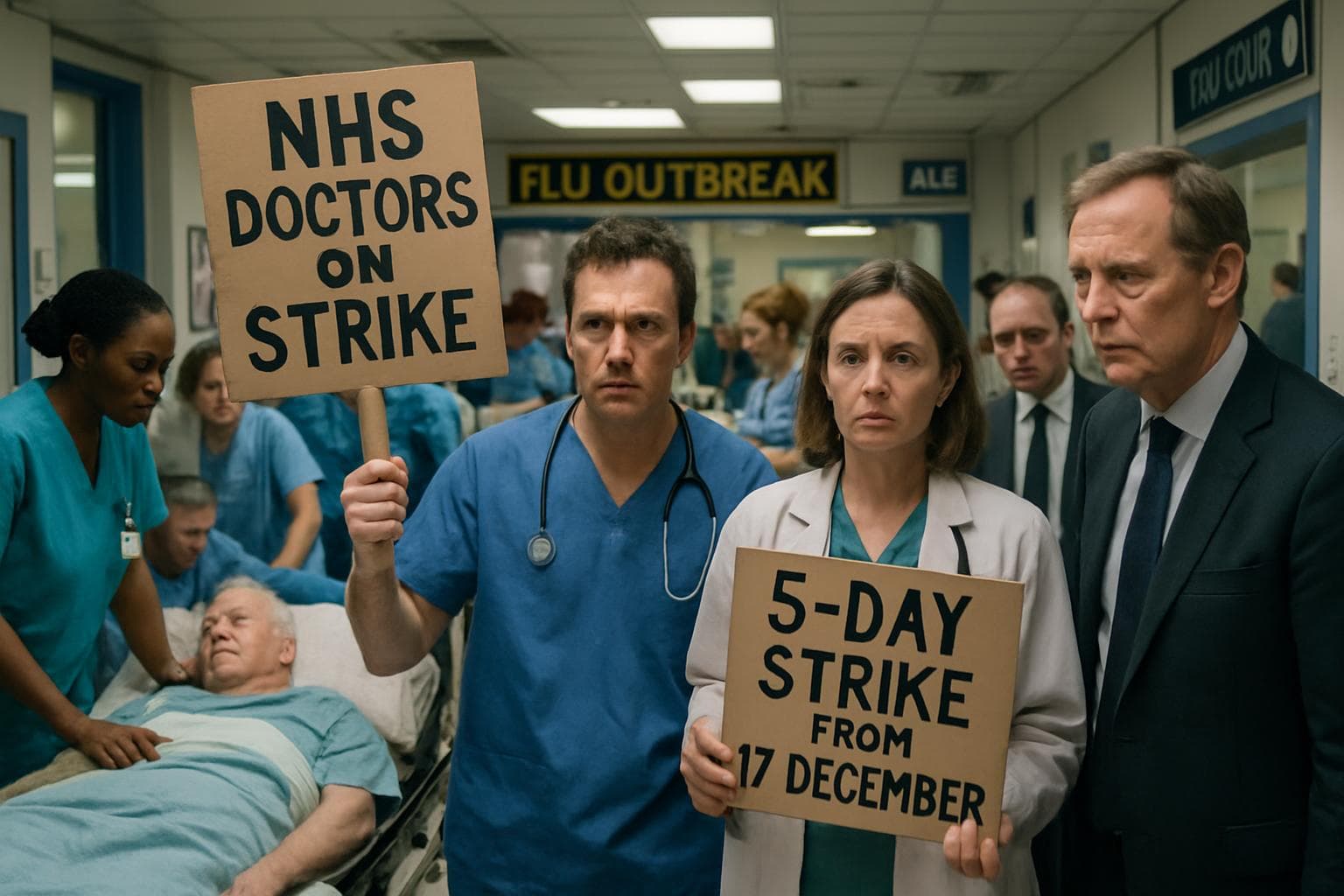
The National Health Service (NHS) is bracing for a critical period as resident doctors plan a five-day strike from December 17-22, coinciding with a severe flu outbreak. Both Prime Minister Keir Starmer and Health Secretary Wes Streeting have expressed grave concerns, urging doctors to reconsider their industrial action to prevent further strain on the healthcare system.
Rising Flu Cases and NHS Preparedness
The flu outbreak has intensified, with NHS England reporting a 55% increase in hospitalizations, averaging 2,660 patients daily. This surge, attributed to a new mutated strain dubbed "super flu," has placed unprecedented pressure on hospitals across the UK. Despite these challenges, NHS officials, including Dr. Chris Streather, assert that the system is better equipped to handle large outbreaks than during the COVID-19 pandemic.
Government and BMA at Odds
The British Medical Association (BMA) is currently polling its members on a new government proposal aimed at averting the strike. The offer includes measures to improve working conditions and training opportunities for doctors. However, the BMA has criticized the government for inadequate responses and accused them of scapegoating doctors for the NHS's struggles during the flu crisis. Dr. Jack Fletcher, chair of the BMA resident doctors committee, emphasized the need for genuine negotiations to prevent the strike.
Political and Public Reactions
Starmer, writing in The Guardian, described the planned strikes as "reckless," highlighting the potential danger to patients and the NHS. Streeting echoed these sentiments, warning that the strikes could be the "Jenga piece" that collapses the NHS tower. Meanwhile, public health advocates like Tony O’Sullivan have criticized the government for failing to address the crisis adequately.
WHAT THIS MIGHT MEAN
As the BMA's poll results are awaited, the outcome could significantly impact the NHS's ability to manage the flu crisis. If the strike proceeds, it may exacerbate the already strained healthcare system, potentially leading to delays in patient care and increased pressure on medical staff. Conversely, if the strike is averted, it could provide temporary relief, but underlying issues such as pay and working conditions will likely persist. The government's handling of this situation could influence public perception and trust in its ability to manage healthcare crises effectively.
Related Articles
UK Clinical Trial on Puberty Blockers Paused Amid Safety Concerns
UK Government to Reform Asylum Seeker Support and Employment Policies

UK Faces Dilemmas Amid Iran Conflict and China Spying Allegations

UK-Iran Tensions: Starmer Defends Cautious Approach Amid Trump Criticism
Persistent Safety Concerns in Nottingham Maternity Services Amidst Calls for Systemic Reform

Diplomatic Tensions Rise as Trump Criticizes Starmer's Iran Policy
NHS Faces Crisis as Resident Doctors Plan Strike Amid Flu Outbreak
In This Article
 Maya Singh| Published
 HIGHLIGHTS
- Keir Starmer and Wes Streeting have urged resident doctors to cancel their planned strike amid a severe flu outbreak, citing risks to the NHS.
- The British Medical Association (BMA) is polling its members on a government offer to potentially avert the strike scheduled from December 17-22.
- Flu cases have surged by 55% in a week, with an average of 2,660 patients hospitalized daily, raising concerns about NHS capacity.
- The BMA criticizes the government for inadequate offers and blames them for the NHS's inability to handle the flu crisis.
- NHS officials claim they are better prepared for large outbreaks since the COVID-19 pandemic, despite the current challenges.
The National Health Service (NHS) is bracing for a critical period as resident doctors plan a five-day strike from December 17-22, coinciding with a severe flu outbreak. Both Prime Minister Keir Starmer and Health Secretary Wes Streeting have expressed grave concerns, urging doctors to reconsider their industrial action to prevent further strain on the healthcare system.
Rising Flu Cases and NHS Preparedness
The flu outbreak has intensified, with NHS England reporting a 55% increase in hospitalizations, averaging 2,660 patients daily. This surge, attributed to a new mutated strain dubbed "super flu," has placed unprecedented pressure on hospitals across the UK. Despite these challenges, NHS officials, including Dr. Chris Streather, assert that the system is better equipped to handle large outbreaks than during the COVID-19 pandemic.
Government and BMA at Odds
The British Medical Association (BMA) is currently polling its members on a new government proposal aimed at averting the strike. The offer includes measures to improve working conditions and training opportunities for doctors. However, the BMA has criticized the government for inadequate responses and accused them of scapegoating doctors for the NHS's struggles during the flu crisis. Dr. Jack Fletcher, chair of the BMA resident doctors committee, emphasized the need for genuine negotiations to prevent the strike.
Political and Public Reactions
Starmer, writing in The Guardian, described the planned strikes as "reckless," highlighting the potential danger to patients and the NHS. Streeting echoed these sentiments, warning that the strikes could be the "Jenga piece" that collapses the NHS tower. Meanwhile, public health advocates like Tony O’Sullivan have criticized the government for failing to address the crisis adequately.
WHAT THIS MIGHT MEAN
As the BMA's poll results are awaited, the outcome could significantly impact the NHS's ability to manage the flu crisis. If the strike proceeds, it may exacerbate the already strained healthcare system, potentially leading to delays in patient care and increased pressure on medical staff. Conversely, if the strike is averted, it could provide temporary relief, but underlying issues such as pay and working conditions will likely persist. The government's handling of this situation could influence public perception and trust in its ability to manage healthcare crises effectively.
Related Articles
UK Clinical Trial on Puberty Blockers Paused Amid Safety Concerns
UK Government to Reform Asylum Seeker Support and Employment Policies
UK Faces Dilemmas Amid Iran Conflict and China Spying Allegations
UK-Iran Tensions: Starmer Defends Cautious Approach Amid Trump Criticism
Persistent Safety Concerns in Nottingham Maternity Services Amidst Calls for Systemic Reform
Diplomatic Tensions Rise as Trump Criticizes Starmer's Iran Policy