
Resident Doctors' Strike Set to Disrupt NHS Services Amidst Pay Dispute
In This Article
HIGHLIGHTS
- Resident doctors in England are set to strike for five days starting July 25, demanding a 29% pay rise to restore wages to 2008 levels.
- The British Medical Association (BMA) claims doctors' pay has fallen by 21% since 2008, while the Nuffield Trust reports a 4-10% decrease since 2010.
- Health Secretary Wes Streeting calls the pay demand "unreasonable," citing a recent 22% pay increase over two years.
- NHS services, particularly in Gloucestershire, will face significant disruption, with some appointments rescheduled and emergency services limited.
- The strike marks the 12th industrial action by resident doctors since 2023, with ongoing disputes over pay and working conditions.
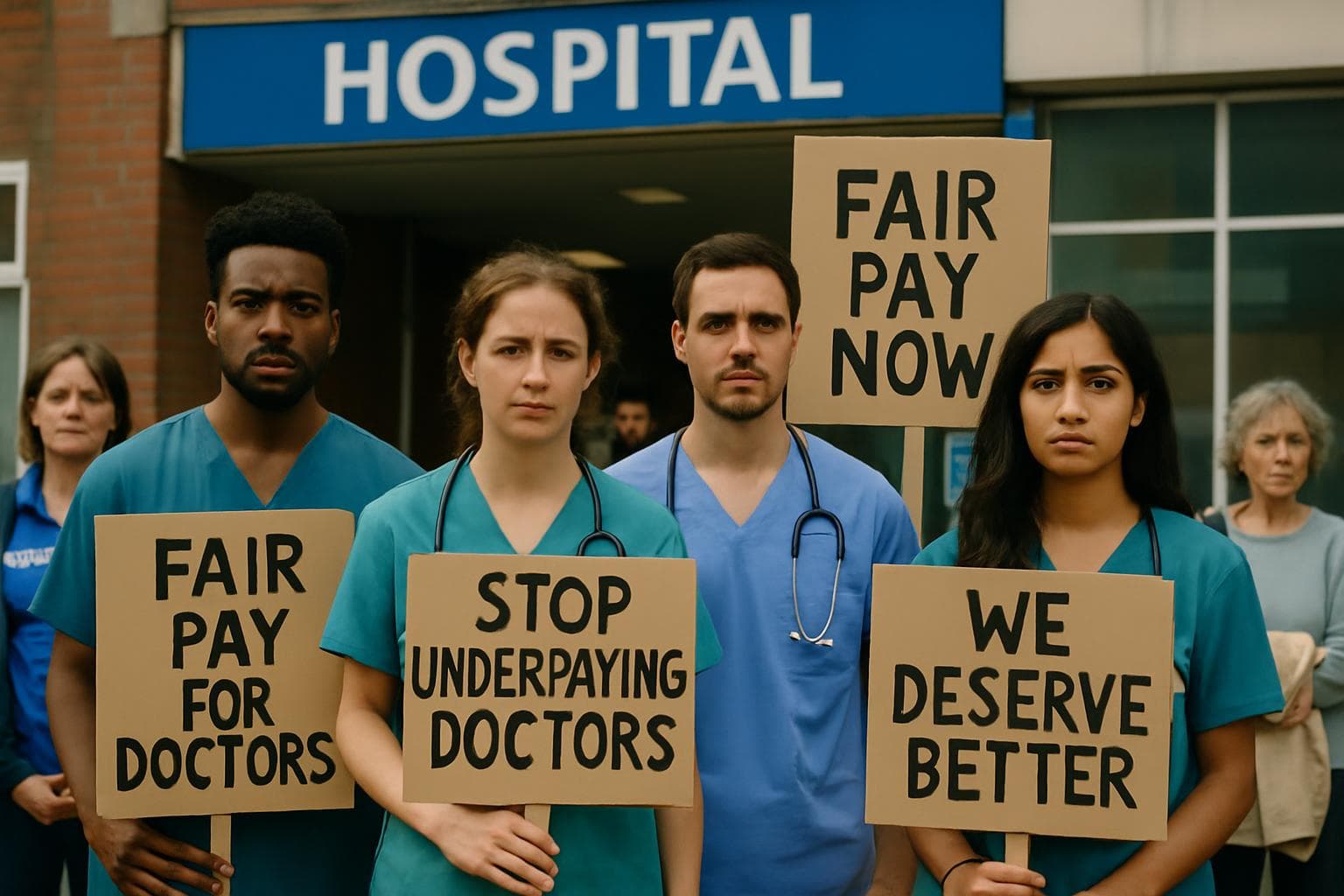
Resident doctors across England are poised to commence a five-day strike starting July 25, intensifying a long-standing pay dispute with the government. The British Medical Association (BMA), representing these doctors, is advocating for a 29% pay increase to restore wages to levels seen in 2008. This industrial action, the 12th since 2023, underscores the deepening rift between healthcare professionals and government officials over pay and working conditions.
Background of the Dispute
The BMA argues that resident doctors, formerly known as junior doctors, have seen their pay erode by 21% in real terms since 2008. In contrast, the Nuffield Trust, an independent health think tank, reports a 4-10% decrease since 2010, highlighting the complexity of the pay debate. Despite a 22% pay rise over the past two years, the BMA insists that further increases are necessary to address nearly two decades of pay restraint.
Government's Stance
Health Secretary Wes Streeting has labeled the BMA's demands as "unreasonable," emphasizing the recent pay uplift as the highest in the public sector. Streeting expressed regret over the strike's impact on the NHS, stating, "These strikes will hit the progress we are making on turning the NHS around." He remains open to negotiating work conditions and career progression but maintains that further pay increases are unaffordable.
Impact on NHS Services
The strike is expected to cause substantial disruption to NHS services, particularly in regions like Gloucestershire. NHS Gloucestershire has warned of significant challenges, urging patients to attend scheduled appointments unless notified otherwise. Emergency services will be limited, with only one Accident and Emergency department remaining open in Gloucestershire. Patients are advised to use services responsibly, with increased demand anticipated for the NHS 111 service.
Consultants' Perspective
While previous strikes garnered support from senior doctors, the current action has sparked mixed reactions. Many consultants express concern over patient safety and the erosion of trust in the profession. The BMA has reassured members that strikes are safe, attributing any disruption to the NHS's attempts to maintain planned care during the industrial action.
WHAT THIS MIGHT MEAN
As the resident doctors' strike unfolds, the potential for prolonged disruption looms large. The government's firm stance on pay increases suggests that a swift resolution may be elusive, potentially leading to further industrial action. The ongoing dispute could strain the NHS's ability to deliver timely care, exacerbating existing challenges in reducing waiting lists and improving patient outcomes. Experts warn that without meaningful dialogue and compromise, the impasse may deepen, impacting both healthcare professionals and patients. The situation underscores the need for innovative solutions to address the complex issues of pay and working conditions within the NHS.
Images from the Web

Related Articles

UK Government to Reform Asylum Seeker Support and Employment Policies

UK Reinforces Military Presence in Cyprus Amid Middle East Tensions
Persistent Safety Concerns in Nottingham Maternity Services Amidst Calls for Systemic Reform
Nottingham Attacks Inquiry: Families Demand Accountability and Truth

Birmingham's Proactive Approach to Measles Outbreak Offers Lessons for North London

NHS Faces Joint Surgery Delays Amid Bone Cement Shortage
Resident Doctors' Strike Set to Disrupt NHS Services Amidst Pay Dispute
In This Article
 Ethan Brooks| Published
 HIGHLIGHTS
- Resident doctors in England are set to strike for five days starting July 25, demanding a 29% pay rise to restore wages to 2008 levels.
- The British Medical Association (BMA) claims doctors' pay has fallen by 21% since 2008, while the Nuffield Trust reports a 4-10% decrease since 2010.
- Health Secretary Wes Streeting calls the pay demand "unreasonable," citing a recent 22% pay increase over two years.
- NHS services, particularly in Gloucestershire, will face significant disruption, with some appointments rescheduled and emergency services limited.
- The strike marks the 12th industrial action by resident doctors since 2023, with ongoing disputes over pay and working conditions.
Resident doctors across England are poised to commence a five-day strike starting July 25, intensifying a long-standing pay dispute with the government. The British Medical Association (BMA), representing these doctors, is advocating for a 29% pay increase to restore wages to levels seen in 2008. This industrial action, the 12th since 2023, underscores the deepening rift between healthcare professionals and government officials over pay and working conditions.
Background of the Dispute
The BMA argues that resident doctors, formerly known as junior doctors, have seen their pay erode by 21% in real terms since 2008. In contrast, the Nuffield Trust, an independent health think tank, reports a 4-10% decrease since 2010, highlighting the complexity of the pay debate. Despite a 22% pay rise over the past two years, the BMA insists that further increases are necessary to address nearly two decades of pay restraint.
Government's Stance
Health Secretary Wes Streeting has labeled the BMA's demands as "unreasonable," emphasizing the recent pay uplift as the highest in the public sector. Streeting expressed regret over the strike's impact on the NHS, stating, "These strikes will hit the progress we are making on turning the NHS around." He remains open to negotiating work conditions and career progression but maintains that further pay increases are unaffordable.
Impact on NHS Services
The strike is expected to cause substantial disruption to NHS services, particularly in regions like Gloucestershire. NHS Gloucestershire has warned of significant challenges, urging patients to attend scheduled appointments unless notified otherwise. Emergency services will be limited, with only one Accident and Emergency department remaining open in Gloucestershire. Patients are advised to use services responsibly, with increased demand anticipated for the NHS 111 service.
Consultants' Perspective
While previous strikes garnered support from senior doctors, the current action has sparked mixed reactions. Many consultants express concern over patient safety and the erosion of trust in the profession. The BMA has reassured members that strikes are safe, attributing any disruption to the NHS's attempts to maintain planned care during the industrial action.
WHAT THIS MIGHT MEAN
As the resident doctors' strike unfolds, the potential for prolonged disruption looms large. The government's firm stance on pay increases suggests that a swift resolution may be elusive, potentially leading to further industrial action. The ongoing dispute could strain the NHS's ability to deliver timely care, exacerbating existing challenges in reducing waiting lists and improving patient outcomes. Experts warn that without meaningful dialogue and compromise, the impasse may deepen, impacting both healthcare professionals and patients. The situation underscores the need for innovative solutions to address the complex issues of pay and working conditions within the NHS.
Images from the Web
Related Articles
UK Government to Reform Asylum Seeker Support and Employment Policies
UK Reinforces Military Presence in Cyprus Amid Middle East Tensions
Persistent Safety Concerns in Nottingham Maternity Services Amidst Calls for Systemic Reform
Nottingham Attacks Inquiry: Families Demand Accountability and Truth
Birmingham's Proactive Approach to Measles Outbreak Offers Lessons for North London
NHS Faces Joint Surgery Delays Amid Bone Cement Shortage