
NHS Staff Pay Rise Sparks Union Outrage Amid Inflation Concerns
In This Article
HIGHLIGHTS
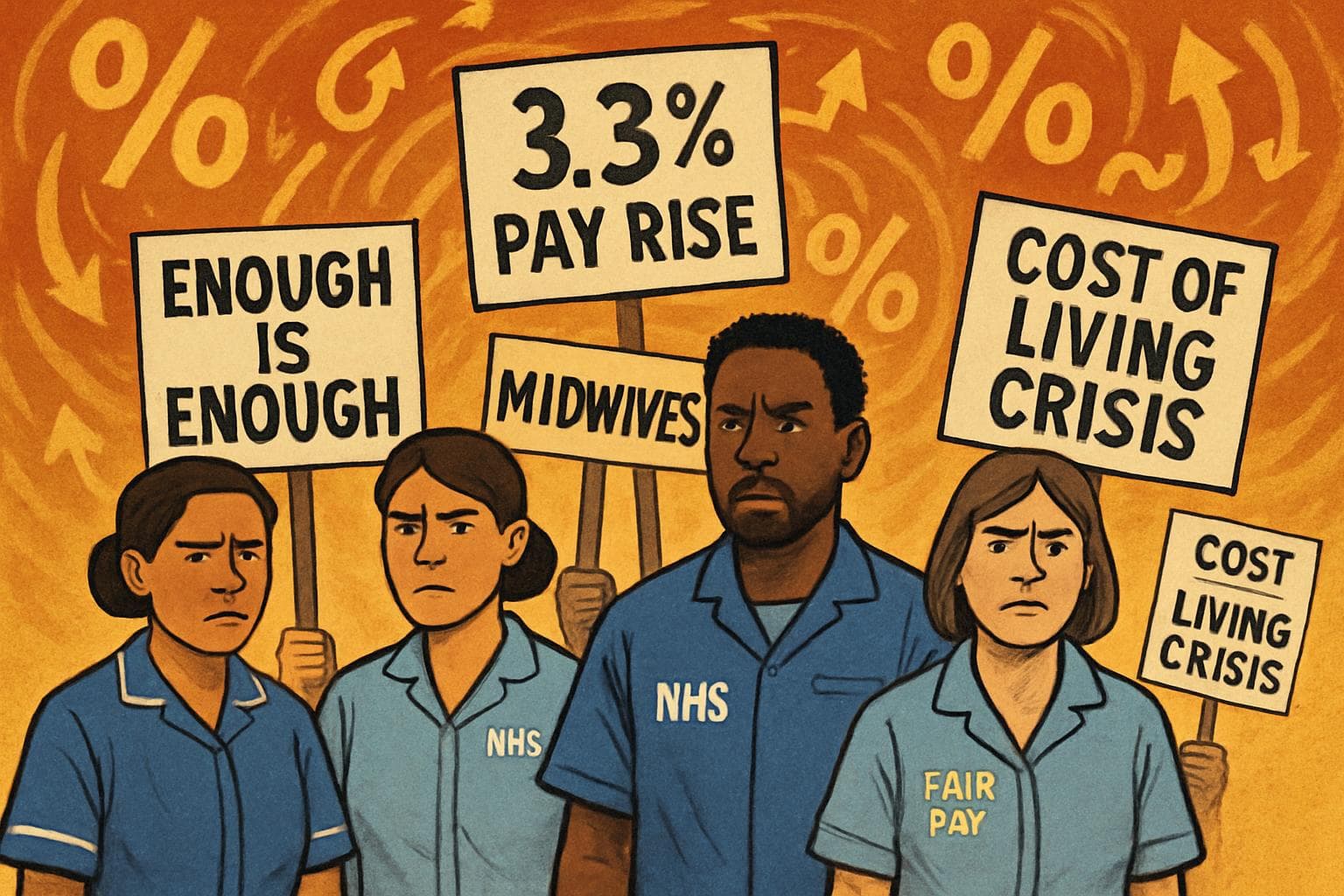
- NHS staff in England and Wales will receive a 3.3% pay rise, affecting approximately 1.5 million workers.
- Health unions, including the Royal College of Nursing, criticized the pay increase as below the current inflation rate of 3.4%.
- Unite, a major union, has threatened strike action, calling the pay rise a "political cowardice and financial betrayal."
- The government claims the pay rise is above the forecasted inflation rate of 2% for the coming year.
- The decision has sparked anger among NHS staff, with unions demanding direct talks on future pay reforms.
The UK government has announced a 3.3% pay rise for NHS staff in England and Wales, a decision that has drawn sharp criticism from health unions. This pay adjustment, set to take effect in the next financial year, impacts around 1.5 million NHS workers, including nurses, midwives, and porters, but excludes doctors, dentists, and senior managers.
Union Backlash Over Pay Decision
Health unions have expressed their dissatisfaction, labeling the pay rise as insufficient against the backdrop of a 3.4% inflation rate. The Royal College of Nursing's general secretary, Prof Nicola Ranger, described the increase as "an insult," emphasizing that it effectively amounts to a pay cut unless inflation decreases. "This knife-edge game-playing is no way to treat people who prop up a system in crisis," Ranger stated.
Unite, another prominent union, has gone further, threatening industrial action. Sharon Graham, Unite's general secretary, criticized the government for bypassing direct negotiations with unions, calling the move "an act of political cowardice and financial betrayal of NHS workers."
Government's Justification
The government, however, maintains that the pay rise exceeds the projected inflation rate of 2% for the upcoming year. Health Secretary Wes Streeting highlighted that the 3.3% increase is higher than the 2.5% initially proposed to the NHS pay review body. A spokesperson from the Department of Health and Social Care expressed appreciation for NHS staff, stating the pay rise demonstrates the government's commitment to the workforce.
Future Implications and Reactions
The announcement has left many NHS staff feeling undervalued, with unions like the Royal College of Midwives echoing sentiments of frustration over unmet promises regarding pay and staffing. Gill Walton, the RCM's general secretary, pointed out that midwives are working extensive unpaid hours to maintain maternity services, calling the pay rise a "real-terms pay cut."
The pay review body has also recommended the same increase for Northern Ireland, though a final decision is pending budgetary considerations.
WHAT THIS MIGHT MEAN
The government's decision to implement a 3.3% pay rise for NHS staff could lead to significant unrest within the health sector. With unions like Unite threatening strike action, the potential for industrial disruptions looms large. The government's stance on pay negotiations may need to shift towards more direct engagement with unions to prevent further escalation.
If inflation remains above the pay increase, NHS staff may continue to experience a decline in real-term wages, exacerbating existing grievances. This situation could pressure the government to revisit its pay policy, particularly as unions demand structural reforms to address long-standing issues within the NHS workforce.
The outcome of ongoing talks with the British Medical Association regarding doctors' pay will also be closely watched, as it may set a precedent for future negotiations across the public sector.
Related Articles
Persistent Safety Concerns in Nottingham Maternity Services Amidst Calls for Systemic Reform
UK Government to Reform Asylum Seeker Support and Employment Policies

Sisters Tragically Drown at Eryri National Park's Watkin Path

Labour MP's Husband Arrested in UK-China Espionage Probe

Saharan Dust to Illuminate UK Skies with Vivid Sunrises and Sunsets

Government Announces £4 Billion Overhaul of SEND Support in England
NHS Staff Pay Rise Sparks Union Outrage Amid Inflation Concerns
In This Article
 Ethan Brooks| Published
 HIGHLIGHTS
- NHS staff in England and Wales will receive a 3.3% pay rise, affecting approximately 1.5 million workers.
- Health unions, including the Royal College of Nursing, criticized the pay increase as below the current inflation rate of 3.4%.
- Unite, a major union, has threatened strike action, calling the pay rise a "political cowardice and financial betrayal."
- The government claims the pay rise is above the forecasted inflation rate of 2% for the coming year.
- The decision has sparked anger among NHS staff, with unions demanding direct talks on future pay reforms.
The UK government has announced a 3.3% pay rise for NHS staff in England and Wales, a decision that has drawn sharp criticism from health unions. This pay adjustment, set to take effect in the next financial year, impacts around 1.5 million NHS workers, including nurses, midwives, and porters, but excludes doctors, dentists, and senior managers.
Union Backlash Over Pay Decision
Health unions have expressed their dissatisfaction, labeling the pay rise as insufficient against the backdrop of a 3.4% inflation rate. The Royal College of Nursing's general secretary, Prof Nicola Ranger, described the increase as "an insult," emphasizing that it effectively amounts to a pay cut unless inflation decreases. "This knife-edge game-playing is no way to treat people who prop up a system in crisis," Ranger stated.
Unite, another prominent union, has gone further, threatening industrial action. Sharon Graham, Unite's general secretary, criticized the government for bypassing direct negotiations with unions, calling the move "an act of political cowardice and financial betrayal of NHS workers."
Government's Justification
The government, however, maintains that the pay rise exceeds the projected inflation rate of 2% for the upcoming year. Health Secretary Wes Streeting highlighted that the 3.3% increase is higher than the 2.5% initially proposed to the NHS pay review body. A spokesperson from the Department of Health and Social Care expressed appreciation for NHS staff, stating the pay rise demonstrates the government's commitment to the workforce.
Future Implications and Reactions
The announcement has left many NHS staff feeling undervalued, with unions like the Royal College of Midwives echoing sentiments of frustration over unmet promises regarding pay and staffing. Gill Walton, the RCM's general secretary, pointed out that midwives are working extensive unpaid hours to maintain maternity services, calling the pay rise a "real-terms pay cut."
The pay review body has also recommended the same increase for Northern Ireland, though a final decision is pending budgetary considerations.
WHAT THIS MIGHT MEAN
The government's decision to implement a 3.3% pay rise for NHS staff could lead to significant unrest within the health sector. With unions like Unite threatening strike action, the potential for industrial disruptions looms large. The government's stance on pay negotiations may need to shift towards more direct engagement with unions to prevent further escalation.
If inflation remains above the pay increase, NHS staff may continue to experience a decline in real-term wages, exacerbating existing grievances. This situation could pressure the government to revisit its pay policy, particularly as unions demand structural reforms to address long-standing issues within the NHS workforce.
The outcome of ongoing talks with the British Medical Association regarding doctors' pay will also be closely watched, as it may set a precedent for future negotiations across the public sector.
Related Articles
Persistent Safety Concerns in Nottingham Maternity Services Amidst Calls for Systemic Reform
UK Government to Reform Asylum Seeker Support and Employment Policies
Sisters Tragically Drown at Eryri National Park's Watkin Path
Labour MP's Husband Arrested in UK-China Espionage Probe
Saharan Dust to Illuminate UK Skies with Vivid Sunrises and Sunsets
Government Announces £4 Billion Overhaul of SEND Support in England