
NHS Strikes Continue Amid Pay Dispute and Political Tensions
In This Article
HIGHLIGHTS
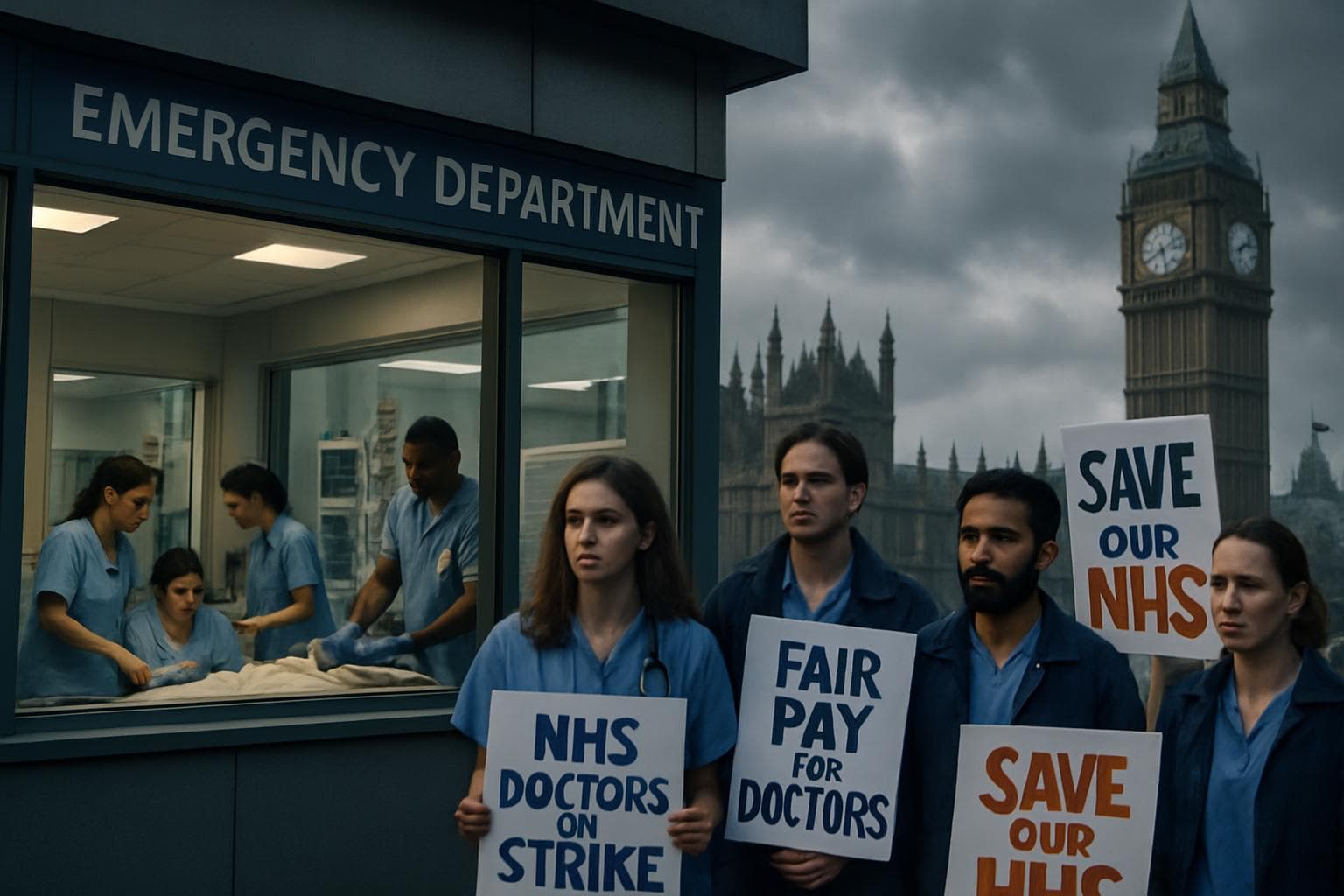
- NHS aims to minimize disruption during the ongoing five-day doctors' strike, which began on Friday and ends Wednesday.
- The British Medical Association (BMA) demands a 29% pay rise, citing a 20% real-term pay decline since 2008.
- Conservative leader Kemi Badenoch proposes banning NHS doctors' strikes if her party returns to power.
- Health Secretary Wes Streeting's negotiations with the BMA failed, as the union rejected non-pay-related concessions.
- NHS leaders warn of potential long-term disruption, with strikes possibly extending into next year.
As the five-day strike by resident doctors in England enters its final day, NHS leaders are striving to minimize the impact on patient care. The strike, which began on Friday, follows a breakdown in negotiations between the British Medical Association (BMA) and the government over pay disputes. Despite efforts to maintain services, NHS regional medical director Dr. Michael Gregory acknowledged that some non-urgent appointments and procedures might be affected.
Efforts to Mitigate Disruption
NHS England has prioritized maintaining urgent and emergency care, with consultant cover in place where possible. Dr. Gregory emphasized the importance of continuing operations and outpatient appointments, advising patients to attend scheduled appointments unless notified otherwise. GP surgeries remain operational, and the public is encouraged to use NHS 111 for non-life-threatening issues.
Political Responses and Proposals
In a controversial move, Conservative leader Kemi Badenoch announced plans to ban NHS doctors' strikes if her party regains power. This proposal would align doctors with police and military personnel, who are legally prohibited from striking. Dr. Tom Dolphin of the BMA criticized the proposal as a "desperate intervention," asserting that the right to strike is fundamental in a modern democracy.
Failed Negotiations and Union Demands
Health Secretary Wes Streeting believed he had reached a verbal agreement with BMA representatives, involving non-pay concessions such as overnight meals and exam fee coverage. However, the BMA committee rejected the deal, insisting on a 29% pay rise to address a 20% real-term decline since 2008. The union remains firm in its stance, urging the government to return to negotiations with a serious proposal.
Potential Long-term Impact
NHS leaders express concern over the potential for prolonged disruption, with strikes possibly extending into next year. Sir Jim Mackey, CEO of NHS England, warned of a "snowball effect" on patients and staff, while David Probert of University College London hospitals trust suggested the situation could persist until Christmas or beyond.
WHAT THIS MIGHT MEAN
The ongoing doctors' strike highlights the deepening rift between the BMA and the government, with significant implications for the UK healthcare system. If the Conservative Party's proposal to ban NHS strikes gains traction, it could lead to a major shift in industrial relations within the sector. Meanwhile, the failure to resolve the pay dispute may result in further strikes, exacerbating service disruptions and potentially prompting other NHS staff to join the industrial action. As negotiations remain stalled, the government faces mounting pressure to address the BMA's demands and prevent long-term damage to the NHS.
Related Articles

UK Government to Reform Asylum Seeker Support and Employment Policies

UK-Iran Tensions: Starmer Defends Cautious Approach Amid Trump Criticism
Labour MP's Husband Arrested in UK-China Espionage Probe
Persistent Safety Concerns in Nottingham Maternity Services Amidst Calls for Systemic Reform
Nottingham Attacks Inquiry: Families Demand Accountability and Truth

Birmingham's Proactive Approach to Measles Outbreak Offers Lessons for North London
NHS Strikes Continue Amid Pay Dispute and Political Tensions
In This Article
 Ethan Brooks| Published
 HIGHLIGHTS
- NHS aims to minimize disruption during the ongoing five-day doctors' strike, which began on Friday and ends Wednesday.
- The British Medical Association (BMA) demands a 29% pay rise, citing a 20% real-term pay decline since 2008.
- Conservative leader Kemi Badenoch proposes banning NHS doctors' strikes if her party returns to power.
- Health Secretary Wes Streeting's negotiations with the BMA failed, as the union rejected non-pay-related concessions.
- NHS leaders warn of potential long-term disruption, with strikes possibly extending into next year.
As the five-day strike by resident doctors in England enters its final day, NHS leaders are striving to minimize the impact on patient care. The strike, which began on Friday, follows a breakdown in negotiations between the British Medical Association (BMA) and the government over pay disputes. Despite efforts to maintain services, NHS regional medical director Dr. Michael Gregory acknowledged that some non-urgent appointments and procedures might be affected.
Efforts to Mitigate Disruption
NHS England has prioritized maintaining urgent and emergency care, with consultant cover in place where possible. Dr. Gregory emphasized the importance of continuing operations and outpatient appointments, advising patients to attend scheduled appointments unless notified otherwise. GP surgeries remain operational, and the public is encouraged to use NHS 111 for non-life-threatening issues.
Political Responses and Proposals
In a controversial move, Conservative leader Kemi Badenoch announced plans to ban NHS doctors' strikes if her party regains power. This proposal would align doctors with police and military personnel, who are legally prohibited from striking. Dr. Tom Dolphin of the BMA criticized the proposal as a "desperate intervention," asserting that the right to strike is fundamental in a modern democracy.
Failed Negotiations and Union Demands
Health Secretary Wes Streeting believed he had reached a verbal agreement with BMA representatives, involving non-pay concessions such as overnight meals and exam fee coverage. However, the BMA committee rejected the deal, insisting on a 29% pay rise to address a 20% real-term decline since 2008. The union remains firm in its stance, urging the government to return to negotiations with a serious proposal.
Potential Long-term Impact
NHS leaders express concern over the potential for prolonged disruption, with strikes possibly extending into next year. Sir Jim Mackey, CEO of NHS England, warned of a "snowball effect" on patients and staff, while David Probert of University College London hospitals trust suggested the situation could persist until Christmas or beyond.
WHAT THIS MIGHT MEAN
The ongoing doctors' strike highlights the deepening rift between the BMA and the government, with significant implications for the UK healthcare system. If the Conservative Party's proposal to ban NHS strikes gains traction, it could lead to a major shift in industrial relations within the sector. Meanwhile, the failure to resolve the pay dispute may result in further strikes, exacerbating service disruptions and potentially prompting other NHS staff to join the industrial action. As negotiations remain stalled, the government faces mounting pressure to address the BMA's demands and prevent long-term damage to the NHS.
Related Articles
UK Government to Reform Asylum Seeker Support and Employment Policies
UK-Iran Tensions: Starmer Defends Cautious Approach Amid Trump Criticism
Labour MP's Husband Arrested in UK-China Espionage Probe
Persistent Safety Concerns in Nottingham Maternity Services Amidst Calls for Systemic Reform
Nottingham Attacks Inquiry: Families Demand Accountability and Truth
Birmingham's Proactive Approach to Measles Outbreak Offers Lessons for North London