
Nigel Farage Avoids Sanctions for Breaching MPs' Financial Declaration Rules
In This Article
HIGHLIGHTS
- Nigel Farage breached MPs' rules 17 times by failing to declare £384,000 in financial interests within the required 28-day period.
- The parliamentary commissioner for standards ruled the breaches as "inadvertent," deciding against recommending sanctions.
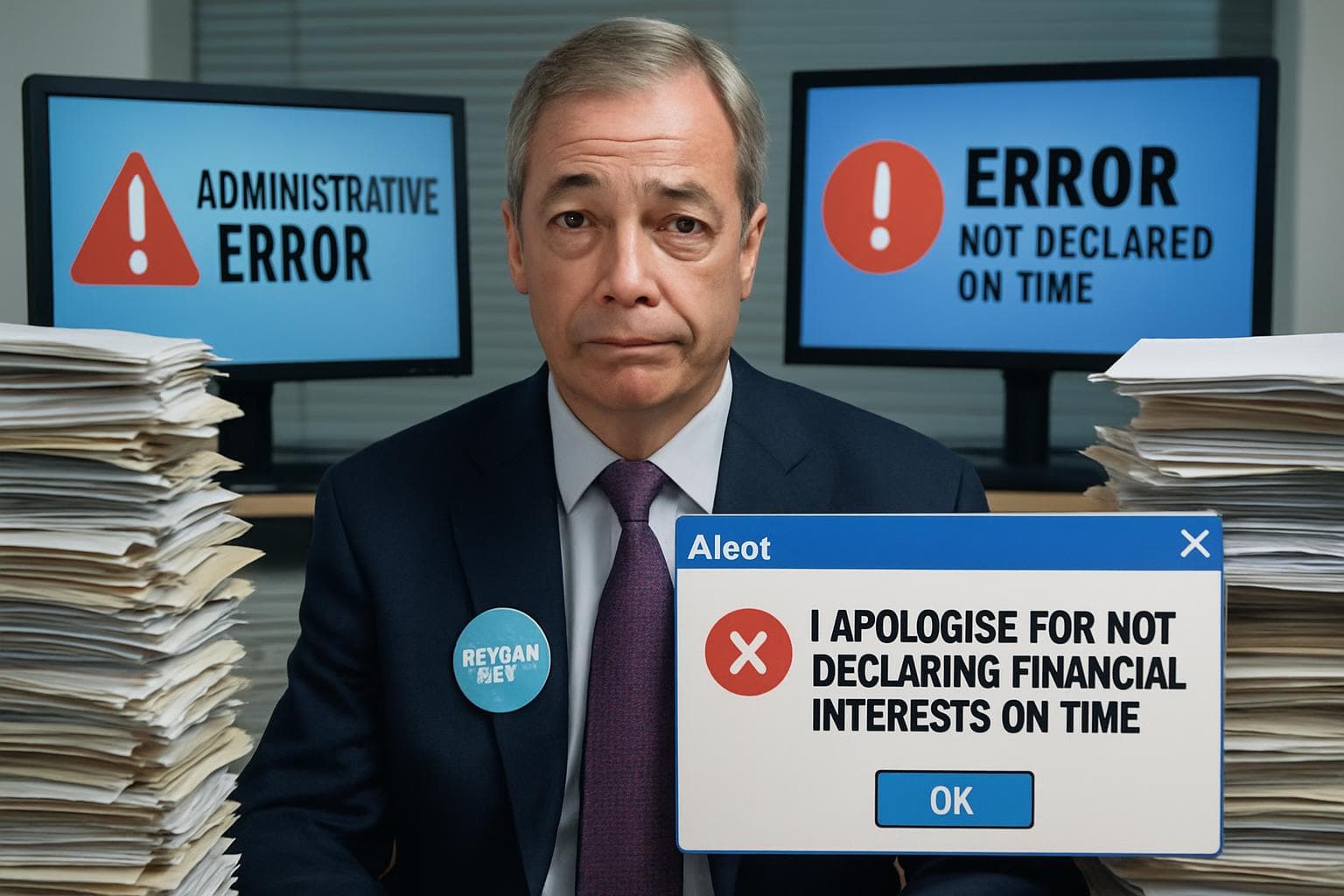
- Farage attributed the errors to administrative issues and his own lack of computer literacy, apologizing for the oversight.
- Payments from GB News, Google, and other sources were among the interests not reported on time.
- A Labour Party spokesperson criticized Farage, accusing him of prioritizing personal gain over his constituents.
Nigel Farage, leader of Reform UK and MP for Clacton, has been found to have breached parliamentary rules 17 times by failing to declare financial interests amounting to £384,000 within the stipulated 28-day period. The parliamentary commissioner for standards, Daniel Greenberg, concluded that these breaches were "inadvertent" and opted not to impose any sanctions.
Administrative Oversight and Apology
Farage, who is known for his outspoken political stance, attributed the lapses to administrative errors and his own lack of computer skills. "I'm not, I'm afraid, computer literate, which makes me yet more an oddball than perhaps I was before," he admitted during a meeting with the commissioner on December 11, 2025. He expressed regret over the situation, stating, "I fully accept that I'm in the wrong in every way, because if your staff mess up, ultimately you're responsible."
Financial Interests and Political Accountability
The financial interests in question included payments from media outlets such as GB News and tech giants like Google. Farage, who is the highest-earning MP, emphasized that his income was not derived from his role as an MP but from his personal brand. He also noted that he did not claim personal expenses, asserting that his outside income allowed him to do so.
Criticism and Political Implications
The Labour Party seized the opportunity to criticize Farage, with a spokesperson stating, "He isn't on the side of working people – he's just lining his pockets when he should be standing up for his constituents." The spokesperson further accused Farage of being distracted by his efforts to attract former Tory politicians to his party.
WHAT THIS MIGHT MEAN
The decision not to sanction Farage may set a precedent for how inadvertent breaches of parliamentary rules are handled, potentially influencing future cases. Politically, this incident could impact Farage's reputation, especially among constituents who may view the breaches as a sign of negligence. As Reform UK continues to grow, Farage's ability to manage administrative tasks effectively will likely come under increased scrutiny. Experts suggest that this case highlights the need for MPs to adapt to modern administrative demands, including digital literacy, to maintain transparency and accountability.
Related Articles
Starmer Condemns Reform UK's Plan to Repeal Equality Act as Un-British
Government U-turn on Local Election Delays Sparks Political Fallout

UK Government to Reform Asylum Seeker Support and Employment Policies
Reform UK Aims to Reshape Welsh Politics with New Manifesto

UK Faces Dilemmas Amid Iran Conflict and China Spying Allegations

Labour MP's Husband Arrested in UK-China Espionage Probe
Nigel Farage Avoids Sanctions for Breaching MPs' Financial Declaration Rules
In This Article
 Ethan Brooks| Published
 HIGHLIGHTS
- Nigel Farage breached MPs' rules 17 times by failing to declare £384,000 in financial interests within the required 28-day period.
- The parliamentary commissioner for standards ruled the breaches as "inadvertent," deciding against recommending sanctions.
- Farage attributed the errors to administrative issues and his own lack of computer literacy, apologizing for the oversight.
- Payments from GB News, Google, and other sources were among the interests not reported on time.
- A Labour Party spokesperson criticized Farage, accusing him of prioritizing personal gain over his constituents.
Nigel Farage, leader of Reform UK and MP for Clacton, has been found to have breached parliamentary rules 17 times by failing to declare financial interests amounting to £384,000 within the stipulated 28-day period. The parliamentary commissioner for standards, Daniel Greenberg, concluded that these breaches were "inadvertent" and opted not to impose any sanctions.
Administrative Oversight and Apology
Farage, who is known for his outspoken political stance, attributed the lapses to administrative errors and his own lack of computer skills. "I'm not, I'm afraid, computer literate, which makes me yet more an oddball than perhaps I was before," he admitted during a meeting with the commissioner on December 11, 2025. He expressed regret over the situation, stating, "I fully accept that I'm in the wrong in every way, because if your staff mess up, ultimately you're responsible."
Financial Interests and Political Accountability
The financial interests in question included payments from media outlets such as GB News and tech giants like Google. Farage, who is the highest-earning MP, emphasized that his income was not derived from his role as an MP but from his personal brand. He also noted that he did not claim personal expenses, asserting that his outside income allowed him to do so.
Criticism and Political Implications
The Labour Party seized the opportunity to criticize Farage, with a spokesperson stating, "He isn't on the side of working people – he's just lining his pockets when he should be standing up for his constituents." The spokesperson further accused Farage of being distracted by his efforts to attract former Tory politicians to his party.
WHAT THIS MIGHT MEAN
The decision not to sanction Farage may set a precedent for how inadvertent breaches of parliamentary rules are handled, potentially influencing future cases. Politically, this incident could impact Farage's reputation, especially among constituents who may view the breaches as a sign of negligence. As Reform UK continues to grow, Farage's ability to manage administrative tasks effectively will likely come under increased scrutiny. Experts suggest that this case highlights the need for MPs to adapt to modern administrative demands, including digital literacy, to maintain transparency and accountability.
Related Articles
Starmer Condemns Reform UK's Plan to Repeal Equality Act as Un-British
Government U-turn on Local Election Delays Sparks Political Fallout
UK Government to Reform Asylum Seeker Support and Employment Policies
Reform UK Aims to Reshape Welsh Politics with New Manifesto
UK Faces Dilemmas Amid Iran Conflict and China Spying Allegations
Labour MP's Husband Arrested in UK-China Espionage Probe