
NSW Moves to Tighten Gun Laws and Restrict Protests Amidst Bondi Shooting Aftermath
In This Article
HIGHLIGHTS
- New South Wales is fast-tracking laws to tighten gun control and restrict protests following the Bondi shooting, which resulted in 15 deaths.
- The proposed legislation includes limiting gun ownership and banning the phrase "globalise the intifada" at protests.
- Civil rights groups criticize the laws as an infringement on democratic freedoms, while pro-gun advocates argue they unfairly target law-abiding citizens.
- The NSW Coalition is divided, with the Nationals opposing the gun reforms due to their impact on rural communities.
- The federal government is also considering anti-hate speech legislation in response to rising antisemitism concerns.
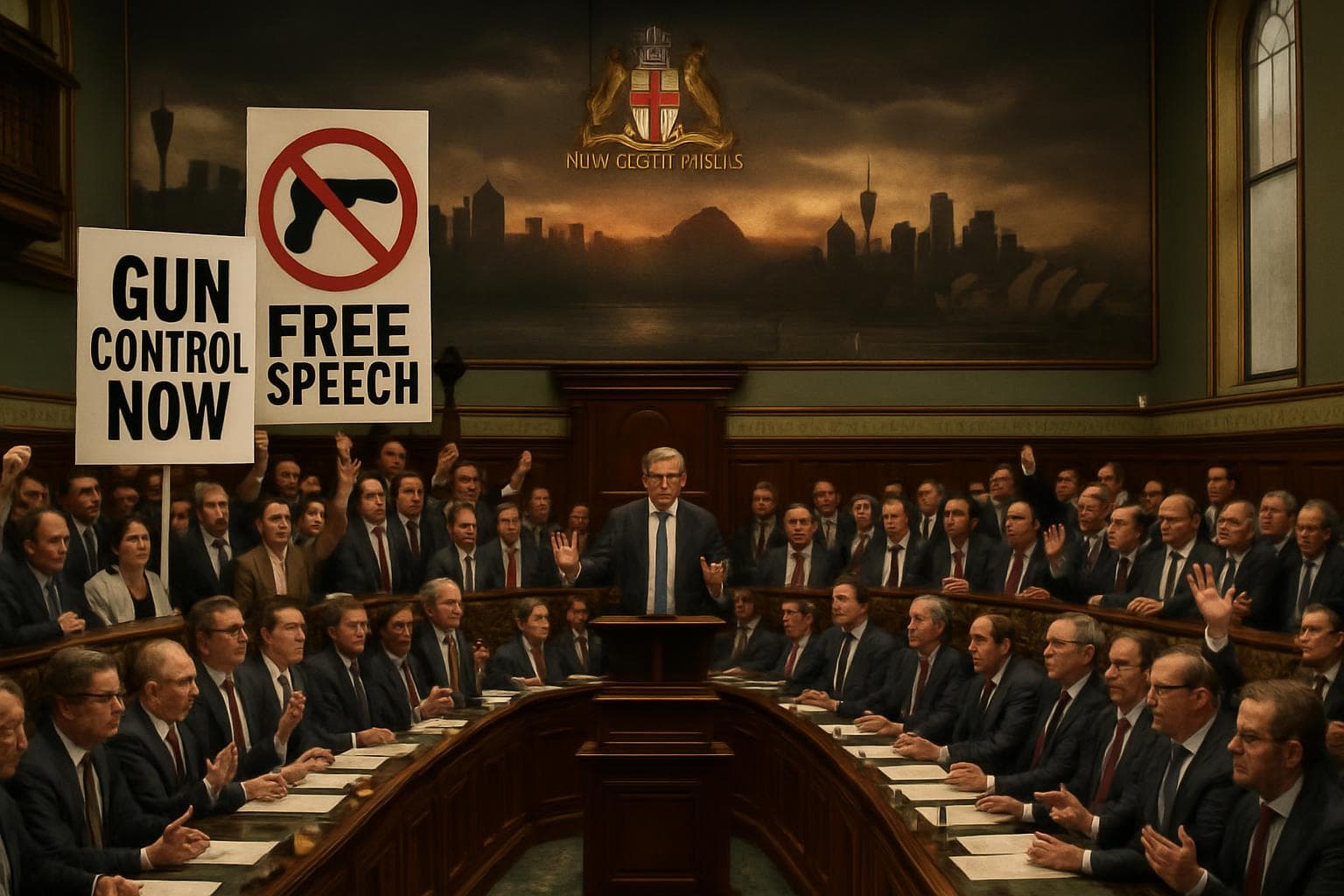
In the wake of the tragic Bondi shooting that claimed 15 lives, New South Wales (NSW) is pushing forward with emergency legislation aimed at tightening gun control and imposing restrictions on protests. The proposed laws, which have sparked significant debate, are being fast-tracked through the NSW parliament.
Gun Control Measures
The new gun laws propose limiting individuals to four firearms, with exceptions for professional shooters who may own up to ten. Additionally, gun licence renewals will be required every two years, and appeals against licence refusals will be abolished, granting police the final say. The state has allocated $150 million for a gun buyback program, with matching federal funds expected to double this amount.
Protest Restrictions and Controversy
The legislation also seeks to ban the phrase "globalise the intifada" at protests, a move that has drawn criticism from civil liberties groups. NSW Premier Chris Minns argues that the phrase incites violence and disunity. However, civil rights advocates, including Timothy Roberts of the NSW Council for Civil Liberties, contend that these measures infringe on democratic freedoms and the right to protest.
Political Divisions and Reactions
The NSW Coalition is split over the gun reforms, with the Nationals opposing the measures due to their impact on rural communities. Meanwhile, the federal government is considering broader anti-hate speech legislation in response to rising antisemitism. Prime Minister Anthony Albanese has expressed a sense of responsibility for the Bondi attack but has resisted calls for a federal royal commission.
Public and Political Responses
Protests have erupted in Sydney, with demonstrators defying the proposed ban on the "intifada" phrase. Critics argue that the government is using the Bondi tragedy to curtail civil liberties. The Greens have labeled the protest restrictions as "draconian," and plan to propose amendments in the upper house.
WHAT THIS MIGHT MEAN
As NSW moves forward with these controversial laws, the state could face legal challenges, particularly concerning the constitutionality of the protest restrictions. The division within the Coalition may also impact the legislation's future, especially if rural communities continue to voice strong opposition. On a broader scale, the federal government's consideration of anti-hate speech laws could lead to nationwide changes in how hate speech is defined and prosecuted, potentially setting a precedent for future legislation.
Related Articles
Tragedy Strikes Lake Cargelligo: Three Dead in NSW Shooting as Gunman Remains at Large
Sydney Police Under Scrutiny Following Violent Anti-Herzog Protest
Tensions Rise as Sydney Protests Against Israeli President's Visit Turn Violent
Coroner Highlights Psychiatric Care Failures in Bondi Junction Stabbing Case
Explosive Device Thrown at Perth Invasion Day Rally Sparks Arrest and Charges
NSW Manhunt Intensifies After Triple Shooting in Lake Cargelligo
NSW Moves to Tighten Gun Laws and Restrict Protests Amidst Bondi Shooting Aftermath
In This Article
 Sofia Romano| Published
 HIGHLIGHTS
- New South Wales is fast-tracking laws to tighten gun control and restrict protests following the Bondi shooting, which resulted in 15 deaths.
- The proposed legislation includes limiting gun ownership and banning the phrase "globalise the intifada" at protests.
- Civil rights groups criticize the laws as an infringement on democratic freedoms, while pro-gun advocates argue they unfairly target law-abiding citizens.
- The NSW Coalition is divided, with the Nationals opposing the gun reforms due to their impact on rural communities.
- The federal government is also considering anti-hate speech legislation in response to rising antisemitism concerns.
In the wake of the tragic Bondi shooting that claimed 15 lives, New South Wales (NSW) is pushing forward with emergency legislation aimed at tightening gun control and imposing restrictions on protests. The proposed laws, which have sparked significant debate, are being fast-tracked through the NSW parliament.
Gun Control Measures
The new gun laws propose limiting individuals to four firearms, with exceptions for professional shooters who may own up to ten. Additionally, gun licence renewals will be required every two years, and appeals against licence refusals will be abolished, granting police the final say. The state has allocated $150 million for a gun buyback program, with matching federal funds expected to double this amount.
Protest Restrictions and Controversy
The legislation also seeks to ban the phrase "globalise the intifada" at protests, a move that has drawn criticism from civil liberties groups. NSW Premier Chris Minns argues that the phrase incites violence and disunity. However, civil rights advocates, including Timothy Roberts of the NSW Council for Civil Liberties, contend that these measures infringe on democratic freedoms and the right to protest.
Political Divisions and Reactions
The NSW Coalition is split over the gun reforms, with the Nationals opposing the measures due to their impact on rural communities. Meanwhile, the federal government is considering broader anti-hate speech legislation in response to rising antisemitism. Prime Minister Anthony Albanese has expressed a sense of responsibility for the Bondi attack but has resisted calls for a federal royal commission.
Public and Political Responses
Protests have erupted in Sydney, with demonstrators defying the proposed ban on the "intifada" phrase. Critics argue that the government is using the Bondi tragedy to curtail civil liberties. The Greens have labeled the protest restrictions as "draconian," and plan to propose amendments in the upper house.
WHAT THIS MIGHT MEAN
As NSW moves forward with these controversial laws, the state could face legal challenges, particularly concerning the constitutionality of the protest restrictions. The division within the Coalition may also impact the legislation's future, especially if rural communities continue to voice strong opposition. On a broader scale, the federal government's consideration of anti-hate speech laws could lead to nationwide changes in how hate speech is defined and prosecuted, potentially setting a precedent for future legislation.
Related Articles
Tragedy Strikes Lake Cargelligo: Three Dead in NSW Shooting as Gunman Remains at Large
Sydney Police Under Scrutiny Following Violent Anti-Herzog Protest
Tensions Rise as Sydney Protests Against Israeli President's Visit Turn Violent
Coroner Highlights Psychiatric Care Failures in Bondi Junction Stabbing Case
Explosive Device Thrown at Perth Invasion Day Rally Sparks Arrest and Charges
NSW Manhunt Intensifies After Triple Shooting in Lake Cargelligo