
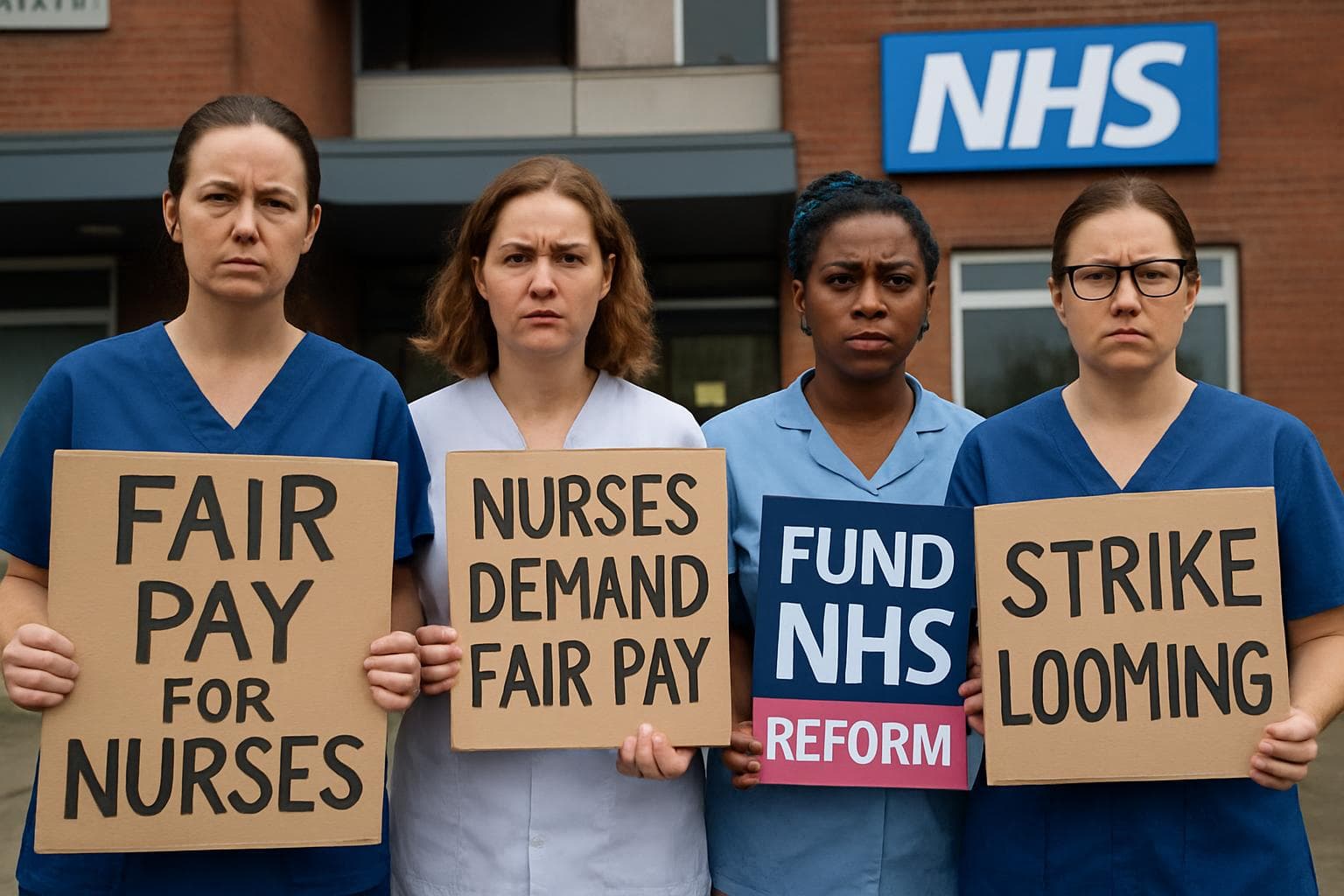
Nurses Demand Pay Reform as Strike Threat Looms Over NHS
In This Article
HIGHLIGHTS
- The Royal College of Nursing (RCN) is threatening industrial action if the UK government does not address pay and contract reform by autumn.
- A survey revealed 91% of RCN members in England, Wales, and Northern Ireland rejected the 3.6% pay increase, citing it as insufficient.
- The RCN is advocating for reforms to the NHS contract, which they claim traps nurses in low pay bands, hindering career progression.
- Resident doctors in England ended their 12th strike over pay disputes, with talks set to resume focusing on working conditions.
- In Northern Ireland, the RCN has lodged a formal dispute over the delayed implementation of the pay award, with 80% of members rejecting the offer.
The Royal College of Nursing (RCN) has issued a stark warning to the UK government: reform the NHS pay structure or face potential strike action. This ultimatum follows a survey in which 91% of RCN members across England, Wales, and Northern Ireland rejected the proposed 3.6% pay increase, deeming it inadequate.
Growing Discontent Among Nurses
The dissatisfaction among nurses is palpable, with many feeling undervalued and trapped in a system that offers little room for career advancement. The RCN has highlighted the need for reforms to the NHS contract, known as Agenda for Change, which they argue confines nurses to low pay bands despite their skills and experience. Prof Nicola Ranger, RCN's general secretary, emphasized the urgency, stating, "We deliver the vast majority of care and deserve to be valued for our skill, knowledge, and experience."
Resident Doctors' Strikes and NHS Disruption
The healthcare sector is already grappling with disruptions as resident doctors in England concluded their 12th strike over pay disputes. While the government has agreed to resume talks, these discussions will focus on improving working conditions rather than pay. The strikes have led to the cancellation of over 250 outpatient appointments and 59 operations at Gloucestershire and Cheltenham Royal Hospitals, highlighting the broader impact on patient care.
Northern Ireland's Pay Dispute
In Northern Ireland, the RCN has lodged a formal dispute over the delayed implementation of the pay award. With 80% of members rejecting the 3.6% offer, the union's Northern Ireland Executive Director, Rita Devlin, expressed frustration over the repeated delays, stating, "Our members are not willing to wait another year for their pay."
Implications for the NHS
The potential for further industrial action poses a significant challenge for NHS leaders, who warn of the detrimental effects on patient care. Rory Deighton of the NHS Confederation noted, "Patients are always the ones who end up suffering the most during industrial action."
WHAT THIS MIGHT MEAN
As the RCN and the government head towards a potential showdown, the implications for the NHS are profound. Should the government fail to address the nurses' demands, the healthcare system could face a tumultuous autumn and winter, marked by strikes and service disruptions. Experts suggest that meaningful reforms to the NHS pay structure could alleviate some of the tensions, but with resident doctors also in dispute, the path to resolution remains complex. The outcome of these negotiations could set a precedent for future healthcare pay negotiations across the UK.
Related Articles
UK Government to Reform Asylum Seeker Support and Employment Policies

Sisters Tragically Drown at Eryri National Park's Watkin Path

Labour MP's Husband Arrested in UK-China Espionage Probe

Saharan Dust to Illuminate UK Skies with Vivid Sunrises and Sunsets
Persistent Safety Concerns in Nottingham Maternity Services Amidst Calls for Systemic Reform

Government Announces £4 Billion Overhaul of SEND Support in England
Nurses Demand Pay Reform as Strike Threat Looms Over NHS
In This Article
 Ethan Brooks| Published
 HIGHLIGHTS
- The Royal College of Nursing (RCN) is threatening industrial action if the UK government does not address pay and contract reform by autumn.
- A survey revealed 91% of RCN members in England, Wales, and Northern Ireland rejected the 3.6% pay increase, citing it as insufficient.
- The RCN is advocating for reforms to the NHS contract, which they claim traps nurses in low pay bands, hindering career progression.
- Resident doctors in England ended their 12th strike over pay disputes, with talks set to resume focusing on working conditions.
- In Northern Ireland, the RCN has lodged a formal dispute over the delayed implementation of the pay award, with 80% of members rejecting the offer.
The Royal College of Nursing (RCN) has issued a stark warning to the UK government: reform the NHS pay structure or face potential strike action. This ultimatum follows a survey in which 91% of RCN members across England, Wales, and Northern Ireland rejected the proposed 3.6% pay increase, deeming it inadequate.
Growing Discontent Among Nurses
The dissatisfaction among nurses is palpable, with many feeling undervalued and trapped in a system that offers little room for career advancement. The RCN has highlighted the need for reforms to the NHS contract, known as Agenda for Change, which they argue confines nurses to low pay bands despite their skills and experience. Prof Nicola Ranger, RCN's general secretary, emphasized the urgency, stating, "We deliver the vast majority of care and deserve to be valued for our skill, knowledge, and experience."
Resident Doctors' Strikes and NHS Disruption
The healthcare sector is already grappling with disruptions as resident doctors in England concluded their 12th strike over pay disputes. While the government has agreed to resume talks, these discussions will focus on improving working conditions rather than pay. The strikes have led to the cancellation of over 250 outpatient appointments and 59 operations at Gloucestershire and Cheltenham Royal Hospitals, highlighting the broader impact on patient care.
Northern Ireland's Pay Dispute
In Northern Ireland, the RCN has lodged a formal dispute over the delayed implementation of the pay award. With 80% of members rejecting the 3.6% offer, the union's Northern Ireland Executive Director, Rita Devlin, expressed frustration over the repeated delays, stating, "Our members are not willing to wait another year for their pay."
Implications for the NHS
The potential for further industrial action poses a significant challenge for NHS leaders, who warn of the detrimental effects on patient care. Rory Deighton of the NHS Confederation noted, "Patients are always the ones who end up suffering the most during industrial action."
WHAT THIS MIGHT MEAN
As the RCN and the government head towards a potential showdown, the implications for the NHS are profound. Should the government fail to address the nurses' demands, the healthcare system could face a tumultuous autumn and winter, marked by strikes and service disruptions. Experts suggest that meaningful reforms to the NHS pay structure could alleviate some of the tensions, but with resident doctors also in dispute, the path to resolution remains complex. The outcome of these negotiations could set a precedent for future healthcare pay negotiations across the UK.
Related Articles
UK Government to Reform Asylum Seeker Support and Employment Policies
Sisters Tragically Drown at Eryri National Park's Watkin Path
Labour MP's Husband Arrested in UK-China Espionage Probe
Saharan Dust to Illuminate UK Skies with Vivid Sunrises and Sunsets
Persistent Safety Concerns in Nottingham Maternity Services Amidst Calls for Systemic Reform
Government Announces £4 Billion Overhaul of SEND Support in England