
Over 100 Arrested in UK Protests Against Palestine Action Ban
In This Article
HIGHLIGHTS
- Over 100 arrests were made across the UK during protests against the proscription of Palestine Action as a terrorist group.
- Demonstrations occurred in major cities, including London, Edinburgh, and Manchester, with many arrests under the Terrorism Act 2000.
- The protests coincided with a High Court challenge by Palestine Action's co-founder against the group's ban.
- The UK government's decision to proscribe the group has been criticized by civil liberties groups and UN experts.
- The protests are part of broader demonstrations against the ongoing conflict in Gaza and alleged UK complicity.
In a series of coordinated protests across the UK, more than 100 individuals were arrested for demonstrating against the recent proscription of Palestine Action as a terrorist organization. The protests, which took place in cities such as London, Edinburgh, Manchester, Bristol, and Truro, were organized in response to the government's decision to ban the activist group under the Terrorism Act 2000.
Nationwide Demonstrations and Arrests
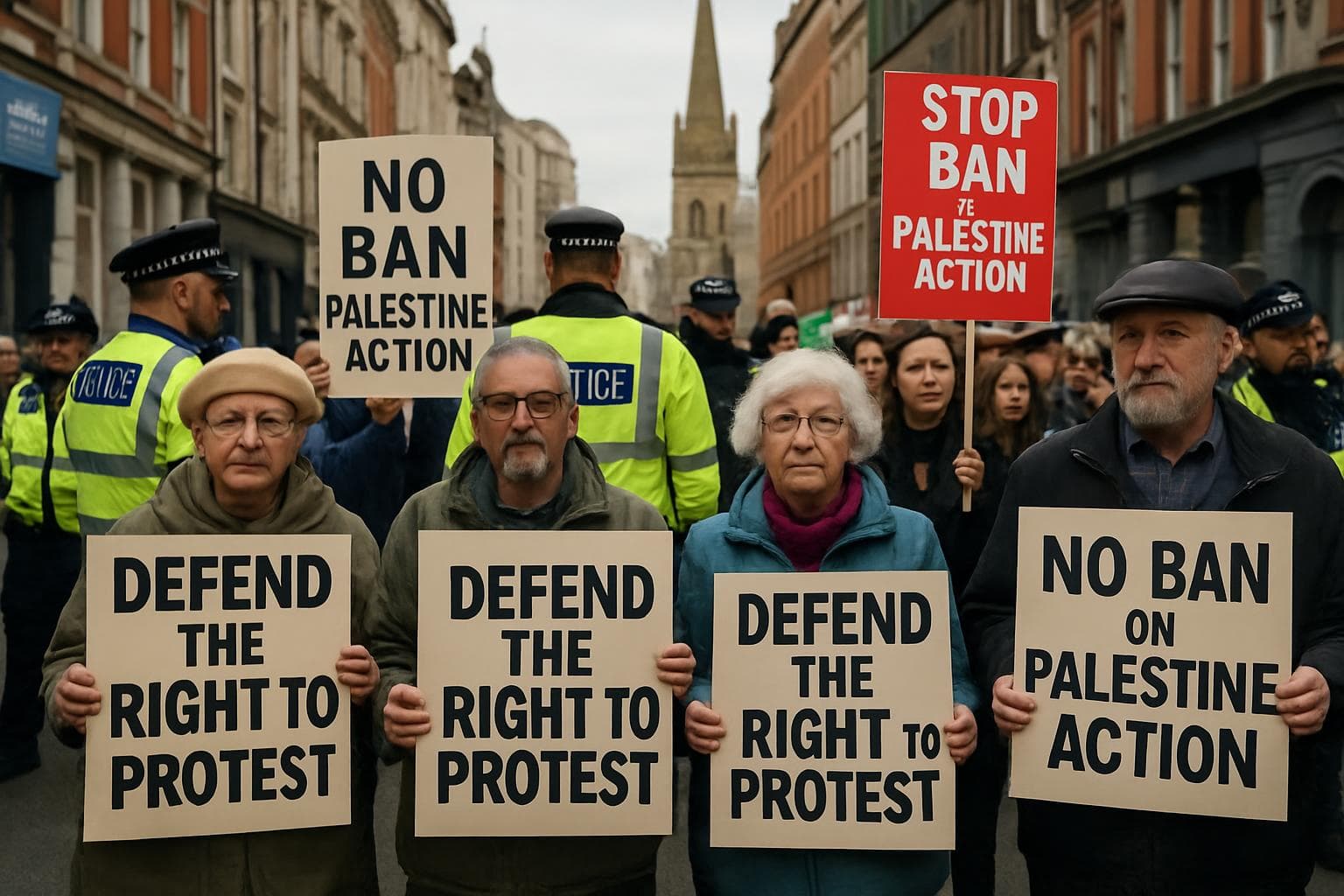
The largest demonstration occurred in London's Parliament Square, where 55 people were detained for displaying placards supporting Palestine Action. The Metropolitan Police swiftly moved in, arresting individuals, some of whom were elderly, for holding signs that read, "I oppose genocide. I support Palestine Action." Similar scenes unfolded in Bristol, where 17 arrests were made, and in Truro, where eight individuals were detained.
In Edinburgh, thousands marched through the city, stopping at key government buildings to voice their opposition to the ban and the ongoing conflict in Gaza. Although no arrests were made during the Edinburgh march, the event highlighted widespread discontent with the UK government's stance.
Legal and Political Context
The protests come ahead of a High Court hearing where Huda Ammori, co-founder of Palestine Action, will challenge the group's proscription. The decision to ban the group has drawn criticism from civil liberties organizations and UN experts, who argue that it conflates legitimate protest with terrorism.
The UK government has defended its decision, citing security concerns following a high-profile break-in at RAF Brize Norton by Palestine Action activists. The incident, which involved defacing military aircraft, was a key factor in the group's proscription.
Public and Political Reactions
Public figures and activists have expressed outrage over the arrests and the broader implications of the ban. Mick Napier, of the Scottish Palestinian Solidarity Campaign, criticized the UK government's actions, stating that they are complicit in the ongoing conflict in Gaza. Former MP Tommy Sheppard echoed these sentiments, describing the situation in the Middle East as a "genocide."
WHAT THIS MIGHT MEAN
The legal challenge by Palestine Action's co-founder could set a significant precedent for how protest groups are treated under UK terrorism laws. If successful, it may lead to a reassessment of the criteria used to proscribe organizations. Politically, the ongoing protests and arrests could increase pressure on the UK government to justify its actions and address concerns about civil liberties. As the situation in Gaza continues to unfold, the UK may face growing domestic and international scrutiny over its policies and their implications for free speech and protest rights.
Related Articles

Labour MP's Husband Arrested in UK-China Espionage Probe
UK Government to Reform Asylum Seeker Support and Employment Policies

UK Faces Dilemmas Amid Iran Conflict and China Spying Allegations
UK Reinforces Military Presence in Cyprus Amid Middle East Tensions

Police Federation Chief Arrested Amid Fraud Investigation

UK-Iran Tensions: Starmer Defends Cautious Approach Amid Trump Criticism
Over 100 Arrested in UK Protests Against Palestine Action Ban
In This Article
 Ethan Brooks| Published
 HIGHLIGHTS
- Over 100 arrests were made across the UK during protests against the proscription of Palestine Action as a terrorist group.
- Demonstrations occurred in major cities, including London, Edinburgh, and Manchester, with many arrests under the Terrorism Act 2000.
- The protests coincided with a High Court challenge by Palestine Action's co-founder against the group's ban.
- The UK government's decision to proscribe the group has been criticized by civil liberties groups and UN experts.
- The protests are part of broader demonstrations against the ongoing conflict in Gaza and alleged UK complicity.
In a series of coordinated protests across the UK, more than 100 individuals were arrested for demonstrating against the recent proscription of Palestine Action as a terrorist organization. The protests, which took place in cities such as London, Edinburgh, Manchester, Bristol, and Truro, were organized in response to the government's decision to ban the activist group under the Terrorism Act 2000.
Nationwide Demonstrations and Arrests
The largest demonstration occurred in London's Parliament Square, where 55 people were detained for displaying placards supporting Palestine Action. The Metropolitan Police swiftly moved in, arresting individuals, some of whom were elderly, for holding signs that read, "I oppose genocide. I support Palestine Action." Similar scenes unfolded in Bristol, where 17 arrests were made, and in Truro, where eight individuals were detained.
In Edinburgh, thousands marched through the city, stopping at key government buildings to voice their opposition to the ban and the ongoing conflict in Gaza. Although no arrests were made during the Edinburgh march, the event highlighted widespread discontent with the UK government's stance.
Legal and Political Context
The protests come ahead of a High Court hearing where Huda Ammori, co-founder of Palestine Action, will challenge the group's proscription. The decision to ban the group has drawn criticism from civil liberties organizations and UN experts, who argue that it conflates legitimate protest with terrorism.
The UK government has defended its decision, citing security concerns following a high-profile break-in at RAF Brize Norton by Palestine Action activists. The incident, which involved defacing military aircraft, was a key factor in the group's proscription.
Public and Political Reactions
Public figures and activists have expressed outrage over the arrests and the broader implications of the ban. Mick Napier, of the Scottish Palestinian Solidarity Campaign, criticized the UK government's actions, stating that they are complicit in the ongoing conflict in Gaza. Former MP Tommy Sheppard echoed these sentiments, describing the situation in the Middle East as a "genocide."
WHAT THIS MIGHT MEAN
The legal challenge by Palestine Action's co-founder could set a significant precedent for how protest groups are treated under UK terrorism laws. If successful, it may lead to a reassessment of the criteria used to proscribe organizations. Politically, the ongoing protests and arrests could increase pressure on the UK government to justify its actions and address concerns about civil liberties. As the situation in Gaza continues to unfold, the UK may face growing domestic and international scrutiny over its policies and their implications for free speech and protest rights.
Related Articles
Labour MP's Husband Arrested in UK-China Espionage Probe
UK Government to Reform Asylum Seeker Support and Employment Policies
UK Faces Dilemmas Amid Iran Conflict and China Spying Allegations
UK Reinforces Military Presence in Cyprus Amid Middle East Tensions
Police Federation Chief Arrested Amid Fraud Investigation
UK-Iran Tensions: Starmer Defends Cautious Approach Amid Trump Criticism