
Congestion Charge Challenges: Oxford Faces Glitches, London Hikes Fees
In This Article
HIGHLIGHTS
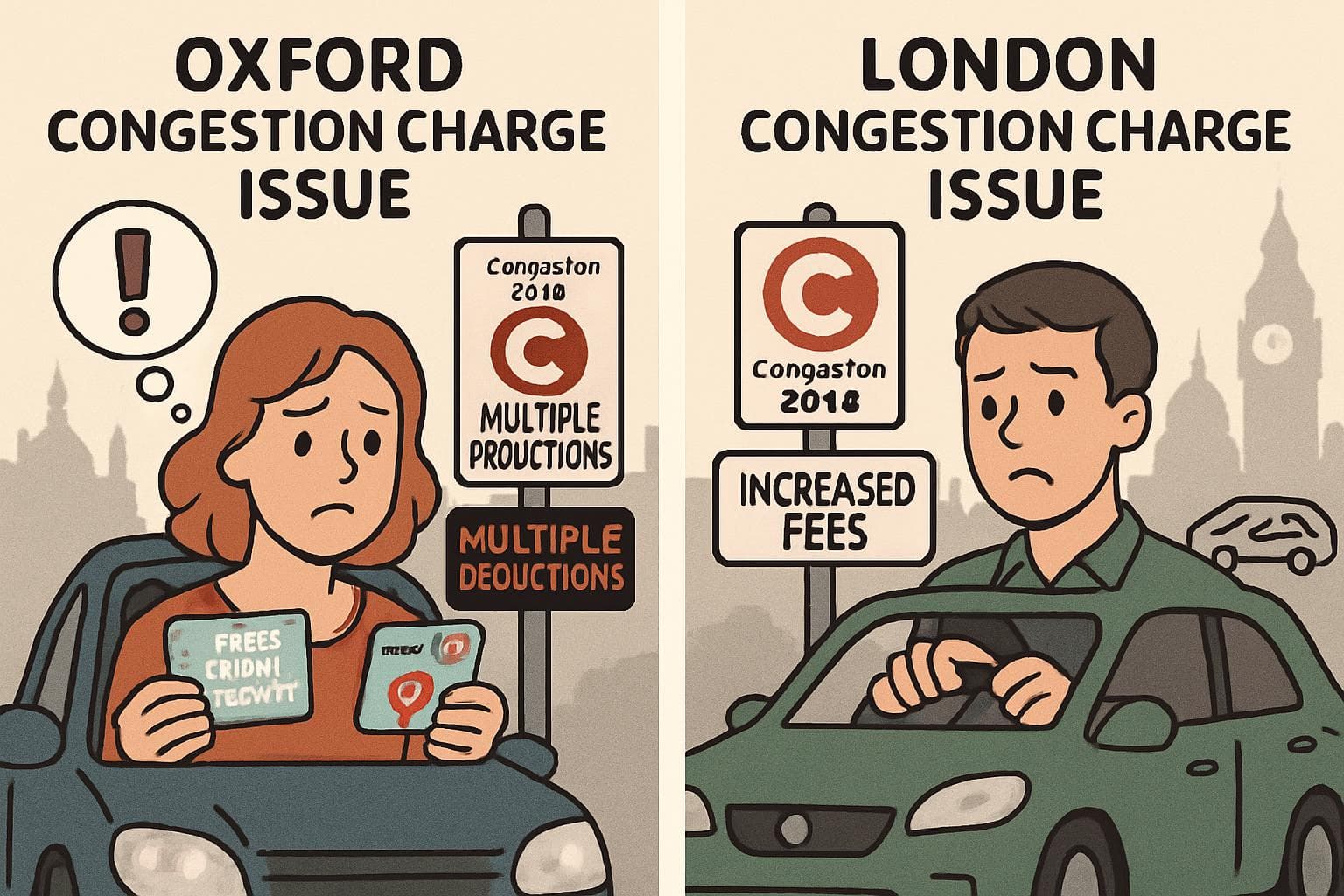
- Oxford's new congestion charge system experienced a glitch, causing multiple permits to be deducted from drivers in one day.
- Oxfordshire County Council is working to resolve the issue within a week and will reinstate any permits deducted in error.
- London's congestion charge will increase to £18 in January, with electric vehicles no longer exempt, though they will receive a discounted rate.
- The changes in London aim to reduce congestion but have been criticized for potentially discouraging the use of electric vehicles.
- London Mayor Sadiq Khan defends the changes, emphasizing the need to keep the congestion charge effective and fit for purpose.
Oxford and London are both grappling with significant developments in their congestion charge systems, impacting drivers across the regions. In Oxford, a technical glitch in the newly implemented congestion charge system has led to multiple free permits being deducted from drivers in a single day. The issue, affecting residents who are entitled to limited free journeys, has been acknowledged by Oxfordshire County Council. Cameras reading number plates at congestion points mistakenly deducted more than one permit per day. The council assures residents that the problem will be resolved within a week, with missing permits reinstated automatically. Andrew Gant, the council's transport chief, stated, "A reconciliation exercise is currently under way to identify the impacted accounts, and any permits deducted in error will be reinstated."
Meanwhile, in London, the congestion charge is set to rise by 20% to £18 starting January, marking a significant policy shift as electric vehicles (EVs) will no longer be exempt from the charge. EV drivers will pay a reduced rate of £13.50, while electric vans and HGVs will incur a £9 fee. This decision, announced by Transport for London, aims to address the increasing number of vehicles in the congestion zone, which has seen a sixfold rise in registered EVs since 2019. London Mayor Sadiq Khan emphasized the necessity of the changes, stating, "Keeping London moving by reducing congestion is vital for our city and for our economy." However, the move has faced criticism from motoring groups and political figures, who argue it could deter the adoption of cleaner vehicles. Elly Baker, Labour’s transport spokesperson, expressed concerns that the policy might penalize those who have already switched to EVs.
WHAT THIS MIGHT MEAN
In Oxford, the resolution of the congestion charge glitch will be crucial for maintaining public trust in the system. The council's swift response and promise to rectify errors should mitigate immediate concerns, but ongoing monitoring will be essential to prevent future issues. As for London, the increased congestion charge and the inclusion of electric vehicles could have broader implications for urban transport policy. While the changes aim to manage traffic effectively, they may also influence the pace at which drivers transition to electric vehicles. The decision could prompt further debate on balancing environmental goals with practical incentives for cleaner transportation. As the policy unfolds, its impact on traffic patterns and air quality will be closely watched by both policymakers and the public.
Related Articles

TfL Advert Banned for Reinforcing Harmful Racial Stereotypes

Labour MP's Husband Arrested in UK-China Espionage Probe

Bafta Film Awards 2023: A Night of Glamour, Talent, and Fashion Statements
Nottingham Attacks Inquiry: Families Demand Accountability and Truth

Bafta Film Awards 2026: A Night of Glamour and Identity Challenges

UK Police Intensify Investigation into Andrew Mountbatten-Windsor Amid Misconduct Allegations
Congestion Charge Challenges: Oxford Faces Glitches, London Hikes Fees
In This Article
 Leila Hassan| Published
 HIGHLIGHTS
- Oxford's new congestion charge system experienced a glitch, causing multiple permits to be deducted from drivers in one day.
- Oxfordshire County Council is working to resolve the issue within a week and will reinstate any permits deducted in error.
- London's congestion charge will increase to £18 in January, with electric vehicles no longer exempt, though they will receive a discounted rate.
- The changes in London aim to reduce congestion but have been criticized for potentially discouraging the use of electric vehicles.
- London Mayor Sadiq Khan defends the changes, emphasizing the need to keep the congestion charge effective and fit for purpose.
Oxford and London are both grappling with significant developments in their congestion charge systems, impacting drivers across the regions. In Oxford, a technical glitch in the newly implemented congestion charge system has led to multiple free permits being deducted from drivers in a single day. The issue, affecting residents who are entitled to limited free journeys, has been acknowledged by Oxfordshire County Council. Cameras reading number plates at congestion points mistakenly deducted more than one permit per day. The council assures residents that the problem will be resolved within a week, with missing permits reinstated automatically. Andrew Gant, the council's transport chief, stated, "A reconciliation exercise is currently under way to identify the impacted accounts, and any permits deducted in error will be reinstated."
Meanwhile, in London, the congestion charge is set to rise by 20% to £18 starting January, marking a significant policy shift as electric vehicles (EVs) will no longer be exempt from the charge. EV drivers will pay a reduced rate of £13.50, while electric vans and HGVs will incur a £9 fee. This decision, announced by Transport for London, aims to address the increasing number of vehicles in the congestion zone, which has seen a sixfold rise in registered EVs since 2019. London Mayor Sadiq Khan emphasized the necessity of the changes, stating, "Keeping London moving by reducing congestion is vital for our city and for our economy." However, the move has faced criticism from motoring groups and political figures, who argue it could deter the adoption of cleaner vehicles. Elly Baker, Labour’s transport spokesperson, expressed concerns that the policy might penalize those who have already switched to EVs.
WHAT THIS MIGHT MEAN
In Oxford, the resolution of the congestion charge glitch will be crucial for maintaining public trust in the system. The council's swift response and promise to rectify errors should mitigate immediate concerns, but ongoing monitoring will be essential to prevent future issues. As for London, the increased congestion charge and the inclusion of electric vehicles could have broader implications for urban transport policy. While the changes aim to manage traffic effectively, they may also influence the pace at which drivers transition to electric vehicles. The decision could prompt further debate on balancing environmental goals with practical incentives for cleaner transportation. As the policy unfolds, its impact on traffic patterns and air quality will be closely watched by both policymakers and the public.
Related Articles
TfL Advert Banned for Reinforcing Harmful Racial Stereotypes
Labour MP's Husband Arrested in UK-China Espionage Probe
Bafta Film Awards 2023: A Night of Glamour, Talent, and Fashion Statements
Nottingham Attacks Inquiry: Families Demand Accountability and Truth
Bafta Film Awards 2026: A Night of Glamour and Identity Challenges
UK Police Intensify Investigation into Andrew Mountbatten-Windsor Amid Misconduct Allegations