
Controversy Surrounds Proscription of Palestine Action Amid Mass Arrests
In This Article
HIGHLIGHTS
- Over 500 individuals were arrested during a protest supporting Palestine Action, a group recently banned under UK terrorism legislation.
- The UK government defends the proscription, citing security advice and alleged violent activities by Palestine Action.
- Palestine Action co-founder Huda Ammori disputes claims of violence, labeling the government's statements as defamatory.
- Amnesty International and other critics argue the arrests threaten freedom of expression and question the broad application of terrorism laws.
- A legal challenge against the ban is set for a hearing in November, with the group seeking to overturn the proscription.
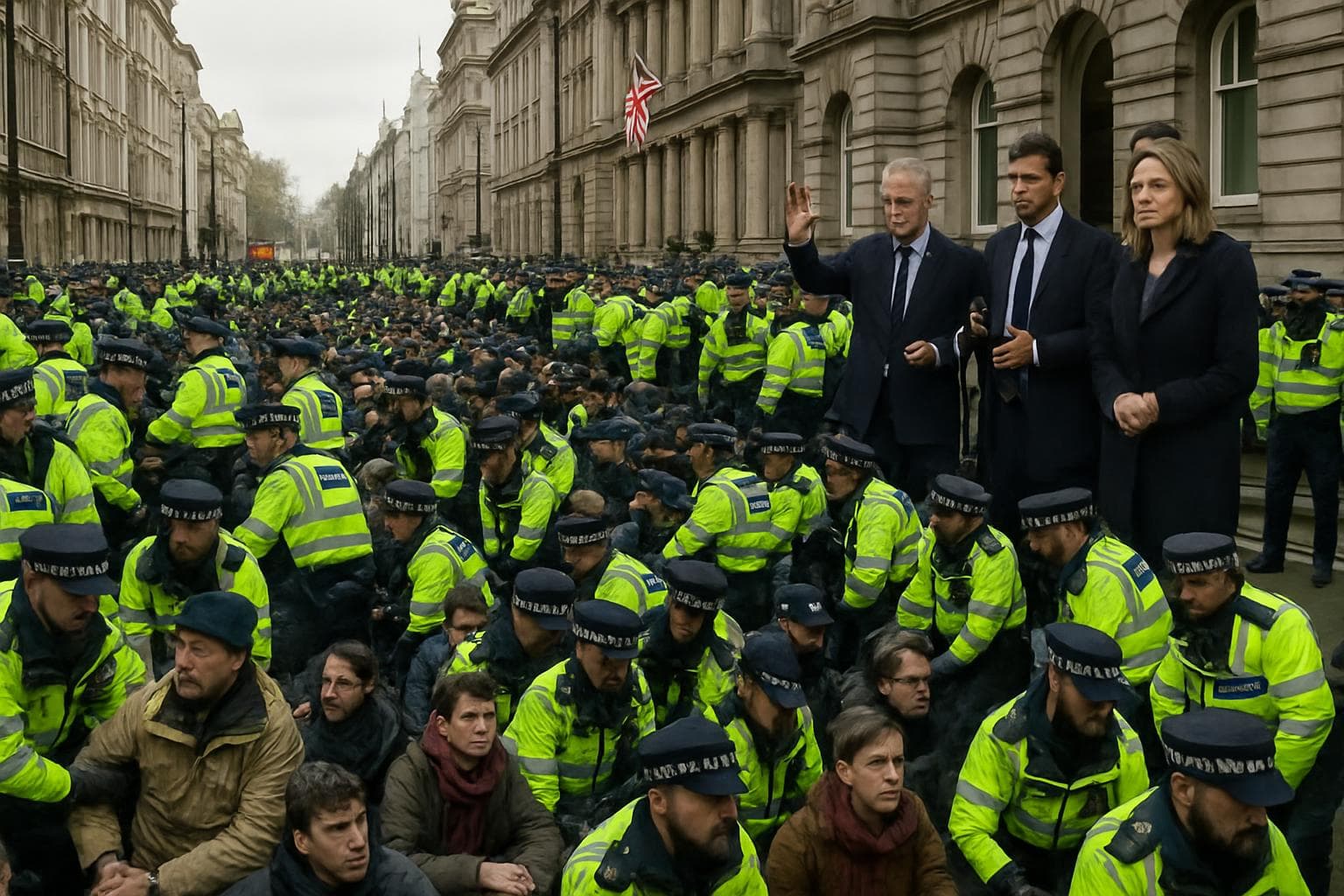
The recent proscription of Palestine Action, a protest group, has sparked significant debate following the arrest of over 500 individuals during a demonstration in London. The UK government, led by Home Secretary Yvette Cooper, has defended the decision to ban the group under terrorism legislation, citing security assessments that label Palestine Action as a violent organization responsible for significant criminal damage.
Government's Stance on Proscription
The proscription, which makes supporting Palestine Action a criminal offense punishable by up to 14 years in prison, was enacted after the group allegedly caused £7 million in damages to military jets at RAF Brize Norton. Cooper emphasized that the decision was based on clear security advice, asserting that the group is not non-violent. The Joint Terrorism Analysis Centre (JTAC) reportedly identified three separate acts of terrorism linked to the group, though specific details remain undisclosed.
Palestine Action's Response
Huda Ammori, co-founder of Palestine Action, has vehemently denied the government's claims, describing them as false and defamatory. Ammori argues that the group's activities, such as spraying paint on warplanes and disrupting operations at Elbit Systems, do not constitute terrorism. She highlights a JTAC report acknowledging that the majority of the group's actions involve minor property damage rather than violence against individuals.
Criticism from Human Rights Advocates
The mass arrests have drawn criticism from human rights organizations, including Amnesty International. Sacha Deshmukh, Amnesty's chief executive, expressed concern over the broad application of UK terrorism laws, suggesting they pose a threat to freedom of expression. Critics argue that the government's actions set a concerning precedent for the criminalization of protest groups.
Legal Challenge Ahead
Palestine Action has secured permission to challenge the proscription in court, with a hearing scheduled for November. The outcome of this legal battle could have significant implications for the future of protest rights and the interpretation of terrorism laws in the UK.
WHAT THIS MIGHT MEAN
The upcoming legal challenge against the proscription of Palestine Action could lead to a reevaluation of the criteria used to designate groups as terrorist organizations. If the court rules in favor of Palestine Action, it may prompt a review of the UK's terrorism laws and their impact on civil liberties. Conversely, if the proscription is upheld, it could embolden the government to apply similar measures to other protest groups, potentially stifling dissent. Legal experts and human rights advocates will be closely monitoring the case, as its outcome could influence future policy decisions and the balance between national security and freedom of expression.
Related Articles

Labour MP's Husband Arrested in UK-China Espionage Probe
Nottingham Attacks Inquiry: Families Demand Accountability and Truth

Prince Andrew's Ties to Epstein Under Scrutiny Amid Calls for Inquiry

Government Criticized for Mishandling Maccabi Tel Aviv Fan Ban

Prince Andrew's Arrest Intensifies Scrutiny on Royal Succession and Prince William's Future Role

UK Police Intensify Investigation into Andrew Mountbatten-Windsor Amid Misconduct Allegations
Controversy Surrounds Proscription of Palestine Action Amid Mass Arrests
In This Article
 Ethan Brooks| Published
 HIGHLIGHTS
- Over 500 individuals were arrested during a protest supporting Palestine Action, a group recently banned under UK terrorism legislation.
- The UK government defends the proscription, citing security advice and alleged violent activities by Palestine Action.
- Palestine Action co-founder Huda Ammori disputes claims of violence, labeling the government's statements as defamatory.
- Amnesty International and other critics argue the arrests threaten freedom of expression and question the broad application of terrorism laws.
- A legal challenge against the ban is set for a hearing in November, with the group seeking to overturn the proscription.
The recent proscription of Palestine Action, a protest group, has sparked significant debate following the arrest of over 500 individuals during a demonstration in London. The UK government, led by Home Secretary Yvette Cooper, has defended the decision to ban the group under terrorism legislation, citing security assessments that label Palestine Action as a violent organization responsible for significant criminal damage.
Government's Stance on Proscription
The proscription, which makes supporting Palestine Action a criminal offense punishable by up to 14 years in prison, was enacted after the group allegedly caused £7 million in damages to military jets at RAF Brize Norton. Cooper emphasized that the decision was based on clear security advice, asserting that the group is not non-violent. The Joint Terrorism Analysis Centre (JTAC) reportedly identified three separate acts of terrorism linked to the group, though specific details remain undisclosed.
Palestine Action's Response
Huda Ammori, co-founder of Palestine Action, has vehemently denied the government's claims, describing them as false and defamatory. Ammori argues that the group's activities, such as spraying paint on warplanes and disrupting operations at Elbit Systems, do not constitute terrorism. She highlights a JTAC report acknowledging that the majority of the group's actions involve minor property damage rather than violence against individuals.
Criticism from Human Rights Advocates
The mass arrests have drawn criticism from human rights organizations, including Amnesty International. Sacha Deshmukh, Amnesty's chief executive, expressed concern over the broad application of UK terrorism laws, suggesting they pose a threat to freedom of expression. Critics argue that the government's actions set a concerning precedent for the criminalization of protest groups.
Legal Challenge Ahead
Palestine Action has secured permission to challenge the proscription in court, with a hearing scheduled for November. The outcome of this legal battle could have significant implications for the future of protest rights and the interpretation of terrorism laws in the UK.
WHAT THIS MIGHT MEAN
The upcoming legal challenge against the proscription of Palestine Action could lead to a reevaluation of the criteria used to designate groups as terrorist organizations. If the court rules in favor of Palestine Action, it may prompt a review of the UK's terrorism laws and their impact on civil liberties. Conversely, if the proscription is upheld, it could embolden the government to apply similar measures to other protest groups, potentially stifling dissent. Legal experts and human rights advocates will be closely monitoring the case, as its outcome could influence future policy decisions and the balance between national security and freedom of expression.
Related Articles
Labour MP's Husband Arrested in UK-China Espionage Probe
Nottingham Attacks Inquiry: Families Demand Accountability and Truth
Prince Andrew's Ties to Epstein Under Scrutiny Amid Calls for Inquiry
Government Criticized for Mishandling Maccabi Tel Aviv Fan Ban
Prince Andrew's Arrest Intensifies Scrutiny on Royal Succession and Prince William's Future Role
UK Police Intensify Investigation into Andrew Mountbatten-Windsor Amid Misconduct Allegations