
Pierre Poilievre Faces Crucial By-Election in Alberta Amid Calls for Electoral Reform
In This Article
HIGHLIGHTS
- Pierre Poilievre is contesting a by-election in Alberta's Battle River-Crowfoot riding after losing his seat in the last general election.
- The by-election features a record 214 candidates, driven by the Longest Ballot Committee advocating for electoral reform.
- Poilievre needs a decisive win to strengthen his position as Conservative leader ahead of a mandatory leadership review in January.
- The by-election has highlighted regional discontent in Alberta, with some voters expressing separatist sentiments.
- Former MP Damien Kurek resigned to allow Poilievre to run, sparking criticism from some constituents.
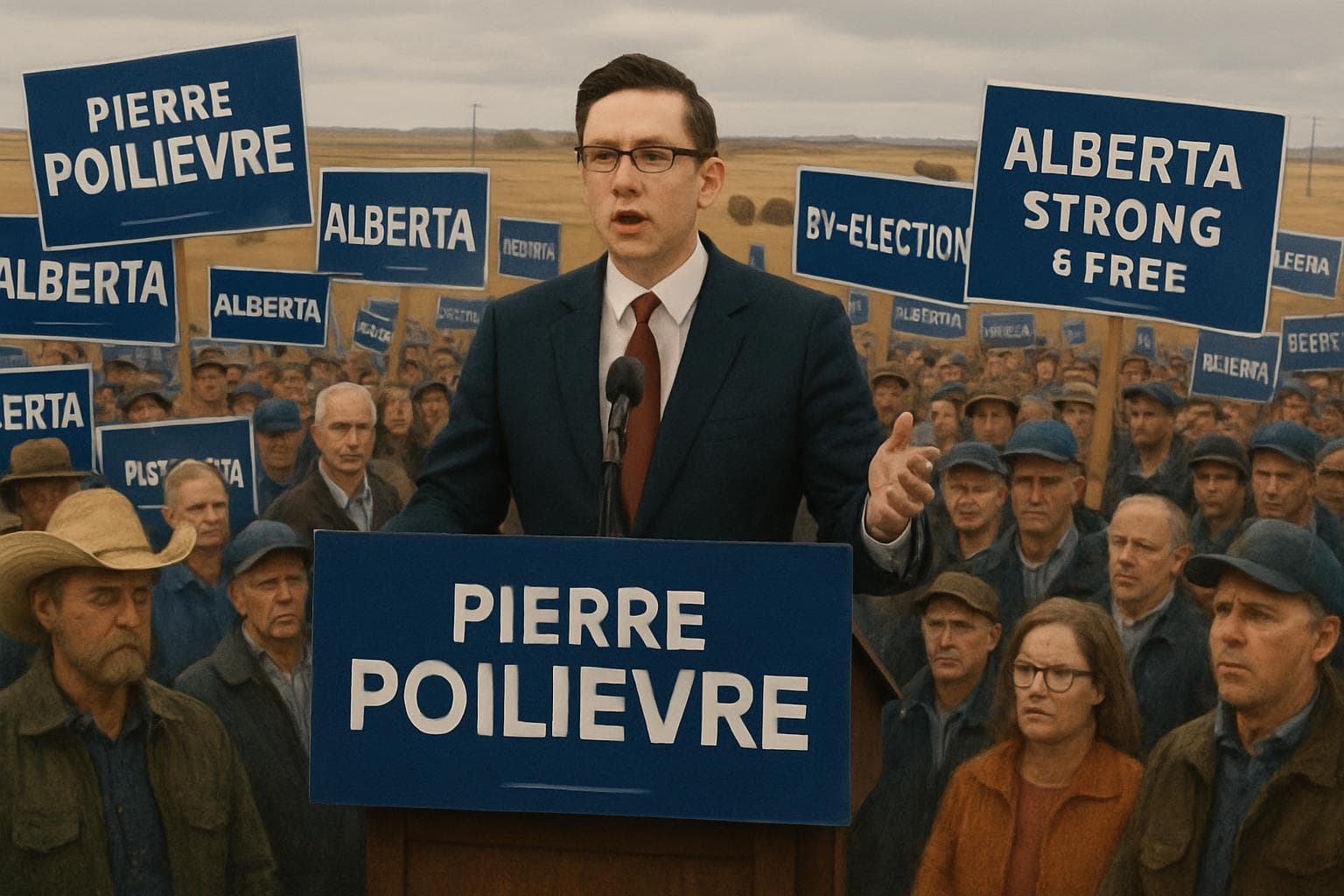
Pierre Poilievre, leader of Canada's Conservative Party, is facing a pivotal by-election in Alberta's Battle River-Crowfoot riding. This election comes after his unexpected defeat in the last general election, where he lost his long-held Ottawa-area seat to Liberal candidate Bruce Fanjoy. The by-election, set for Monday, has drawn significant attention due to its implications for Poilievre's political future and the broader Canadian political landscape.
A Crowded Field and Electoral Reform
The by-election has attracted a record 214 candidates, largely due to the efforts of the Longest Ballot Committee. This group is pushing for a review of Canada's first-past-the-post electoral system, arguing it fails to represent voters adequately. As a result, voters will need to fill out a write-in ballot, a first for Elections Canada, which has promised to count votes even if names are misspelled.
Poilievre's Political Stakes
Poilievre's campaign in the rural Alberta riding is crucial for his leadership, as he faces a mandatory review in January. The Conservative leader has been out of the House of Commons since April, following his party's defeat by Mark Carney's Liberals. Winning the Battle River-Crowfoot seat is essential for Poilievre to regain his footing and effectively challenge the Liberal government.
Regional Discontent and Separatist Sentiments
The by-election has also spotlighted regional discontent in Alberta, a province with a significant energy sector that often feels overlooked by Ottawa. Some voters have expressed separatist sentiments, with political analyst Joan Crockatt noting that Poilievre's loyalty to Canada may sway some voters. "He's loyal to Canada. And there are sentiments of separation here that do run pretty deep," Crockatt said.
Criticism and Local Dynamics
The decision by former MP Damien Kurek to resign and allow Poilievre to run has faced criticism. Independent candidate Bonnie Critchley, a retired army veteran, accused Poilievre of using the riding as "nothing more than a means to an end." Barry Rueger, another candidate, echoed this sentiment, questioning Poilievre's ability to represent rural Alberta after his defeat in Ontario.
WHAT THIS MIGHT MEAN
If Poilievre secures a decisive victory in the by-election, it could bolster his leadership position within the Conservative Party and strengthen his ability to challenge Prime Minister Mark Carney's Liberal government. However, a narrow win or loss could lead to increased scrutiny and pressure during the upcoming leadership review.
The by-election's focus on electoral reform may also reignite national discussions about Canada's voting system, potentially influencing future legislative agendas. Additionally, the separatist sentiments in Alberta could prompt broader debates about regional autonomy and national unity, affecting the political landscape in the province and beyond.
Related Articles

Canada and Australia Forge Strategic Partnership Amid Global Uncertainty
Canada Calls for De-escalation Amid US-Israel Strikes on Iran
Canadian Leaders Unite in Grief at Tumbler Ridge Vigil for Shooting Victims

Diplomatic Tensions Rise as Trump Criticizes Starmer's Iran Policy
Violence Erupts Across Mexico Following Death of Drug Lord El Mencho
OpenAI's Missed Warning: Tumbler Ridge Shooting Raises Questions on AI's Role in Violence Prevention
Pierre Poilievre Faces Crucial By-Election in Alberta Amid Calls for Electoral Reform
In This Article
 Alex Carter| Published
 HIGHLIGHTS
- Pierre Poilievre is contesting a by-election in Alberta's Battle River-Crowfoot riding after losing his seat in the last general election.
- The by-election features a record 214 candidates, driven by the Longest Ballot Committee advocating for electoral reform.
- Poilievre needs a decisive win to strengthen his position as Conservative leader ahead of a mandatory leadership review in January.
- The by-election has highlighted regional discontent in Alberta, with some voters expressing separatist sentiments.
- Former MP Damien Kurek resigned to allow Poilievre to run, sparking criticism from some constituents.
Pierre Poilievre, leader of Canada's Conservative Party, is facing a pivotal by-election in Alberta's Battle River-Crowfoot riding. This election comes after his unexpected defeat in the last general election, where he lost his long-held Ottawa-area seat to Liberal candidate Bruce Fanjoy. The by-election, set for Monday, has drawn significant attention due to its implications for Poilievre's political future and the broader Canadian political landscape.
A Crowded Field and Electoral Reform
The by-election has attracted a record 214 candidates, largely due to the efforts of the Longest Ballot Committee. This group is pushing for a review of Canada's first-past-the-post electoral system, arguing it fails to represent voters adequately. As a result, voters will need to fill out a write-in ballot, a first for Elections Canada, which has promised to count votes even if names are misspelled.
Poilievre's Political Stakes
Poilievre's campaign in the rural Alberta riding is crucial for his leadership, as he faces a mandatory review in January. The Conservative leader has been out of the House of Commons since April, following his party's defeat by Mark Carney's Liberals. Winning the Battle River-Crowfoot seat is essential for Poilievre to regain his footing and effectively challenge the Liberal government.
Regional Discontent and Separatist Sentiments
The by-election has also spotlighted regional discontent in Alberta, a province with a significant energy sector that often feels overlooked by Ottawa. Some voters have expressed separatist sentiments, with political analyst Joan Crockatt noting that Poilievre's loyalty to Canada may sway some voters. "He's loyal to Canada. And there are sentiments of separation here that do run pretty deep," Crockatt said.
Criticism and Local Dynamics
The decision by former MP Damien Kurek to resign and allow Poilievre to run has faced criticism. Independent candidate Bonnie Critchley, a retired army veteran, accused Poilievre of using the riding as "nothing more than a means to an end." Barry Rueger, another candidate, echoed this sentiment, questioning Poilievre's ability to represent rural Alberta after his defeat in Ontario.
WHAT THIS MIGHT MEAN
If Poilievre secures a decisive victory in the by-election, it could bolster his leadership position within the Conservative Party and strengthen his ability to challenge Prime Minister Mark Carney's Liberal government. However, a narrow win or loss could lead to increased scrutiny and pressure during the upcoming leadership review.
The by-election's focus on electoral reform may also reignite national discussions about Canada's voting system, potentially influencing future legislative agendas. Additionally, the separatist sentiments in Alberta could prompt broader debates about regional autonomy and national unity, affecting the political landscape in the province and beyond.
Related Articles
Canada and Australia Forge Strategic Partnership Amid Global Uncertainty
Canada Calls for De-escalation Amid US-Israel Strikes on Iran
Canadian Leaders Unite in Grief at Tumbler Ridge Vigil for Shooting Victims
Diplomatic Tensions Rise as Trump Criticizes Starmer's Iran Policy
Violence Erupts Across Mexico Following Death of Drug Lord El Mencho
OpenAI's Missed Warning: Tumbler Ridge Shooting Raises Questions on AI's Role in Violence Prevention