
Pro-Palestine March on Sydney Harbour Bridge Faces Police Intervention Over Safety Concerns
In This Article
HIGHLIGHTS
- The Sydney Harbour Bridge was closed for a pro-Palestine march authorized by the NSW Supreme Court, despite initial police objections.
- Notable figures like Julian Assange and MP Ed Husic participated in the protest, which drew thousands despite adverse weather.
- NSW Police halted the march midway due to safety concerns, instructing protesters to return to the city in a controlled manner.
- The protest highlighted the humanitarian crisis in Gaza, with participants carrying signs and symbols to draw attention to the issue.
- The legal authorization of the march provided participants protection under the Summary Offences Act, preventing charges related to public assembly.
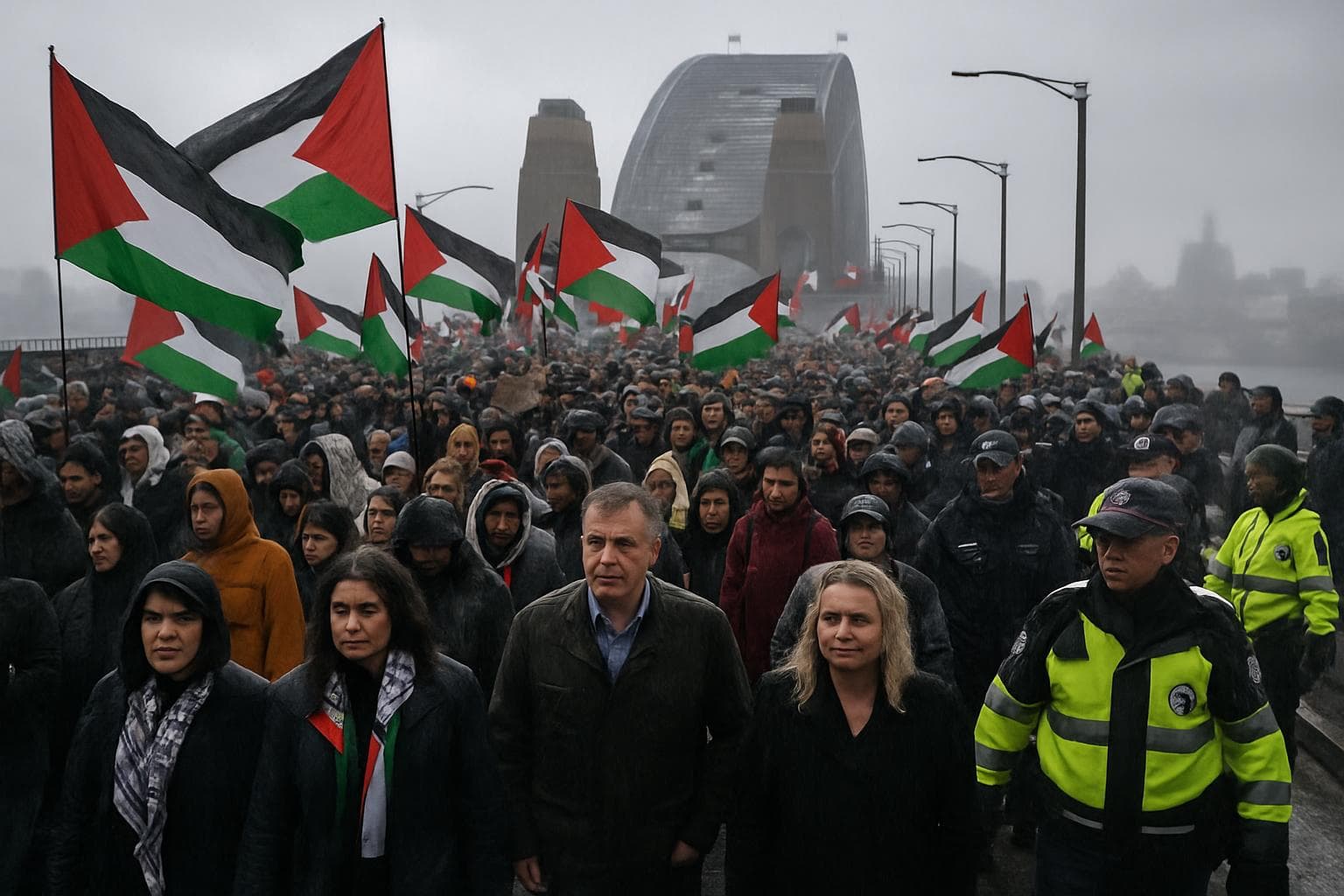
A significant pro-Palestine protest unfolded on the Sydney Harbour Bridge on Sunday, drawing thousands of participants, including high-profile figures like Julian Assange and federal MP Ed Husic. The march, organized by the Palestine Action Group, aimed to spotlight the humanitarian crisis in Gaza. Despite torrential rain, demonstrators gathered at Lang Park before proceeding across the iconic bridge.
Supreme Court Ruling and Public Safety Concerns
The protest was initially met with resistance from NSW Police, who cited insufficient time to prepare a traffic management plan and potential safety risks. However, the NSW Supreme Court authorized the march just a day before it was scheduled, with Justice Belinda Rigg acknowledging the urgency of the situation in Gaza. The court's decision allowed the bridge to be closed to vehicles, granting legal protection to the protesters under the Summary Offences Act.
Mid-March Halt and Police Instructions
As the march progressed, NSW Police intervened, citing public safety concerns. A mass text message was sent to participants, instructing them to stop and return to the city in a controlled manner. Police helicopters and officers on the ground coordinated the safe dispersal of the crowd. Despite the interruption, the march succeeded in drawing attention to the plight of children in Gaza, with participants carrying Palestinian flags and signs.
Community Reactions and Political Implications
The protest's authorization was met with disappointment from the NSW Jewish Board of Deputies, who expressed their concerns on social media. Meanwhile, the event has intensified discussions around Australia's stance on Palestinian statehood, especially as international pressure mounts ahead of the United Nations General Assembly.
WHAT THIS MIGHT MEAN
The pro-Palestine march on the Sydney Harbour Bridge underscores the growing tension between public safety and the right to protest. As Australia faces increasing international pressure to recognize Palestinian statehood, similar demonstrations may arise, challenging authorities to balance civil liberties with public order. Legal experts suggest that the Supreme Court's decision could set a precedent for future protests, emphasizing the importance of freedom of expression. Moving forward, the NSW government may need to refine its approach to managing large-scale public assemblies, ensuring both safety and the right to protest are upheld.
Related Articles

Anna Murdoch-Mann: Influential Figure in Media and Philanthropy Dies at 81
High Court Ruling Delays Trial of Pro-Palestine Activists
Prince Andrew's Arrest Raises Questions About Royal Succession and Monarchy's Future
New UK Entry Rules for Dual Nationals Spark Outcry

Canada and Australia Forge Strategic Partnership Amid Global Uncertainty
Canada Calls for De-escalation Amid US-Israel Strikes on Iran
Pro-Palestine March on Sydney Harbour Bridge Faces Police Intervention Over Safety Concerns
In This Article
 Ethan Brooks| Published
 HIGHLIGHTS
- The Sydney Harbour Bridge was closed for a pro-Palestine march authorized by the NSW Supreme Court, despite initial police objections.
- Notable figures like Julian Assange and MP Ed Husic participated in the protest, which drew thousands despite adverse weather.
- NSW Police halted the march midway due to safety concerns, instructing protesters to return to the city in a controlled manner.
- The protest highlighted the humanitarian crisis in Gaza, with participants carrying signs and symbols to draw attention to the issue.
- The legal authorization of the march provided participants protection under the Summary Offences Act, preventing charges related to public assembly.
A significant pro-Palestine protest unfolded on the Sydney Harbour Bridge on Sunday, drawing thousands of participants, including high-profile figures like Julian Assange and federal MP Ed Husic. The march, organized by the Palestine Action Group, aimed to spotlight the humanitarian crisis in Gaza. Despite torrential rain, demonstrators gathered at Lang Park before proceeding across the iconic bridge.
Supreme Court Ruling and Public Safety Concerns
The protest was initially met with resistance from NSW Police, who cited insufficient time to prepare a traffic management plan and potential safety risks. However, the NSW Supreme Court authorized the march just a day before it was scheduled, with Justice Belinda Rigg acknowledging the urgency of the situation in Gaza. The court's decision allowed the bridge to be closed to vehicles, granting legal protection to the protesters under the Summary Offences Act.
Mid-March Halt and Police Instructions
As the march progressed, NSW Police intervened, citing public safety concerns. A mass text message was sent to participants, instructing them to stop and return to the city in a controlled manner. Police helicopters and officers on the ground coordinated the safe dispersal of the crowd. Despite the interruption, the march succeeded in drawing attention to the plight of children in Gaza, with participants carrying Palestinian flags and signs.
Community Reactions and Political Implications
The protest's authorization was met with disappointment from the NSW Jewish Board of Deputies, who expressed their concerns on social media. Meanwhile, the event has intensified discussions around Australia's stance on Palestinian statehood, especially as international pressure mounts ahead of the United Nations General Assembly.
WHAT THIS MIGHT MEAN
The pro-Palestine march on the Sydney Harbour Bridge underscores the growing tension between public safety and the right to protest. As Australia faces increasing international pressure to recognize Palestinian statehood, similar demonstrations may arise, challenging authorities to balance civil liberties with public order. Legal experts suggest that the Supreme Court's decision could set a precedent for future protests, emphasizing the importance of freedom of expression. Moving forward, the NSW government may need to refine its approach to managing large-scale public assemblies, ensuring both safety and the right to protest are upheld.
Related Articles
Anna Murdoch-Mann: Influential Figure in Media and Philanthropy Dies at 81
High Court Ruling Delays Trial of Pro-Palestine Activists
Prince Andrew's Arrest Raises Questions About Royal Succession and Monarchy's Future
New UK Entry Rules for Dual Nationals Spark Outcry
Canada and Australia Forge Strategic Partnership Amid Global Uncertainty
Canada Calls for De-escalation Amid US-Israel Strikes on Iran