
High Court Ruling Delays Trial of Pro-Palestine Activists
In This Article
HIGHLIGHTS
- A High Court ruling deemed the UK government's ban on Palestine Action as unlawful, citing it as disproportionate and infringing on freedom of speech.
- The case against four pro-Palestine protesters accused of causing over £1 million in damage has been postponed to consider the ruling.
- The defendants, known as Palestinian Martyrs, allegedly targeted a factory supplying equipment for Israeli fighter jets.
- The ban on Palestine Action was controversial, drawing criticism from various officials and organizations for its use of terrorism legislation.
- The postponed trial is set to begin on 8 June at Birmingham Crown Court, with the next hearing scheduled for 27 February.
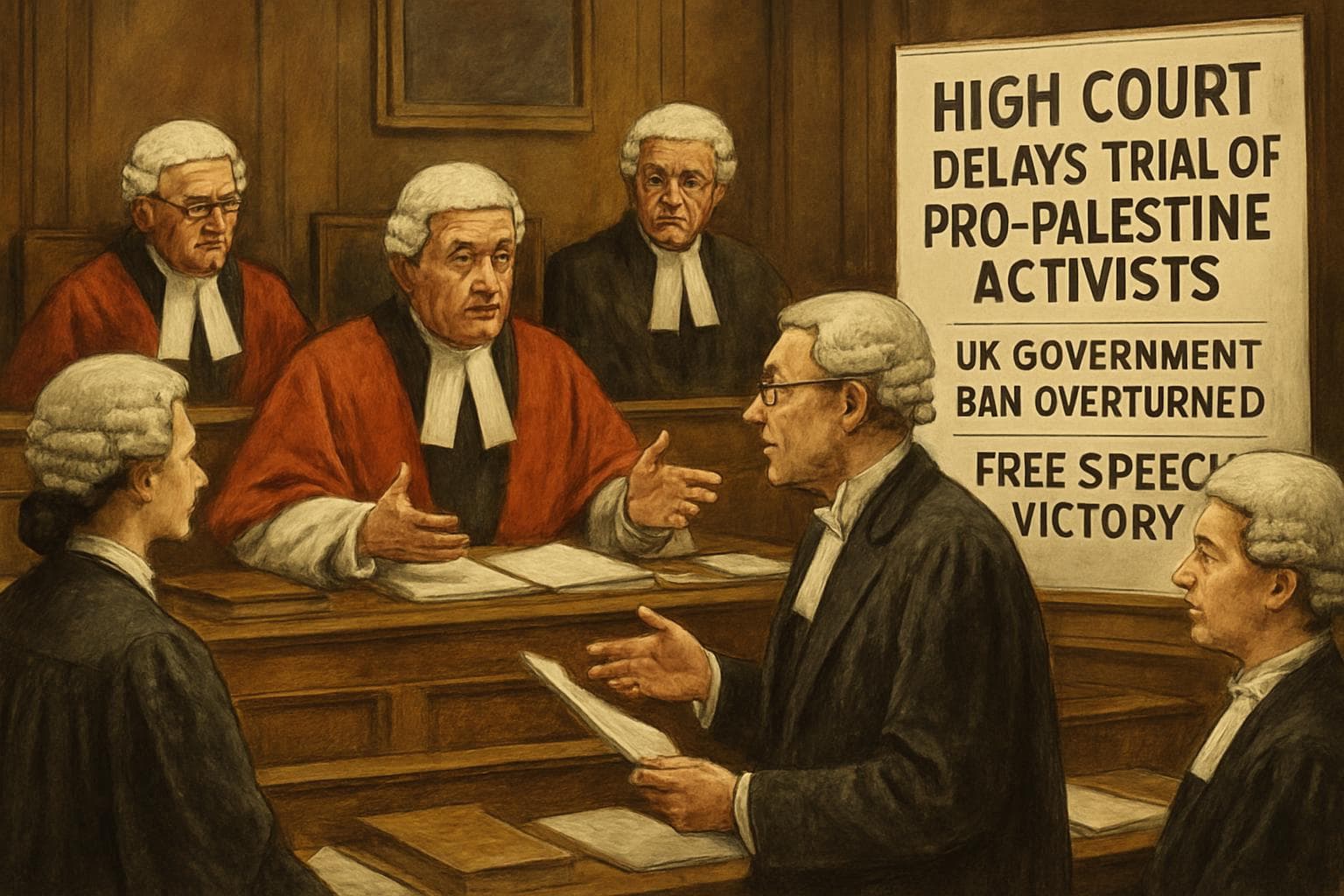
In a significant legal development, the High Court has ruled against the UK government's ban on the activist group Palestine Action, labeling it as disproportionate and a violation of freedom of speech. This decision has led to the postponement of a court case involving four pro-Palestine protesters accused of causing substantial damage to a defense manufacturer's factory.
Background of the Case
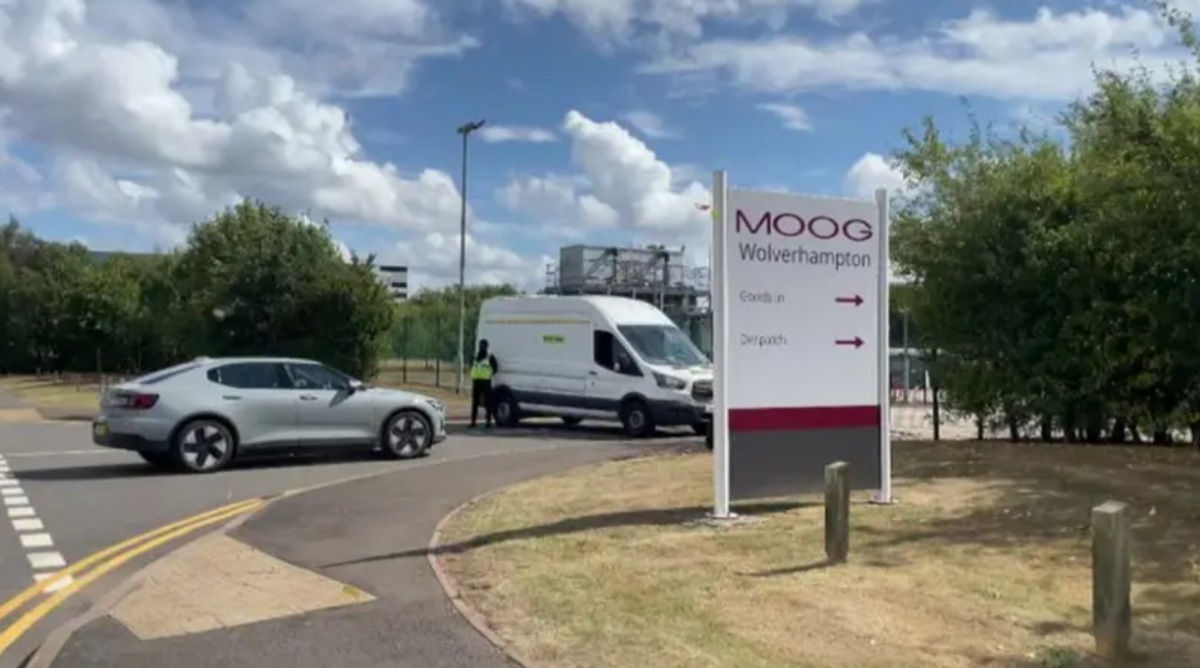
The four defendants, Iain Evans, Hisham Alkhamesi, Bea Sherman, and Hana Yun Stevens, were scheduled to enter pleas at the Old Bailey. They face charges of criminal damage for allegedly causing over £1 million in damages to the Moog Aircraft Group factory in Wolverhampton on 26 August 2025. The group, identifying themselves as Palestinian Martyrs, reportedly targeted the factory due to its role in supplying equipment for Israeli F-35 fighter jets used in Gaza.
Legal Context and Controversy
The High Court's decision to overturn the ban on Palestine Action has been described as an embarrassing defeat for the government. The ban, initially announced by then Home Secretary Yvette Cooper, was criticized for its reliance on the Terrorism Act 2000, which had traditionally been applied to groups engaged in violence against individuals, such as Islamic State. Critics argued that the ban was an attempt to suppress pro-Palestinian voices rather than address genuine security threats.
Implications for the Protesters
Following the High Court ruling, Mrs. Justice Cheema-Grubb agreed to delay the plea hearing for the defendants, allowing their counsel time to consider the implications of the decision. The four activists, who appeared via video link from custody, are now set to face trial on 8 June at Birmingham Crown Court, with the next hearing scheduled for 27 February.
WHAT THIS MIGHT MEAN
The High Court's ruling against the ban on Palestine Action could have far-reaching implications for the UK government's approach to protest groups. Legal experts suggest that this decision may prompt a reevaluation of how terrorism legislation is applied to non-violent direct action groups. Politically, the ruling may fuel further debate on the balance between national security and civil liberties, particularly concerning pro-Palestinian activism. As the postponed trial approaches, the case will likely continue to draw public and media attention, potentially influencing future legal and policy decisions.
Images from the Web
Related Articles
Prince Andrew's Ties to Epstein Under Scrutiny Amid Calls for Inquiry
Government Criticized for Mishandling Maccabi Tel Aviv Fan Ban
Prince Andrew's Arrest Intensifies Scrutiny on Royal Succession and Prince William's Future Role
UK Defence Faces Scrutiny Amid Ajax Armoured Vehicle Delays and Soldier Safety Concerns
UN Report: Sudan's El Fasher Siege Shows Genocide Hallmarks

Government Announces £4 Billion Overhaul of SEND Support in England
High Court Ruling Delays Trial of Pro-Palestine Activists
In This Article
 Ethan Brooks| Published
 HIGHLIGHTS
- A High Court ruling deemed the UK government's ban on Palestine Action as unlawful, citing it as disproportionate and infringing on freedom of speech.
- The case against four pro-Palestine protesters accused of causing over £1 million in damage has been postponed to consider the ruling.
- The defendants, known as Palestinian Martyrs, allegedly targeted a factory supplying equipment for Israeli fighter jets.
- The ban on Palestine Action was controversial, drawing criticism from various officials and organizations for its use of terrorism legislation.
- The postponed trial is set to begin on 8 June at Birmingham Crown Court, with the next hearing scheduled for 27 February.
In a significant legal development, the High Court has ruled against the UK government's ban on the activist group Palestine Action, labeling it as disproportionate and a violation of freedom of speech. This decision has led to the postponement of a court case involving four pro-Palestine protesters accused of causing substantial damage to a defense manufacturer's factory.
Background of the Case
The four defendants, Iain Evans, Hisham Alkhamesi, Bea Sherman, and Hana Yun Stevens, were scheduled to enter pleas at the Old Bailey. They face charges of criminal damage for allegedly causing over £1 million in damages to the Moog Aircraft Group factory in Wolverhampton on 26 August 2025. The group, identifying themselves as Palestinian Martyrs, reportedly targeted the factory due to its role in supplying equipment for Israeli F-35 fighter jets used in Gaza.
Legal Context and Controversy
The High Court's decision to overturn the ban on Palestine Action has been described as an embarrassing defeat for the government. The ban, initially announced by then Home Secretary Yvette Cooper, was criticized for its reliance on the Terrorism Act 2000, which had traditionally been applied to groups engaged in violence against individuals, such as Islamic State. Critics argued that the ban was an attempt to suppress pro-Palestinian voices rather than address genuine security threats.
Implications for the Protesters
Following the High Court ruling, Mrs. Justice Cheema-Grubb agreed to delay the plea hearing for the defendants, allowing their counsel time to consider the implications of the decision. The four activists, who appeared via video link from custody, are now set to face trial on 8 June at Birmingham Crown Court, with the next hearing scheduled for 27 February.
WHAT THIS MIGHT MEAN
The High Court's ruling against the ban on Palestine Action could have far-reaching implications for the UK government's approach to protest groups. Legal experts suggest that this decision may prompt a reevaluation of how terrorism legislation is applied to non-violent direct action groups. Politically, the ruling may fuel further debate on the balance between national security and civil liberties, particularly concerning pro-Palestinian activism. As the postponed trial approaches, the case will likely continue to draw public and media attention, potentially influencing future legal and policy decisions.
Images from the Web
Related Articles
Prince Andrew's Ties to Epstein Under Scrutiny Amid Calls for Inquiry
Government Criticized for Mishandling Maccabi Tel Aviv Fan Ban
Prince Andrew's Arrest Intensifies Scrutiny on Royal Succession and Prince William's Future Role
UK Defence Faces Scrutiny Amid Ajax Armoured Vehicle Delays and Soldier Safety Concerns
UN Report: Sudan's El Fasher Siege Shows Genocide Hallmarks
Government Announces £4 Billion Overhaul of SEND Support in England