
Innovative Radioactive Technology Aims to Curb Rhino Poaching in South Africa
In This Article
HIGHLIGHTS
- South African scientists have developed the Rhisotope Project, injecting rhino horns with radioactive material to combat poaching.
- The project, led by the University of the Witwatersrand, is deemed safe for rhinos and aims to make horns detectable by customs.
- Over 400 rhinos are poached annually in South Africa, with the illegal trade driven by demand in Asian markets.
- The initiative, costing approximately £220,000, involved six years of research and aims to disrupt illegal wildlife trade channels.
- Conservationists highlight the need for better legislation alongside technological solutions to effectively address the rhino poaching crisis.
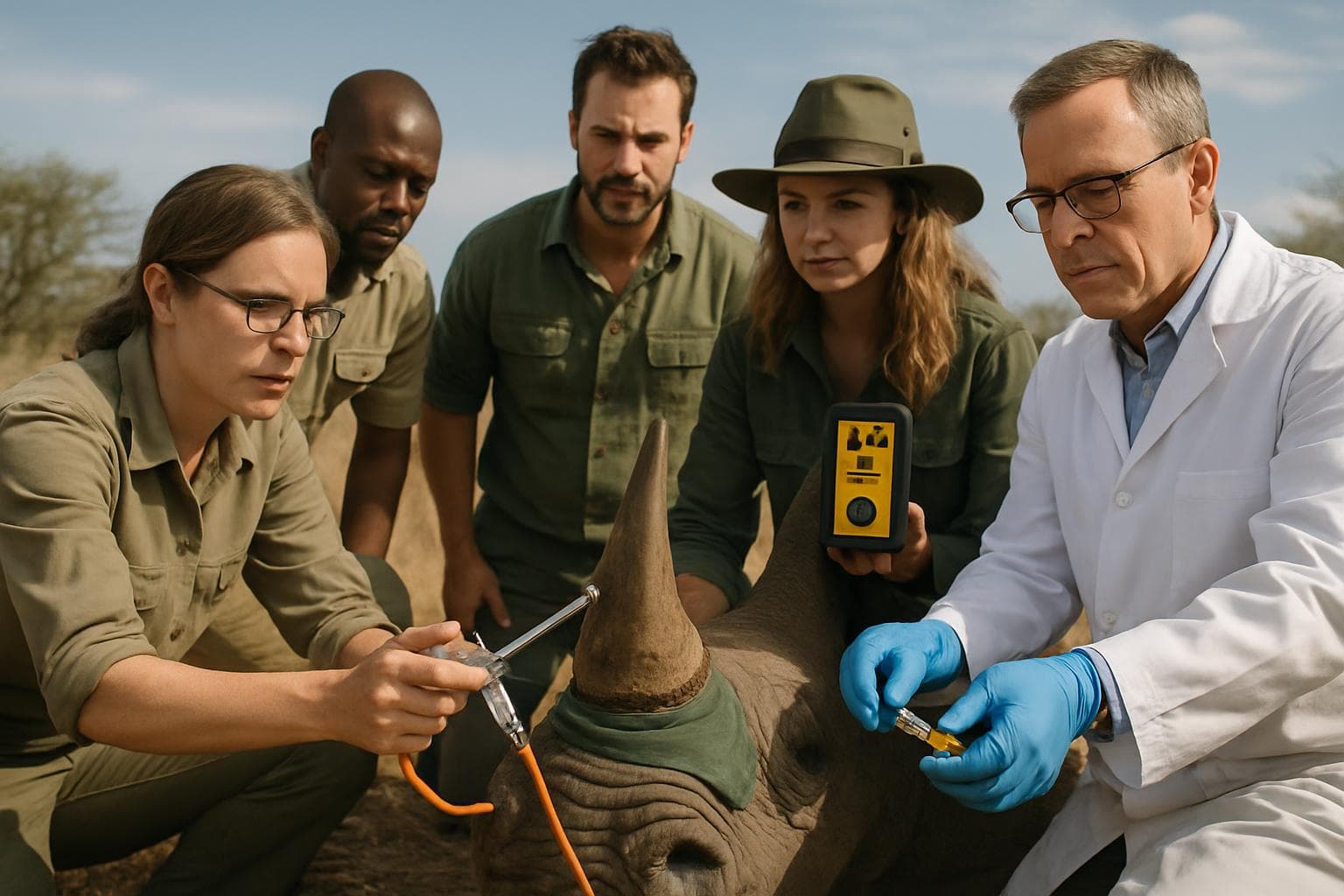
In a groundbreaking effort to combat the rampant poaching of rhinos, South African scientists have launched the Rhisotope Project, which involves injecting rhino horns with a harmless radioactive material. This innovative approach, spearheaded by the University of the Witwatersrand, aims to make the horns detectable by customs officials, thereby disrupting the illegal wildlife trade.
A Proactive Approach to Wildlife Conservation
The Rhisotope Project, which cost approximately £220,000 ($290,000), is the result of six years of rigorous research and testing. The initiative is a collaboration between the university, nuclear energy experts, and conservationists. James Larkin, a professor at Wits University, emphasized the project's significance, stating, "This is a significant tool to help reduce the numbers of poaching because we're proactive rather than being reactive."
Ensuring Safety and Efficacy
The pilot study, which involved 20 rhinos, confirmed that the radioactive material is completely safe for the animals. The research demonstrated that even at low levels, the isotopes can be detected by radiation detectors at airports and borders. This capability is crucial for intercepting smuggled horns, which are often concealed in large shipping containers.
Addressing the Poaching Crisis
South Africa, home to the largest rhino population globally, faces severe poaching challenges, with over 400 rhinos killed annually. The demand for rhino horns, primarily in Asian markets for traditional medicine and as status symbols, continues to drive this illegal trade. Jamie Joseph, director of the Saving the Wild charity, praised the project as "innovative and much needed," while also stressing the importance of legislative action to end the crisis.
A Call for Broader Adoption
The university is advocating for the widespread adoption of this technology by private wildlife park owners and national conservation authorities. Jessica Babich, head of the Rhisotope Project, expressed the team's ambition to deploy the technology at scale, safeguarding not only rhinos but also a vital part of Africa's natural heritage.
WHAT THIS MIGHT MEAN
The Rhisotope Project represents a promising step forward in the fight against rhino poaching, but its success will depend on widespread implementation and international cooperation. If adopted broadly, this technology could significantly disrupt illegal trade routes and reduce poaching rates. However, experts caution that technological solutions must be complemented by robust legal frameworks and political will to effectively address the root causes of wildlife trafficking. As the project gains traction, it may also inspire similar initiatives for other endangered species, potentially transforming conservation efforts worldwide.
Related Articles

Jesse Jackson: A Legacy of Civil Rights and Political Change

Gold and Silver Prices Plummet Amid Market Volatility

Diplomatic Tensions Escalate as South Africa and Israel Expel Top Envoys

Viral 'Crying Horse' Toy Captures China's Corporate Fatigue Ahead of Lunar New Year

Severe Flooding in South Africa Forces Kruger National Park Closure and Evacuations

Mass Shooting in South Africa Leaves Nine Dead in Bekkersdal Tavern Attack
Innovative Radioactive Technology Aims to Curb Rhino Poaching in South Africa
In This Article
 Himanshu Kaushik| Published
 HIGHLIGHTS
- South African scientists have developed the Rhisotope Project, injecting rhino horns with radioactive material to combat poaching.
- The project, led by the University of the Witwatersrand, is deemed safe for rhinos and aims to make horns detectable by customs.
- Over 400 rhinos are poached annually in South Africa, with the illegal trade driven by demand in Asian markets.
- The initiative, costing approximately £220,000, involved six years of research and aims to disrupt illegal wildlife trade channels.
- Conservationists highlight the need for better legislation alongside technological solutions to effectively address the rhino poaching crisis.
In a groundbreaking effort to combat the rampant poaching of rhinos, South African scientists have launched the Rhisotope Project, which involves injecting rhino horns with a harmless radioactive material. This innovative approach, spearheaded by the University of the Witwatersrand, aims to make the horns detectable by customs officials, thereby disrupting the illegal wildlife trade.
A Proactive Approach to Wildlife Conservation
The Rhisotope Project, which cost approximately £220,000 ($290,000), is the result of six years of rigorous research and testing. The initiative is a collaboration between the university, nuclear energy experts, and conservationists. James Larkin, a professor at Wits University, emphasized the project's significance, stating, "This is a significant tool to help reduce the numbers of poaching because we're proactive rather than being reactive."
Ensuring Safety and Efficacy
The pilot study, which involved 20 rhinos, confirmed that the radioactive material is completely safe for the animals. The research demonstrated that even at low levels, the isotopes can be detected by radiation detectors at airports and borders. This capability is crucial for intercepting smuggled horns, which are often concealed in large shipping containers.
Addressing the Poaching Crisis
South Africa, home to the largest rhino population globally, faces severe poaching challenges, with over 400 rhinos killed annually. The demand for rhino horns, primarily in Asian markets for traditional medicine and as status symbols, continues to drive this illegal trade. Jamie Joseph, director of the Saving the Wild charity, praised the project as "innovative and much needed," while also stressing the importance of legislative action to end the crisis.
A Call for Broader Adoption
The university is advocating for the widespread adoption of this technology by private wildlife park owners and national conservation authorities. Jessica Babich, head of the Rhisotope Project, expressed the team's ambition to deploy the technology at scale, safeguarding not only rhinos but also a vital part of Africa's natural heritage.
WHAT THIS MIGHT MEAN
The Rhisotope Project represents a promising step forward in the fight against rhino poaching, but its success will depend on widespread implementation and international cooperation. If adopted broadly, this technology could significantly disrupt illegal trade routes and reduce poaching rates. However, experts caution that technological solutions must be complemented by robust legal frameworks and political will to effectively address the root causes of wildlife trafficking. As the project gains traction, it may also inspire similar initiatives for other endangered species, potentially transforming conservation efforts worldwide.
Related Articles
Jesse Jackson: A Legacy of Civil Rights and Political Change
Gold and Silver Prices Plummet Amid Market Volatility
Diplomatic Tensions Escalate as South Africa and Israel Expel Top Envoys
Viral 'Crying Horse' Toy Captures China's Corporate Fatigue Ahead of Lunar New Year
Severe Flooding in South Africa Forces Kruger National Park Closure and Evacuations
Mass Shooting in South Africa Leaves Nine Dead in Bekkersdal Tavern Attack