
Viral 'Crying Horse' Toy Captures China's Corporate Fatigue Ahead of Lunar New Year
In This Article
HIGHLIGHTS
- A defective "crying horse" toy has gone viral in China ahead of the Lunar New Year, resonating with young workers facing corporate burnout.
- The toy, produced by Happy Sister in Yiwu, features an upside-down smile, symbolizing the fatigue of modern work life.
- Orders for the toy have surged, with over 15,000 units sold daily, and demand extending to international markets.
- The toy's popularity highlights the ongoing criticism of China's 996 work culture, despite its official ban in 2021.
- The "crying horse" taps into the "ugly-cute" toy trend, appealing to consumers seeking emotional expression through products.
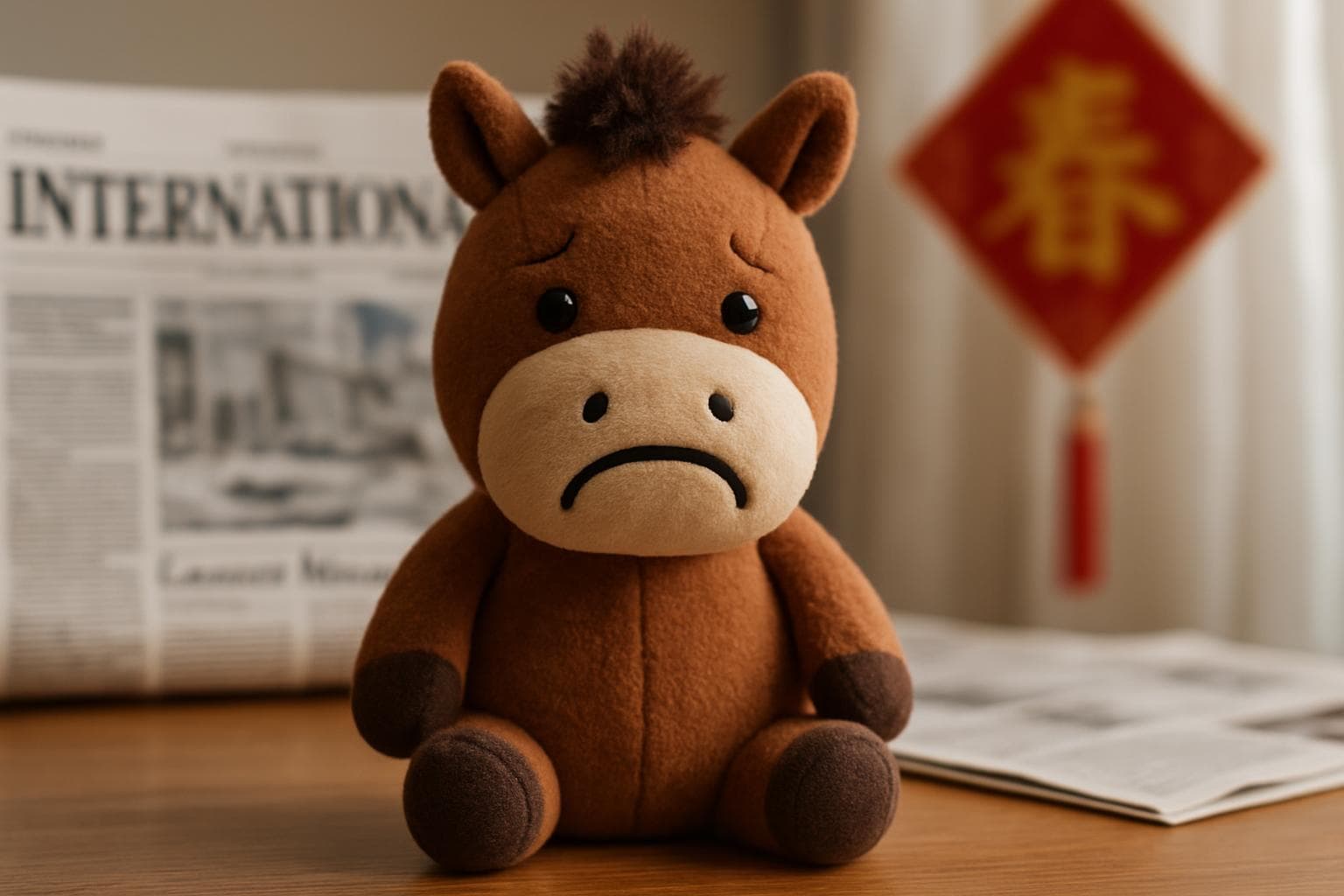
As China prepares to celebrate the Lunar New Year on February 17, a defective toy has unexpectedly captured the nation's attention. The "crying horse" plush, produced by Happy Sister in Yiwu, has become a viral sensation, resonating deeply with young workers who feel the strain of corporate burnout.
Originally intended to sport a cheerful grin, the toy's smile was mistakenly sewn upside down, giving it a despondent expression. This error has struck a chord with many, symbolizing the fatigue and pressure faced by modern workers. "People joked that the crying horse is how you look at work, while the smiling one is how you look after work," explained Zhang Huoqing, the owner of Happy Sister.
The toy's popularity has soared, with daily orders exceeding 15,000 units. Its appeal extends beyond China, with wholesale orders coming from South Africa, East Asia, and the Middle East. The "crying horse" is also expected to feature on a new range of merchandise in the coming year.
This phenomenon highlights the ongoing criticism of China's notorious 996 work culture, which demands employees work from 9 am to 9 pm, six days a week. Although officially banned in 2021, long hours remain common, and the toy has become a symbol of this enduring issue. "Consumer products and internet memes can act as outlets for discussing work pressure," noted Jacob Cooke, CEO of WPIC Marketing + Technologies.
The "crying horse" also taps into the broader "ugly-cute" toy trend, appealing to consumers who seek emotional expression through their purchases. Despite its accidental creation, the toy has become a poignant reflection of the zeitgeist, capturing the spirit of a generation grappling with work-life balance.
WHAT THIS MIGHT MEAN
The viral success of the "crying horse" toy underscores the growing discontent with corporate work culture in China. As the Lunar New Year approaches, this trend may prompt further discussions on work-life balance and employee well-being. Companies might face increasing pressure to address these concerns, potentially leading to more significant reforms in workplace practices.
Moreover, the toy's international appeal suggests a broader resonance with global audiences, indicating that issues of work-related stress and burnout are not confined to China. This could inspire similar products in other markets, reflecting a universal desire for emotional expression and relief from workplace pressures.
Related Articles
China Sets Lowest GDP Growth Target in Decades Amid Economic Challenges
Canada and Australia Forge Strategic Partnership Amid Global Uncertainty

Middle East Conflict Drives UK Energy Prices to New Highs

UK Faces Dilemmas Amid Iran Conflict and China Spying Allegations
Intensified US-Israel Strikes on Iran Spark Global Outcry

UK Reinforces Military Presence in Cyprus Amid Middle East Tensions
Viral 'Crying Horse' Toy Captures China's Corporate Fatigue Ahead of Lunar New Year
In This Article
 Maya Singh| Published
 HIGHLIGHTS
- A defective "crying horse" toy has gone viral in China ahead of the Lunar New Year, resonating with young workers facing corporate burnout.
- The toy, produced by Happy Sister in Yiwu, features an upside-down smile, symbolizing the fatigue of modern work life.
- Orders for the toy have surged, with over 15,000 units sold daily, and demand extending to international markets.
- The toy's popularity highlights the ongoing criticism of China's 996 work culture, despite its official ban in 2021.
- The "crying horse" taps into the "ugly-cute" toy trend, appealing to consumers seeking emotional expression through products.
As China prepares to celebrate the Lunar New Year on February 17, a defective toy has unexpectedly captured the nation's attention. The "crying horse" plush, produced by Happy Sister in Yiwu, has become a viral sensation, resonating deeply with young workers who feel the strain of corporate burnout.
Originally intended to sport a cheerful grin, the toy's smile was mistakenly sewn upside down, giving it a despondent expression. This error has struck a chord with many, symbolizing the fatigue and pressure faced by modern workers. "People joked that the crying horse is how you look at work, while the smiling one is how you look after work," explained Zhang Huoqing, the owner of Happy Sister.
The toy's popularity has soared, with daily orders exceeding 15,000 units. Its appeal extends beyond China, with wholesale orders coming from South Africa, East Asia, and the Middle East. The "crying horse" is also expected to feature on a new range of merchandise in the coming year.
This phenomenon highlights the ongoing criticism of China's notorious 996 work culture, which demands employees work from 9 am to 9 pm, six days a week. Although officially banned in 2021, long hours remain common, and the toy has become a symbol of this enduring issue. "Consumer products and internet memes can act as outlets for discussing work pressure," noted Jacob Cooke, CEO of WPIC Marketing + Technologies.
The "crying horse" also taps into the broader "ugly-cute" toy trend, appealing to consumers who seek emotional expression through their purchases. Despite its accidental creation, the toy has become a poignant reflection of the zeitgeist, capturing the spirit of a generation grappling with work-life balance.
WHAT THIS MIGHT MEAN
The viral success of the "crying horse" toy underscores the growing discontent with corporate work culture in China. As the Lunar New Year approaches, this trend may prompt further discussions on work-life balance and employee well-being. Companies might face increasing pressure to address these concerns, potentially leading to more significant reforms in workplace practices.
Moreover, the toy's international appeal suggests a broader resonance with global audiences, indicating that issues of work-related stress and burnout are not confined to China. This could inspire similar products in other markets, reflecting a universal desire for emotional expression and relief from workplace pressures.
Related Articles
China Sets Lowest GDP Growth Target in Decades Amid Economic Challenges
Canada and Australia Forge Strategic Partnership Amid Global Uncertainty
Middle East Conflict Drives UK Energy Prices to New Highs
UK Faces Dilemmas Amid Iran Conflict and China Spying Allegations
Intensified US-Israel Strikes on Iran Spark Global Outcry
UK Reinforces Military Presence in Cyprus Amid Middle East Tensions