
Peru's Political Turmoil: President José Jerí Ousted Amid Scandal
In This Article
HIGHLIGHTS
- Peru's Congress ousted interim President José Jerí after just four months due to undisclosed meetings with Chinese businessmen.
- The scandal, known as "Chifagate," involved Jerí's secretive meetings with businessman Zhihua Yang, leading to a corruption investigation.
- Jerí's removal marks the third consecutive ousting of a Peruvian president, highlighting ongoing political instability.
- The controversy has strained Peru-China relations amid U.S. diplomatic tensions over Chinese investments in Peru.
- Peru's Congress will vote on a new interim president ahead of the general election scheduled for April 2024.
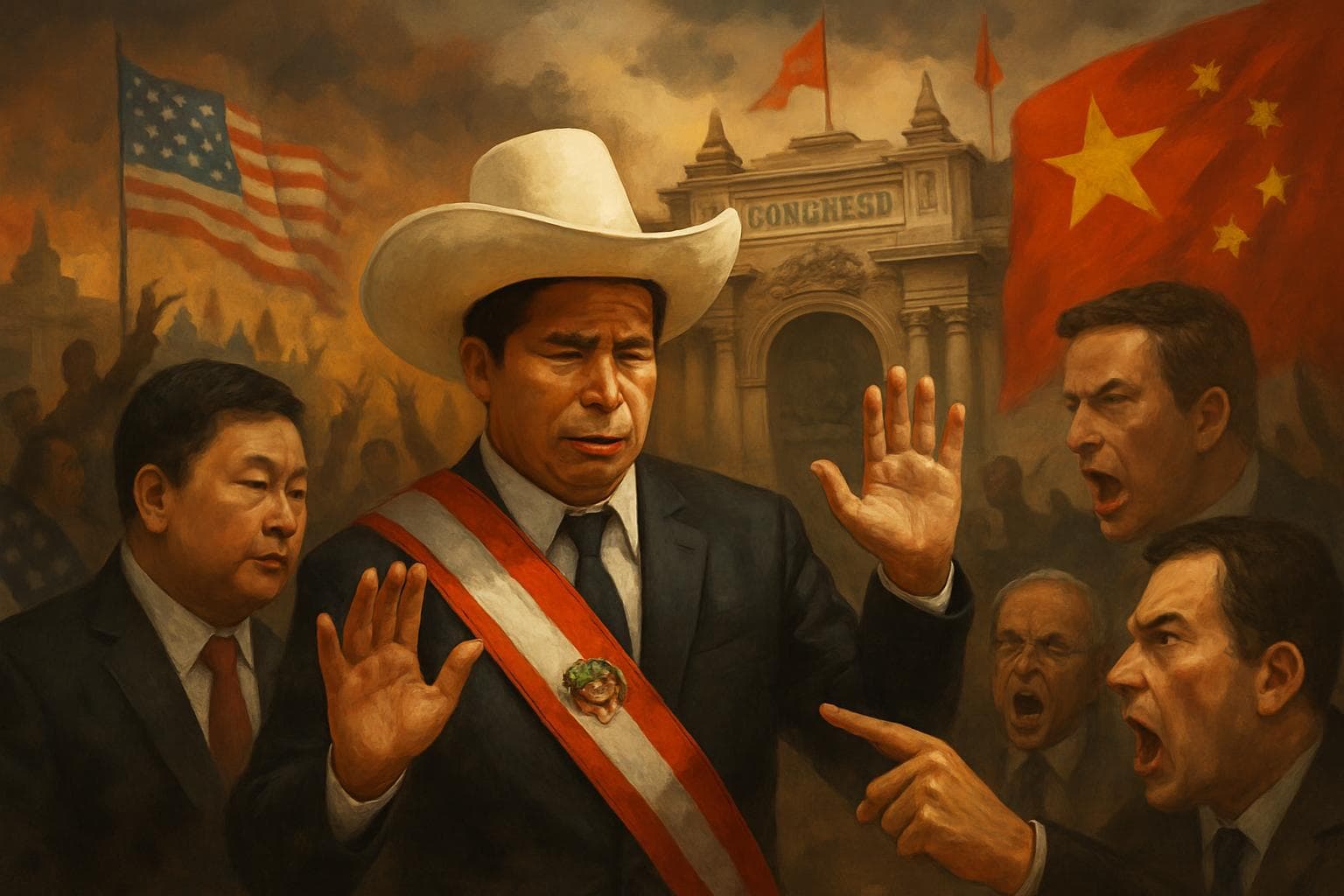
In a dramatic turn of events, Peru's Congress has ousted interim President José Jerí, marking the third consecutive removal of a head of state in the country. Jerí, who held office for just four months, was embroiled in a scandal dubbed "Chifagate," which centered around undisclosed meetings with Chinese businessman Zhihua Yang. The meetings, captured on security footage, were not recorded in Jerí's official schedule, sparking allegations of influence-peddling and corruption.
The "Chifagate" Scandal
The controversy erupted when videos surfaced showing Jerí meeting with Yang, a well-connected businessman under government scrutiny, outside official hours. In one instance, Jerí was seen wearing a hooded top during a late-night visit to a restaurant owned by Yang. The meetings also involved Ji Wu Xiaodong, another Chinese national under house arrest for alleged ties to an illegal timber network. These revelations led to a preliminary investigation by prosecutors into potential influence-peddling.
Political Instability and Public Outcry
Jerí's removal underscores the persistent political instability in Peru, which has seen a rapid turnover of presidents since 2016. His predecessor, Dina Boluarte, was impeached amid protests and scandals. The current upheaval comes as Peru prepares for a general election in April 2024, with Congress set to vote on a new interim leader. Ruth Luque, a lawmaker supporting Jerí's ousting, emphasized the need for transparent governance, stating, "We ask to end this agony so we can truly create the transition citizens are hoping for."
Diplomatic Tensions and Economic Implications
The scandal has also impacted Peru's international relations, particularly with China and the United States. U.S. Ambassador Bernardo Navarro criticized Chinese investments in Peru, particularly the Chancay port project, suggesting potential sovereignty risks. In response, China's foreign ministry condemned the U.S. remarks, defending its cooperation with Peru. Despite the diplomatic row, Peru's foreign ministry has sought to maintain positive bilateral trade relations with China.
WHAT THIS MIGHT MEAN
The removal of José Jerí adds another layer of complexity to Peru's already volatile political landscape. As Congress prepares to elect a new interim president, the focus will likely be on restoring public trust and ensuring a smooth transition ahead of the 2024 general election. The ongoing investigation into Jerí's dealings could lead to further legal ramifications, potentially influencing future political dynamics.
On the international front, the diplomatic tensions between the U.S. and China over investments in Peru may continue to escalate, impacting Peru's foreign policy and economic strategies. As the country navigates these challenges, the new leadership will need to balance domestic stability with international diplomacy to foster growth and maintain sovereignty.
Related Articles

Iran Postpones Khamenei Funeral Amid Escalating US-Israeli Strikes

US-Iran Tensions Escalate Amid Renewed Nuclear Talks and Protests
China Sets Lowest GDP Growth Target in Decades Amid Economic Challenges

UK Faces Dilemmas Amid Iran Conflict and China Spying Allegations
Canada Calls for De-escalation Amid US-Israel Strikes on Iran
US Supreme Court Ruling Sparks Trade Uncertainty in Asia and Beyond
Peru's Political Turmoil: President José Jerí Ousted Amid Scandal
In This Article
 Ethan Brooks| Published
 HIGHLIGHTS
- Peru's Congress ousted interim President José Jerí after just four months due to undisclosed meetings with Chinese businessmen.
- The scandal, known as "Chifagate," involved Jerí's secretive meetings with businessman Zhihua Yang, leading to a corruption investigation.
- Jerí's removal marks the third consecutive ousting of a Peruvian president, highlighting ongoing political instability.
- The controversy has strained Peru-China relations amid U.S. diplomatic tensions over Chinese investments in Peru.
- Peru's Congress will vote on a new interim president ahead of the general election scheduled for April 2024.
In a dramatic turn of events, Peru's Congress has ousted interim President José Jerí, marking the third consecutive removal of a head of state in the country. Jerí, who held office for just four months, was embroiled in a scandal dubbed "Chifagate," which centered around undisclosed meetings with Chinese businessman Zhihua Yang. The meetings, captured on security footage, were not recorded in Jerí's official schedule, sparking allegations of influence-peddling and corruption.
The "Chifagate" Scandal
The controversy erupted when videos surfaced showing Jerí meeting with Yang, a well-connected businessman under government scrutiny, outside official hours. In one instance, Jerí was seen wearing a hooded top during a late-night visit to a restaurant owned by Yang. The meetings also involved Ji Wu Xiaodong, another Chinese national under house arrest for alleged ties to an illegal timber network. These revelations led to a preliminary investigation by prosecutors into potential influence-peddling.
Political Instability and Public Outcry
Jerí's removal underscores the persistent political instability in Peru, which has seen a rapid turnover of presidents since 2016. His predecessor, Dina Boluarte, was impeached amid protests and scandals. The current upheaval comes as Peru prepares for a general election in April 2024, with Congress set to vote on a new interim leader. Ruth Luque, a lawmaker supporting Jerí's ousting, emphasized the need for transparent governance, stating, "We ask to end this agony so we can truly create the transition citizens are hoping for."
Diplomatic Tensions and Economic Implications
The scandal has also impacted Peru's international relations, particularly with China and the United States. U.S. Ambassador Bernardo Navarro criticized Chinese investments in Peru, particularly the Chancay port project, suggesting potential sovereignty risks. In response, China's foreign ministry condemned the U.S. remarks, defending its cooperation with Peru. Despite the diplomatic row, Peru's foreign ministry has sought to maintain positive bilateral trade relations with China.
WHAT THIS MIGHT MEAN
The removal of José Jerí adds another layer of complexity to Peru's already volatile political landscape. As Congress prepares to elect a new interim president, the focus will likely be on restoring public trust and ensuring a smooth transition ahead of the 2024 general election. The ongoing investigation into Jerí's dealings could lead to further legal ramifications, potentially influencing future political dynamics.
On the international front, the diplomatic tensions between the U.S. and China over investments in Peru may continue to escalate, impacting Peru's foreign policy and economic strategies. As the country navigates these challenges, the new leadership will need to balance domestic stability with international diplomacy to foster growth and maintain sovereignty.
Related Articles
Iran Postpones Khamenei Funeral Amid Escalating US-Israeli Strikes
US-Iran Tensions Escalate Amid Renewed Nuclear Talks and Protests
China Sets Lowest GDP Growth Target in Decades Amid Economic Challenges
UK Faces Dilemmas Amid Iran Conflict and China Spying Allegations
Canada Calls for De-escalation Amid US-Israel Strikes on Iran
US Supreme Court Ruling Sparks Trade Uncertainty in Asia and Beyond