
Reform UK Clarifies Deportation Plans Amidst Criticism

In This Article
HIGHLIGHTS
- Reform UK, led by Nigel Farage, has proposed deporting 600,000 illegal migrants over five years if elected.
- Farage clarified that deportation plans currently exclude women and children, focusing on single men.
- The party aims to disapply international treaties like the 1951 Refugee Convention to facilitate deportations.
- Critics, including MP Calum Miller, have labeled the proposals as "empty slogans" lacking serious policy substance.
- Reform UK plans to increase detention capacity and build new removal centers if they win the next election.
Reform UK, under the leadership of Nigel Farage, has unveiled a controversial immigration policy aimed at deporting 600,000 illegal migrants over a five-year period if the party wins the next general election. The proposal, which has sparked significant debate, initially suggested the deportation of all small-boat arrivals, including women and children. However, Farage has since clarified that the immediate focus will be on single men, with women and children not included in the current five-year plan.
Policy Details and Clarifications
The proposed policy by Reform UK seeks to address illegal migration by targeting over 650,000 adults believed to be living illegally in the UK. Central to the plan is the intention to "disapply" international treaties, such as the 1951 Refugee Convention, which currently restricts the government's ability to deport individuals to unsafe countries. Farage emphasized that while the deportation of women and children is not part of the immediate agenda, the party remains committed to addressing illegal migration comprehensively.
Political Reactions and Criticism
The announcement has drawn criticism from various political figures and parties. Calum Miller, MP for Bicester and Woodstock, criticized Farage's approach as "empty slogans" that fail to address the complexities of immigration policy. He urged Farage to engage with communities and understand their challenges rather than fueling division. The Liberal Democrats accused Farage of making a U-turn on his initial statements, while Labour and the Conservatives have questioned the feasibility of the proposals.
Implementation Challenges
Reform UK plans to increase detention capacity by 24,000 within 18 months and build new removal centers in remote areas if they gain power. However, the party has not disclosed specific locations for these centers. The proposal also includes offering financial aid to countries like Afghanistan to accept deported migrants, with potential sanctions for non-cooperative states.
WHAT THIS MIGHT MEAN
As Reform UK continues to refine its immigration policy, the political landscape could see heightened debates on the ethics and practicality of mass deportations. If the party gains traction in the polls, it may pressure other political entities to address immigration more aggressively. However, the feasibility of implementing such a large-scale deportation plan remains uncertain, especially with potential legal challenges and international backlash. Experts suggest that any future government will need to balance firm immigration controls with humanitarian obligations, ensuring policies are both effective and compassionate.
Related Articles

Starmer Condemns Reform UK's Plan to Repeal Equality Act as Un-British

Reform UK Aims to Reshape Welsh Politics with New Manifesto

UK Government Considers Removing Andrew Mountbatten-Windsor from Royal Succession Amid Arrest

Global Counsel Faces Collapse Amidst Epstein Scandal Fallout

Andrew Mountbatten-Windsor Arrested Amid Misconduct Allegations
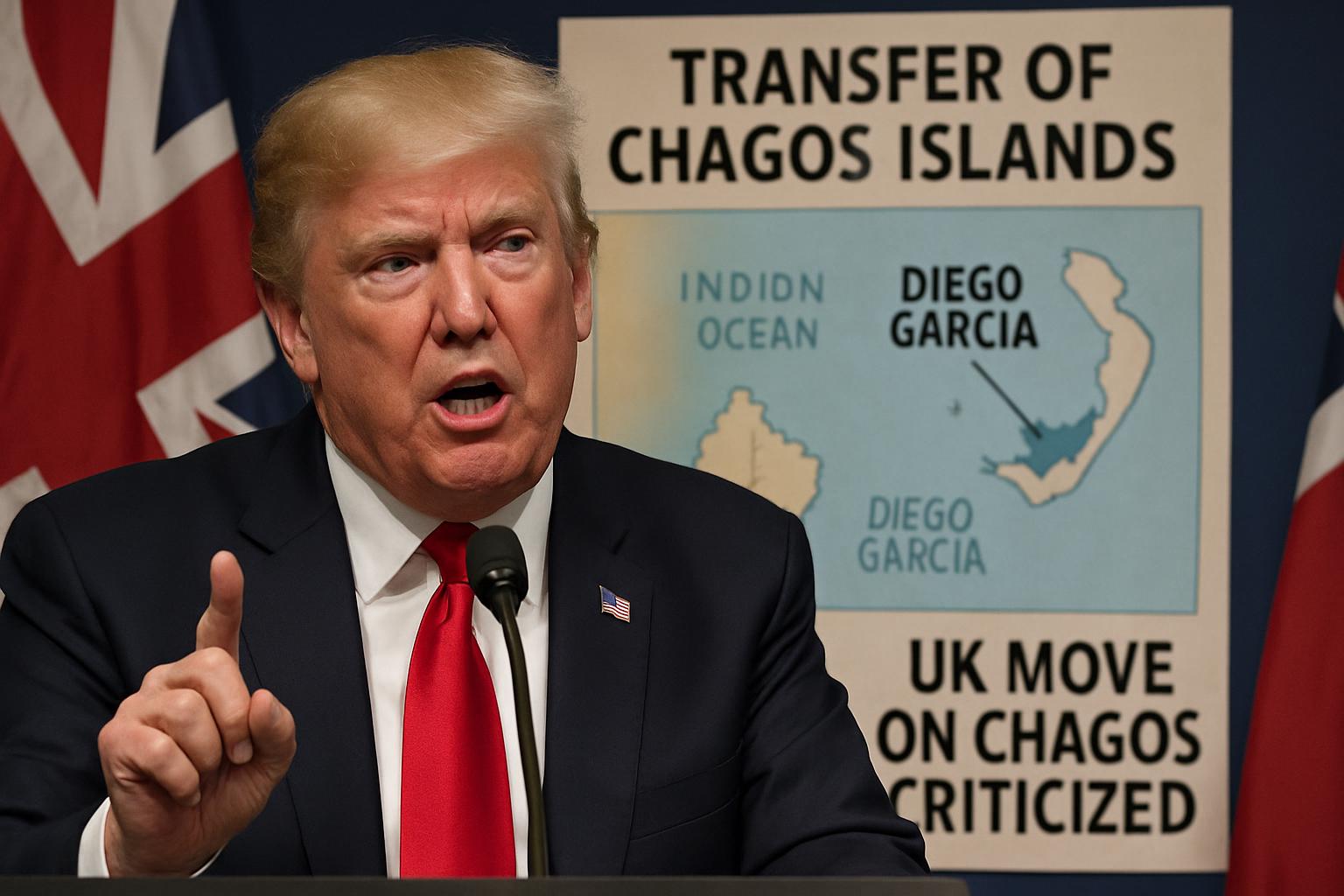
Trump Criticizes UK Plan to Transfer Chagos Islands to Mauritius
Reform UK Clarifies Deportation Plans Amidst Criticism
In This Article
 Ethan Brooks| Published
 HIGHLIGHTS
- Reform UK, led by Nigel Farage, has proposed deporting 600,000 illegal migrants over five years if elected.
- Farage clarified that deportation plans currently exclude women and children, focusing on single men.
- The party aims to disapply international treaties like the 1951 Refugee Convention to facilitate deportations.
- Critics, including MP Calum Miller, have labeled the proposals as "empty slogans" lacking serious policy substance.
- Reform UK plans to increase detention capacity and build new removal centers if they win the next election.
Reform UK, under the leadership of Nigel Farage, has unveiled a controversial immigration policy aimed at deporting 600,000 illegal migrants over a five-year period if the party wins the next general election. The proposal, which has sparked significant debate, initially suggested the deportation of all small-boat arrivals, including women and children. However, Farage has since clarified that the immediate focus will be on single men, with women and children not included in the current five-year plan.
Policy Details and Clarifications
The proposed policy by Reform UK seeks to address illegal migration by targeting over 650,000 adults believed to be living illegally in the UK. Central to the plan is the intention to "disapply" international treaties, such as the 1951 Refugee Convention, which currently restricts the government's ability to deport individuals to unsafe countries. Farage emphasized that while the deportation of women and children is not part of the immediate agenda, the party remains committed to addressing illegal migration comprehensively.
Political Reactions and Criticism
The announcement has drawn criticism from various political figures and parties. Calum Miller, MP for Bicester and Woodstock, criticized Farage's approach as "empty slogans" that fail to address the complexities of immigration policy. He urged Farage to engage with communities and understand their challenges rather than fueling division. The Liberal Democrats accused Farage of making a U-turn on his initial statements, while Labour and the Conservatives have questioned the feasibility of the proposals.
Implementation Challenges
Reform UK plans to increase detention capacity by 24,000 within 18 months and build new removal centers in remote areas if they gain power. However, the party has not disclosed specific locations for these centers. The proposal also includes offering financial aid to countries like Afghanistan to accept deported migrants, with potential sanctions for non-cooperative states.
WHAT THIS MIGHT MEAN
As Reform UK continues to refine its immigration policy, the political landscape could see heightened debates on the ethics and practicality of mass deportations. If the party gains traction in the polls, it may pressure other political entities to address immigration more aggressively. However, the feasibility of implementing such a large-scale deportation plan remains uncertain, especially with potential legal challenges and international backlash. Experts suggest that any future government will need to balance firm immigration controls with humanitarian obligations, ensuring policies are both effective and compassionate.
Related Articles
Starmer Condemns Reform UK's Plan to Repeal Equality Act as Un-British
Reform UK Aims to Reshape Welsh Politics with New Manifesto
UK Government Considers Removing Andrew Mountbatten-Windsor from Royal Succession Amid Arrest
Global Counsel Faces Collapse Amidst Epstein Scandal Fallout
Andrew Mountbatten-Windsor Arrested Amid Misconduct Allegations
Trump Criticizes UK Plan to Transfer Chagos Islands to Mauritius