
Reform UK Proposes Major Tax Overhaul and Spending Cuts in Scotland
In This Article
HIGHLIGHTS
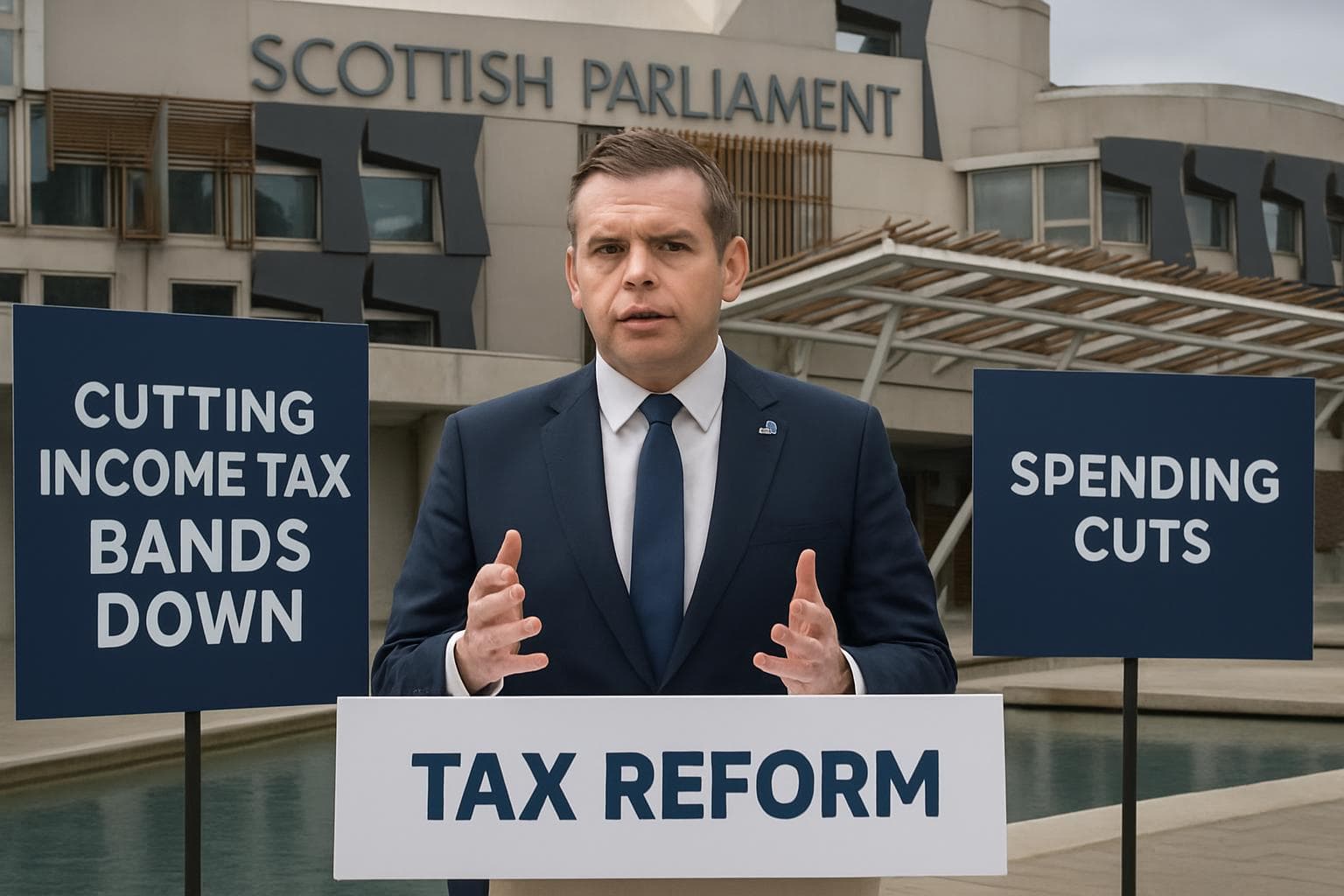
- Reform UK plans to reduce Scottish income tax bands from six to three, aligning them with the rest of the UK.
- Malcolm Offord, Reform UK's Scottish leader, proposes a £2bn tax cut funded by reducing public spending on quangos and environmental protections.
- The party aims to cut income tax by 3p over a Scottish Parliament term, starting with a 1p reduction.
- Critics argue that the proposed cuts could severely impact public services and question the feasibility of the savings.
- Offord opposes a Scottish independence referendum for at least 10 years, focusing instead on economic growth.
Reform UK, under the leadership of Malcolm Offord, has unveiled a bold plan to overhaul Scotland's tax system, promising significant cuts to income tax rates if the party wins the upcoming Holyrood elections. Offord, who recently took the helm as the party's Scottish leader, aims to reduce the number of income tax bands from six to three, aligning them with those in England, Wales, and Northern Ireland.
Tax Cuts and Funding Sources
The proposed tax reforms include an immediate 1p reduction in income tax, with a further 3p cut planned over the course of a Scottish Parliament term. Offord claims these changes will be funded by reallocating £2bn from public spending, specifically targeting what he describes as "highly dubious" environmental protection measures and the budgets of 132 quangos. However, Offord has not disclosed which specific bodies would face funding cuts.
Economic and Political Implications
Critics, including the Fraser of Allander Institute, have expressed skepticism about the feasibility of these savings, warning that such cuts could have a severe impact on public services. Stephen Boyd from the Institute for Public Policy Research Scotland described the proposals as "profoundly unserious," highlighting potential negative effects on public sector jobs and pay.
Stance on Independence and Immigration
Offord has also taken a firm stance against holding another Scottish independence referendum for at least a decade, emphasizing the need to focus on economic growth instead. On immigration, he advocates prioritizing local citizens over newcomers, citing the current cost of living challenges.
WHAT THIS MIGHT MEAN
If Reform UK succeeds in implementing its tax and spending proposals, the Scottish economy could experience significant shifts, potentially affecting public services and employment. The party's stance against an independence referendum may appeal to unionists but could alienate nationalist voters. As the Holyrood elections approach, the feasibility of Reform UK's plans and their impact on Scotland's political landscape will be closely scrutinized. Experts suggest that detailed cost analyses and transparent communication will be crucial for gaining public trust and support.
Related Articles

Saharan Dust to Illuminate UK Skies with Vivid Sunrises and Sunsets
Reform UK Aims to Reshape Welsh Politics with New Manifesto

Sisters Tragically Drown at Eryri National Park's Watkin Path

Labour MP's Husband Arrested in UK-China Espionage Probe

Police Federation Chief Arrested Amid Fraud Investigation

Government Announces £4 Billion Overhaul of SEND Support in England
Reform UK Proposes Major Tax Overhaul and Spending Cuts in Scotland
In This Article
 Daniel Rivera| Published
 HIGHLIGHTS
- Reform UK plans to reduce Scottish income tax bands from six to three, aligning them with the rest of the UK.
- Malcolm Offord, Reform UK's Scottish leader, proposes a £2bn tax cut funded by reducing public spending on quangos and environmental protections.
- The party aims to cut income tax by 3p over a Scottish Parliament term, starting with a 1p reduction.
- Critics argue that the proposed cuts could severely impact public services and question the feasibility of the savings.
- Offord opposes a Scottish independence referendum for at least 10 years, focusing instead on economic growth.
Reform UK, under the leadership of Malcolm Offord, has unveiled a bold plan to overhaul Scotland's tax system, promising significant cuts to income tax rates if the party wins the upcoming Holyrood elections. Offord, who recently took the helm as the party's Scottish leader, aims to reduce the number of income tax bands from six to three, aligning them with those in England, Wales, and Northern Ireland.
Tax Cuts and Funding Sources
The proposed tax reforms include an immediate 1p reduction in income tax, with a further 3p cut planned over the course of a Scottish Parliament term. Offord claims these changes will be funded by reallocating £2bn from public spending, specifically targeting what he describes as "highly dubious" environmental protection measures and the budgets of 132 quangos. However, Offord has not disclosed which specific bodies would face funding cuts.
Economic and Political Implications
Critics, including the Fraser of Allander Institute, have expressed skepticism about the feasibility of these savings, warning that such cuts could have a severe impact on public services. Stephen Boyd from the Institute for Public Policy Research Scotland described the proposals as "profoundly unserious," highlighting potential negative effects on public sector jobs and pay.
Stance on Independence and Immigration
Offord has also taken a firm stance against holding another Scottish independence referendum for at least a decade, emphasizing the need to focus on economic growth instead. On immigration, he advocates prioritizing local citizens over newcomers, citing the current cost of living challenges.
WHAT THIS MIGHT MEAN
If Reform UK succeeds in implementing its tax and spending proposals, the Scottish economy could experience significant shifts, potentially affecting public services and employment. The party's stance against an independence referendum may appeal to unionists but could alienate nationalist voters. As the Holyrood elections approach, the feasibility of Reform UK's plans and their impact on Scotland's political landscape will be closely scrutinized. Experts suggest that detailed cost analyses and transparent communication will be crucial for gaining public trust and support.
Related Articles
Saharan Dust to Illuminate UK Skies with Vivid Sunrises and Sunsets
Reform UK Aims to Reshape Welsh Politics with New Manifesto
Sisters Tragically Drown at Eryri National Park's Watkin Path
Labour MP's Husband Arrested in UK-China Espionage Probe
Police Federation Chief Arrested Amid Fraud Investigation
Government Announces £4 Billion Overhaul of SEND Support in England