
River Island Secures Court Approval for Restructuring Amid Retail Challenges
In This Article
HIGHLIGHTS
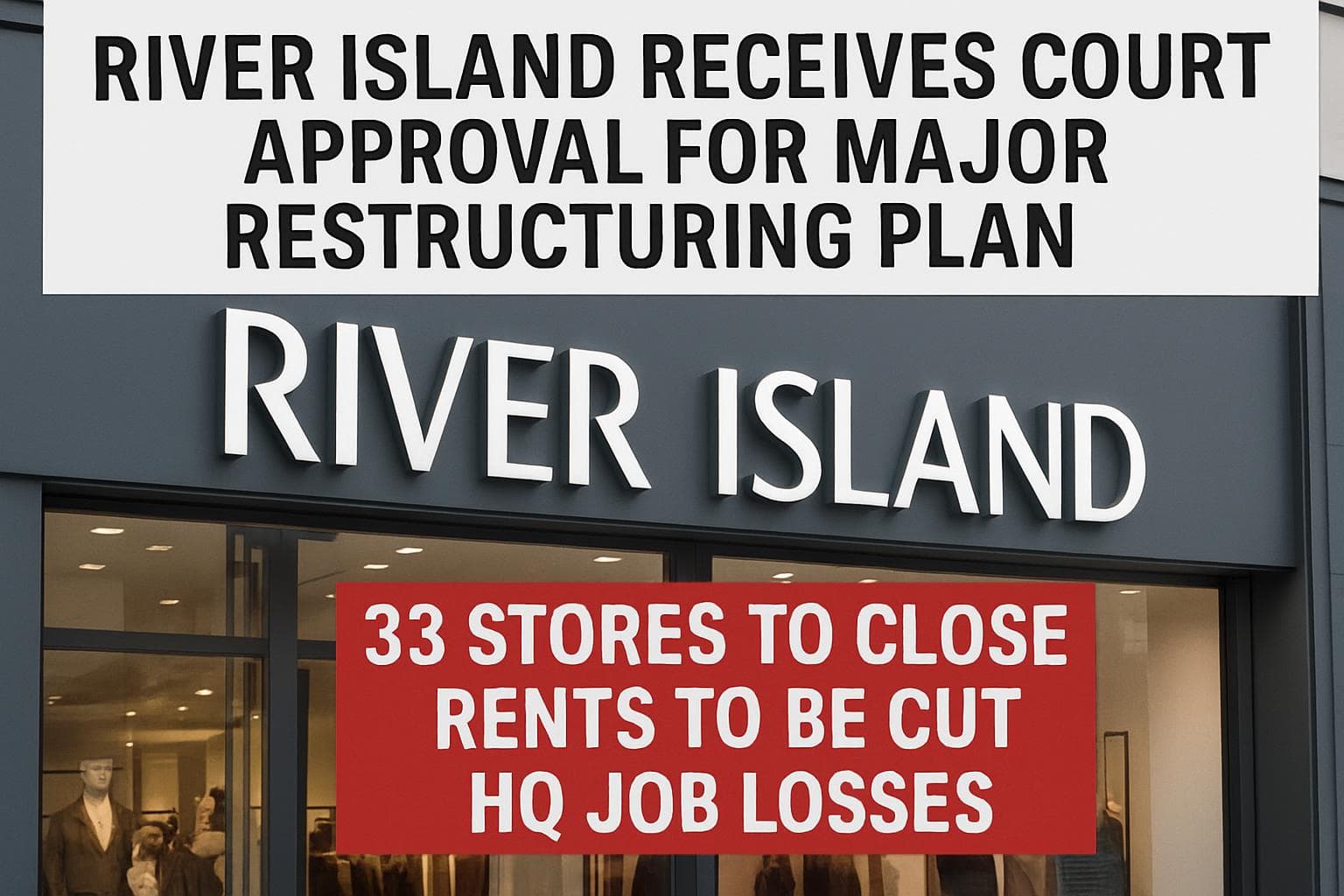
- River Island has received High Court approval to close 33 UK stores as part of a restructuring plan aimed at avoiding insolvency.
- The restructuring will save over 4,000 jobs but puts more than 1,000 roles and 70 additional sites at risk.
- The plan includes reducing rents at 71 branches and making 110 head office roles redundant, saving an estimated £8.1 million.
- River Island faces a projected shortfall of over £43 million and seeks £54 million in funding to continue operations.
- The retailer's challenges are attributed to rising costs and a consumer shift towards online shopping.
River Island, a prominent name in UK fashion retail, has been granted permission by the High Court to proceed with a significant restructuring plan. This move, aimed at staving off potential insolvency, involves the closure of 33 stores across the UK. The decision comes as the retailer grapples with the dual pressures of rising operational costs and a marked shift in consumer behavior towards online shopping.
Restructuring Plan Details
The approved plan, which received backing from a majority of creditors, is designed to align River Island's store estate with current customer needs. In addition to the store closures, the plan includes rent reductions at 71 branches and the elimination of 110 head office roles, resulting in an estimated £8.1 million in savings. Despite these measures, more than 1,000 jobs and 70 additional sites remain at risk.
Financial Pressures and Strategic Vision
River Island's financial struggles have been exacerbated by a projected shortfall of over £43 million, with the company seeking £54 million in funding to maintain operations. Chief Executive Ben Lewis emphasized the importance of the restructuring plan, stating it provides a "strong platform" for the company's transformation strategy. The retailer's recent efforts to enhance its fashion offerings and shopping experience are reportedly showing positive results.
Industry Context and Challenges
The challenges faced by River Island are not unique within the UK fashion retail sector. The industry has seen increased competition from fast-growing online retailers like Shein and Temu, which benefit from tax breaks on imported goods. Additionally, the rise in employer National Insurance Contributions has further strained financial resources. River Island, originally founded as Chelsea Girl in the 1940s, has outlasted several high street rivals but now faces the pressing need to adapt to a rapidly changing retail landscape.
WHAT THIS MIGHT MEAN
Looking ahead, River Island's ability to successfully implement its restructuring plan will be crucial in determining its long-term viability. The retailer must navigate negotiations with landlords to secure rent reductions and focus on revitalizing its brand appeal to attract consumers. Failure to adapt could lead to further financial difficulties, potentially resulting in administration or insolvency proceedings. Industry experts suggest that a renewed focus on marketing and creative strategies will be essential for River Island to regain its status as a beloved brand in the competitive fashion market.
Related Articles

Middle East Conflict Drives UK Energy Prices to New Highs

Canada and Australia Forge Strategic Partnership Amid Global Uncertainty

UK Government to Reform Asylum Seeker Support and Employment Policies

UK Faces Dilemmas Amid Iran Conflict and China Spying Allegations
UK Reinforces Military Presence in Cyprus Amid Middle East Tensions

Police Federation Chief Arrested Amid Fraud Investigation
River Island Secures Court Approval for Restructuring Amid Retail Challenges
In This Article
 Daniel Rivera| Published
 HIGHLIGHTS
- River Island has received High Court approval to close 33 UK stores as part of a restructuring plan aimed at avoiding insolvency.
- The restructuring will save over 4,000 jobs but puts more than 1,000 roles and 70 additional sites at risk.
- The plan includes reducing rents at 71 branches and making 110 head office roles redundant, saving an estimated £8.1 million.
- River Island faces a projected shortfall of over £43 million and seeks £54 million in funding to continue operations.
- The retailer's challenges are attributed to rising costs and a consumer shift towards online shopping.
River Island, a prominent name in UK fashion retail, has been granted permission by the High Court to proceed with a significant restructuring plan. This move, aimed at staving off potential insolvency, involves the closure of 33 stores across the UK. The decision comes as the retailer grapples with the dual pressures of rising operational costs and a marked shift in consumer behavior towards online shopping.
Restructuring Plan Details
The approved plan, which received backing from a majority of creditors, is designed to align River Island's store estate with current customer needs. In addition to the store closures, the plan includes rent reductions at 71 branches and the elimination of 110 head office roles, resulting in an estimated £8.1 million in savings. Despite these measures, more than 1,000 jobs and 70 additional sites remain at risk.
Financial Pressures and Strategic Vision
River Island's financial struggles have been exacerbated by a projected shortfall of over £43 million, with the company seeking £54 million in funding to maintain operations. Chief Executive Ben Lewis emphasized the importance of the restructuring plan, stating it provides a "strong platform" for the company's transformation strategy. The retailer's recent efforts to enhance its fashion offerings and shopping experience are reportedly showing positive results.
Industry Context and Challenges
The challenges faced by River Island are not unique within the UK fashion retail sector. The industry has seen increased competition from fast-growing online retailers like Shein and Temu, which benefit from tax breaks on imported goods. Additionally, the rise in employer National Insurance Contributions has further strained financial resources. River Island, originally founded as Chelsea Girl in the 1940s, has outlasted several high street rivals but now faces the pressing need to adapt to a rapidly changing retail landscape.
WHAT THIS MIGHT MEAN
Looking ahead, River Island's ability to successfully implement its restructuring plan will be crucial in determining its long-term viability. The retailer must navigate negotiations with landlords to secure rent reductions and focus on revitalizing its brand appeal to attract consumers. Failure to adapt could lead to further financial difficulties, potentially resulting in administration or insolvency proceedings. Industry experts suggest that a renewed focus on marketing and creative strategies will be essential for River Island to regain its status as a beloved brand in the competitive fashion market.
Related Articles
Middle East Conflict Drives UK Energy Prices to New Highs
Canada and Australia Forge Strategic Partnership Amid Global Uncertainty
UK Government to Reform Asylum Seeker Support and Employment Policies
UK Faces Dilemmas Amid Iran Conflict and China Spying Allegations
UK Reinforces Military Presence in Cyprus Amid Middle East Tensions
Police Federation Chief Arrested Amid Fraud Investigation