
Royal Mail's Return to Profit Marks a New Era Under Czech Ownership
In This Article
HIGHLIGHTS
- Royal Mail reported its first profit in three years, with a £12m gain excluding redundancy costs, following its acquisition by Czech billionaire Daniel Kretinsky.
- The company is implementing significant changes, including reducing second-class deliveries to alternating weekdays, a process expected to take until 2026.
- Parcel volumes increased by 6%, contributing to the profit turnaround, while letter volumes declined by 4%.
- The Universal Service Obligation remains under review, with potential changes to delivery frequency aimed at saving costs.
- Despite financial improvements, Royal Mail continues to miss delivery targets, achieving only 75.9% of first-class mail delivered within one day.
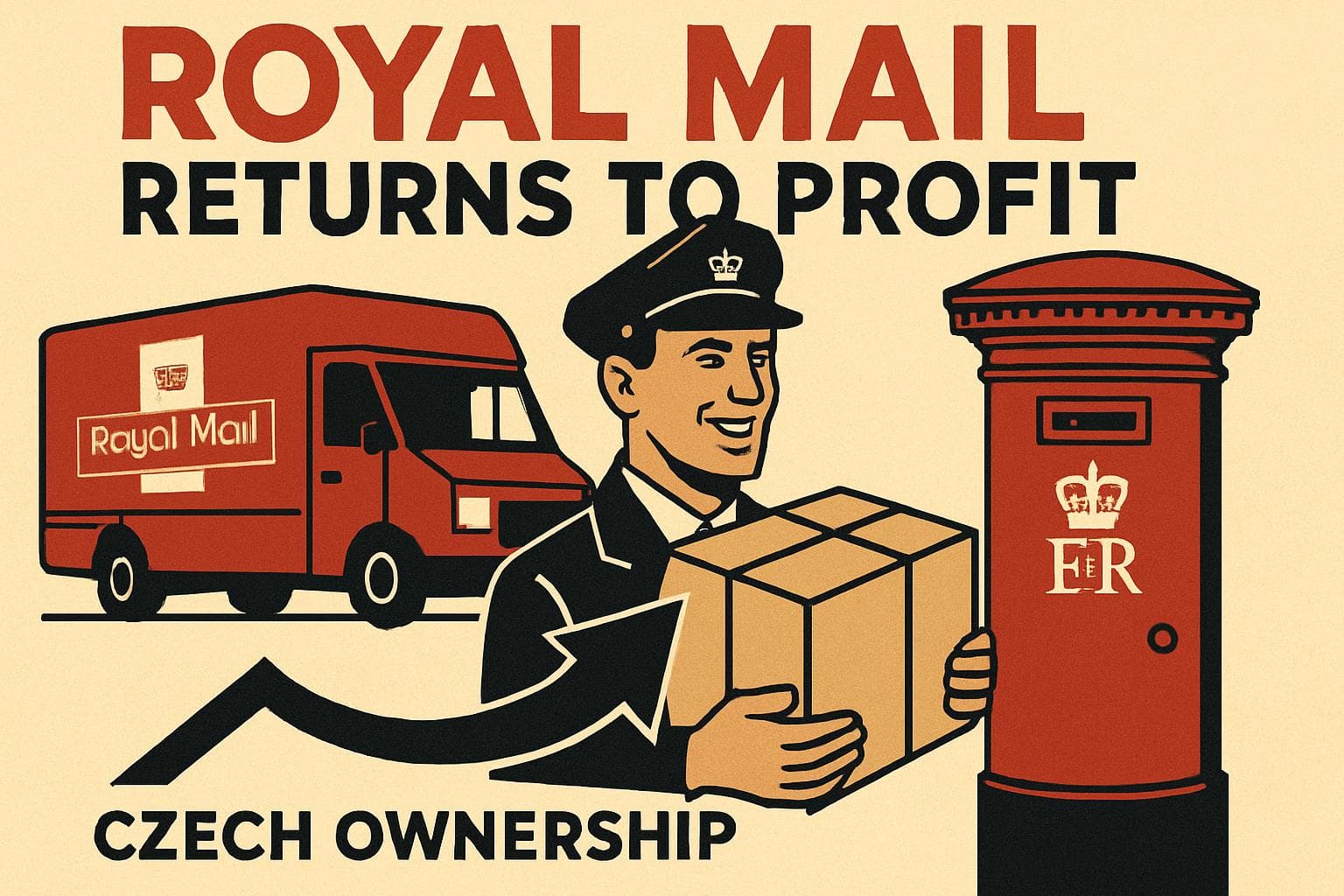
Royal Mail has announced its first annual profit in three years, a significant milestone following its acquisition by Czech billionaire Daniel Kretinsky's EP Group. The postal service reported a £12 million profit, excluding redundancy costs, for the year ending March 31, a stark contrast to the previous year's £336 million loss. This financial turnaround comes amid a strategic shift towards parcel delivery and a reduction in second-class letter services.
Strategic Changes and Challenges
Under the leadership of Martin Seidenberg, CEO of International Distribution Services (IDS), Royal Mail is undergoing a transformation. The company is phasing out Saturday second-class deliveries, a move approved by the postal regulator Ofcom, and plans to reduce the service to alternating weekdays. This extensive rollout, currently in a pilot phase across 35 delivery offices, is expected to continue until 2026. Seidenberg emphasized the importance of a careful implementation, stating, "We owe it to our customers that we are not flipping back and forth."
Parcel Growth and Financial Performance
The shift in focus to parcel deliveries has been pivotal, with volumes increasing by 6% over the year. This growth, coupled with a more sophisticated pricing system and improved cost control, has driven Royal Mail's return to profitability. Despite these gains, the company continues to face challenges, notably missing its delivery targets. Only 75.9% of first-class mail was delivered within one working day, falling short of the 93% target set by Ofcom.
Future Prospects and Regulatory Considerations
The Universal Service Obligation (USO), which mandates six-day delivery for first-class mail and three-day delivery for second-class, is currently under review. Royal Mail has proposed reducing second-class deliveries to every other weekday, a change that could save up to £300 million annually. The EP Group has committed to maintaining the Royal Mail brand and its UK headquarters for the next five years, while the UK government retains a "golden share" to oversee major changes.
WHAT THIS MIGHT MEAN
Looking ahead, Royal Mail's ability to maintain profitability will hinge on successfully implementing its strategic changes and meeting regulatory requirements. The ongoing review of the Universal Service Obligation by Ofcom could lead to significant cost savings if proposed delivery reductions are approved. However, the company must also address its delivery performance to meet regulatory targets and customer expectations. As Royal Mail navigates these challenges, its transformation under EP Group's ownership will be closely watched by industry analysts and stakeholders.
Related Articles

Middle East Conflict Drives UK Energy Prices to New Highs

Government Announces £4 Billion Overhaul of SEND Support in England

UK Government Announces Major Overhaul of SEND System with £3.4 Billion Investment

Prince Andrew's Ties to Epstein Under Scrutiny Amid Calls for Inquiry

Government Criticized for Mishandling Maccabi Tel Aviv Fan Ban
Government Unveils Ambitious Plan to Halve Attainment Gap in England's Schools
Royal Mail's Return to Profit Marks a New Era Under Czech Ownership
In This Article
 Daniel Rivera| Published
 HIGHLIGHTS
- Royal Mail reported its first profit in three years, with a £12m gain excluding redundancy costs, following its acquisition by Czech billionaire Daniel Kretinsky.
- The company is implementing significant changes, including reducing second-class deliveries to alternating weekdays, a process expected to take until 2026.
- Parcel volumes increased by 6%, contributing to the profit turnaround, while letter volumes declined by 4%.
- The Universal Service Obligation remains under review, with potential changes to delivery frequency aimed at saving costs.
- Despite financial improvements, Royal Mail continues to miss delivery targets, achieving only 75.9% of first-class mail delivered within one day.
Royal Mail has announced its first annual profit in three years, a significant milestone following its acquisition by Czech billionaire Daniel Kretinsky's EP Group. The postal service reported a £12 million profit, excluding redundancy costs, for the year ending March 31, a stark contrast to the previous year's £336 million loss. This financial turnaround comes amid a strategic shift towards parcel delivery and a reduction in second-class letter services.
Strategic Changes and Challenges
Under the leadership of Martin Seidenberg, CEO of International Distribution Services (IDS), Royal Mail is undergoing a transformation. The company is phasing out Saturday second-class deliveries, a move approved by the postal regulator Ofcom, and plans to reduce the service to alternating weekdays. This extensive rollout, currently in a pilot phase across 35 delivery offices, is expected to continue until 2026. Seidenberg emphasized the importance of a careful implementation, stating, "We owe it to our customers that we are not flipping back and forth."
Parcel Growth and Financial Performance
The shift in focus to parcel deliveries has been pivotal, with volumes increasing by 6% over the year. This growth, coupled with a more sophisticated pricing system and improved cost control, has driven Royal Mail's return to profitability. Despite these gains, the company continues to face challenges, notably missing its delivery targets. Only 75.9% of first-class mail was delivered within one working day, falling short of the 93% target set by Ofcom.
Future Prospects and Regulatory Considerations
The Universal Service Obligation (USO), which mandates six-day delivery for first-class mail and three-day delivery for second-class, is currently under review. Royal Mail has proposed reducing second-class deliveries to every other weekday, a change that could save up to £300 million annually. The EP Group has committed to maintaining the Royal Mail brand and its UK headquarters for the next five years, while the UK government retains a "golden share" to oversee major changes.
WHAT THIS MIGHT MEAN
Looking ahead, Royal Mail's ability to maintain profitability will hinge on successfully implementing its strategic changes and meeting regulatory requirements. The ongoing review of the Universal Service Obligation by Ofcom could lead to significant cost savings if proposed delivery reductions are approved. However, the company must also address its delivery performance to meet regulatory targets and customer expectations. As Royal Mail navigates these challenges, its transformation under EP Group's ownership will be closely watched by industry analysts and stakeholders.
Related Articles
Middle East Conflict Drives UK Energy Prices to New Highs
Government Announces £4 Billion Overhaul of SEND Support in England
UK Government Announces Major Overhaul of SEND System with £3.4 Billion Investment
Prince Andrew's Ties to Epstein Under Scrutiny Amid Calls for Inquiry
Government Criticized for Mishandling Maccabi Tel Aviv Fan Ban
Government Unveils Ambitious Plan to Halve Attainment Gap in England's Schools