
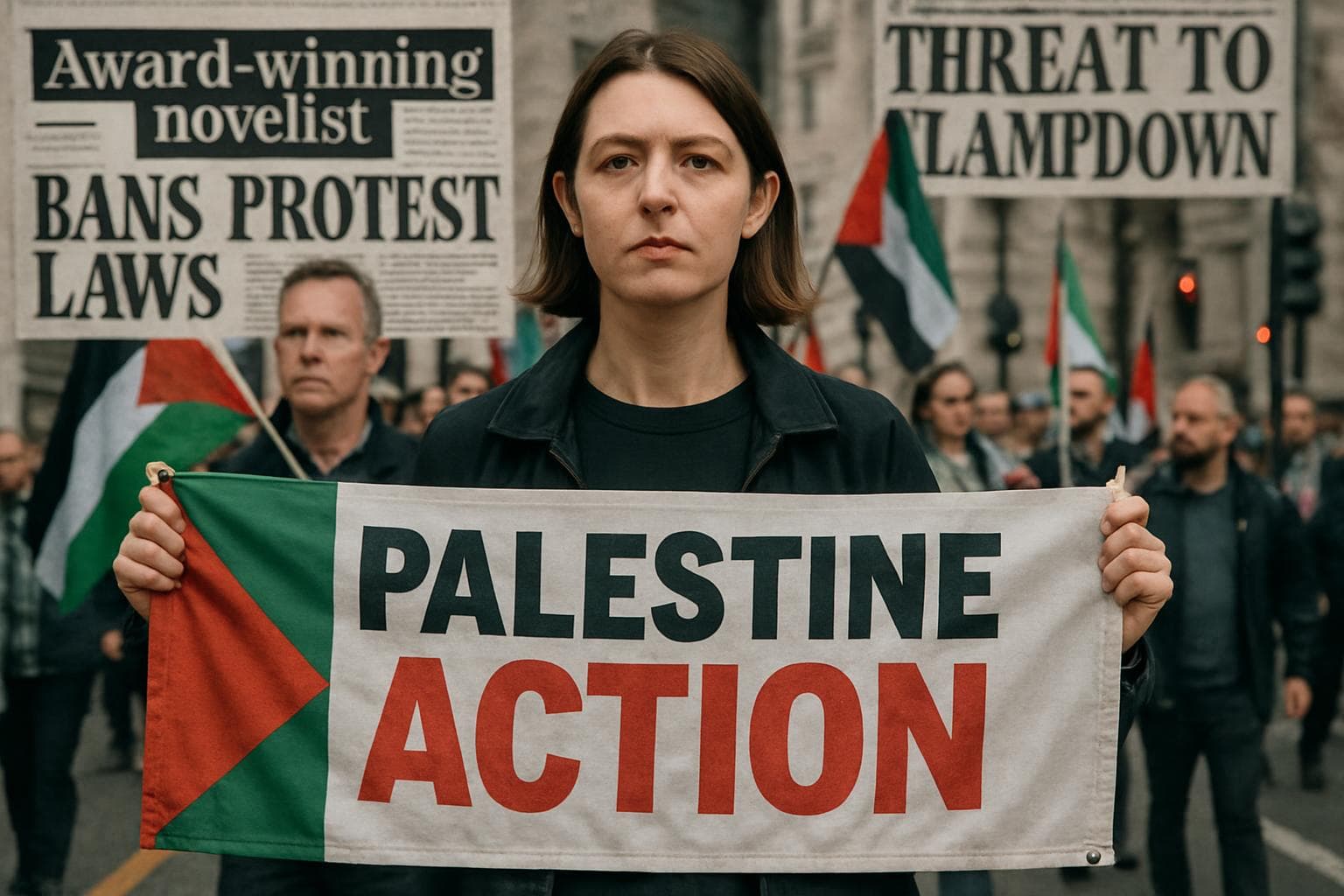
Sally Rooney Defies UK Ban to Support Palestine Action Amidst Protests Over Civil Liberties
In This Article
HIGHLIGHTS
- Sally Rooney pledges continued support for Palestine Action despite its classification as a terrorist group in the UK.
- Home Secretary Yvette Cooper defends the proscription, citing the group's violent activities and guidance on evading law enforcement.
- Over 700 arrests have been made since the ban, highlighting tensions over civil liberties and protest rights in Britain.
- Critics argue the UK government's actions undermine democratic freedoms and exacerbate public discontent.
- The debate over Palestine Action reflects broader concerns about the erosion of protest rights and civil liberties in the UK.
Award-winning novelist Sally Rooney has reaffirmed her support for Palestine Action, a group recently proscribed as a terrorist organization by the UK government. Despite the ban, Rooney, known for her bestsellers "Normal People" and "Intermezzo," announced her intention to continue backing the group financially and publicly. Writing in the Irish Times, Rooney stated, "If this makes me a supporter of terror under UK law, so be it."
Government Stance and Legal Context
The UK government, led by Home Secretary Yvette Cooper, maintains that Palestine Action's activities extend beyond peaceful protest. Cooper highlighted incidents such as the vandalism at RAF Brize Norton, which resulted in damages estimated at £7 million, as evidence of the group's violent tendencies. She also referenced a so-called "Underground Manual" allegedly used by the group to identify targets and evade law enforcement.
Since the ban's implementation in July, over 700 individuals have been arrested, including more than 500 during a recent demonstration in London. The arrests underscore the contentious nature of the government's approach to protest rights in Britain.
Public and Political Reactions
The proscription of Palestine Action has sparked widespread debate about civil liberties in the UK. Critics argue that the government's actions represent a significant encroachment on democratic freedoms. Dr. David Killick from Cumbria expressed concern over the use of counter-terrorism legislation to suppress dissent, stating that it reflects a morally bankrupt government.
The controversy has also drawn attention to the broader issue of protest rights in Britain. Andy Beckett, writing for The Guardian, noted the shrinking legal space for protest and the growing disillusionment among citizens who feel their voices are not being heard.
WHAT THIS MIGHT MEAN
The ongoing debate over Palestine Action's proscription raises critical questions about the future of protest rights in the UK. Legal challenges to the ban could set important precedents for how terrorism laws are applied to protest groups. If the courts rule in favor of Palestine Action, it may prompt a reevaluation of the government's approach to civil liberties.
Politically, the situation underscores the need for the UK government to address public concerns about democratic freedoms. Failure to do so could exacerbate social divisions and fuel further unrest. As the trial of Palestine Action supporters approaches, the outcome may influence public perception and government policy on protest rights and civil liberties.
Related Articles

UK Government to Reform Asylum Seeker Support and Employment Policies
Labour MP's Husband Arrested in UK-China Espionage Probe
Nottingham Attacks Inquiry: Families Demand Accountability and Truth
Prince Andrew's Ties to Epstein Under Scrutiny Amid Calls for Inquiry
Government Criticized for Mishandling Maccabi Tel Aviv Fan Ban
Prince Andrew's Arrest Intensifies Scrutiny on Royal Succession and Prince William's Future Role
Sally Rooney Defies UK Ban to Support Palestine Action Amidst Protests Over Civil Liberties
In This Article
 Ethan Brooks| Published
 HIGHLIGHTS
- Sally Rooney pledges continued support for Palestine Action despite its classification as a terrorist group in the UK.
- Home Secretary Yvette Cooper defends the proscription, citing the group's violent activities and guidance on evading law enforcement.
- Over 700 arrests have been made since the ban, highlighting tensions over civil liberties and protest rights in Britain.
- Critics argue the UK government's actions undermine democratic freedoms and exacerbate public discontent.
- The debate over Palestine Action reflects broader concerns about the erosion of protest rights and civil liberties in the UK.
Award-winning novelist Sally Rooney has reaffirmed her support for Palestine Action, a group recently proscribed as a terrorist organization by the UK government. Despite the ban, Rooney, known for her bestsellers "Normal People" and "Intermezzo," announced her intention to continue backing the group financially and publicly. Writing in the Irish Times, Rooney stated, "If this makes me a supporter of terror under UK law, so be it."
Government Stance and Legal Context
The UK government, led by Home Secretary Yvette Cooper, maintains that Palestine Action's activities extend beyond peaceful protest. Cooper highlighted incidents such as the vandalism at RAF Brize Norton, which resulted in damages estimated at £7 million, as evidence of the group's violent tendencies. She also referenced a so-called "Underground Manual" allegedly used by the group to identify targets and evade law enforcement.
Since the ban's implementation in July, over 700 individuals have been arrested, including more than 500 during a recent demonstration in London. The arrests underscore the contentious nature of the government's approach to protest rights in Britain.
Public and Political Reactions
The proscription of Palestine Action has sparked widespread debate about civil liberties in the UK. Critics argue that the government's actions represent a significant encroachment on democratic freedoms. Dr. David Killick from Cumbria expressed concern over the use of counter-terrorism legislation to suppress dissent, stating that it reflects a morally bankrupt government.
The controversy has also drawn attention to the broader issue of protest rights in Britain. Andy Beckett, writing for The Guardian, noted the shrinking legal space for protest and the growing disillusionment among citizens who feel their voices are not being heard.
WHAT THIS MIGHT MEAN
The ongoing debate over Palestine Action's proscription raises critical questions about the future of protest rights in the UK. Legal challenges to the ban could set important precedents for how terrorism laws are applied to protest groups. If the courts rule in favor of Palestine Action, it may prompt a reevaluation of the government's approach to civil liberties.
Politically, the situation underscores the need for the UK government to address public concerns about democratic freedoms. Failure to do so could exacerbate social divisions and fuel further unrest. As the trial of Palestine Action supporters approaches, the outcome may influence public perception and government policy on protest rights and civil liberties.
Related Articles
UK Government to Reform Asylum Seeker Support and Employment Policies
Labour MP's Husband Arrested in UK-China Espionage Probe
Nottingham Attacks Inquiry: Families Demand Accountability and Truth
Prince Andrew's Ties to Epstein Under Scrutiny Amid Calls for Inquiry
Government Criticized for Mishandling Maccabi Tel Aviv Fan Ban
Prince Andrew's Arrest Intensifies Scrutiny on Royal Succession and Prince William's Future Role